
Butch Cassidy and the Sundance Kid
1969 American Western buddy film directed by George Roy Hill, starring Paul Newman and Robert Redford; notable for its style, soundtrack, awards and enduring influence on popular culture.
Overview
Butch Cassidy and the Sundance Kid is a 1969 American Western that blends action, comedy and a reflective view of outlaw friendship. Directed by George Roy Hill and produced for 20th Century Fox, it stars Paul Newman as Robert LeRoy Parker (Butch Cassidy) and Robert Redford as Harry Longabaugh (the Sundance Kid). William Goldman wrote the screenplay and Burt Bacharach provided a musical score that included the hit song "Raindrops Keep Fallin' on My Head." The film follows the two partners as they commit a series of robberies, evade law enforcement, and ultimately flee the United States for South America in search of refuge.
Image gallery
1 Image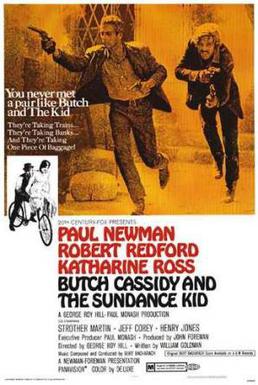
Plot and tone
The narrative is episodic, presenting a succession of heists, escapes and comic interludes that emphasize the chemistry between the leads. Rather than a strictly factual biography, the movie treats its subjects as legendary figures and adopts a tone that mixes warmth, irony and melancholy. It juxtaposes the open landscapes of the American West with a sense of changing times, suggesting that the frontier era and the outlaws' way of life are drawing to a close.
Historical basis
The film is loosely based on real late 19th- and early 20th-century outlaws: the Wild Bunch gang led by Butch Cassidy and the gunman Harry Longabaugh, known as the Sundance Kid. Filmmakers adapted and dramatized episodes from those lives rather than attempting a documentary account, and the movie helped popularize the legends of both men. It leaves certain historical questions—such as the exact circumstances of their final years—unresolved, reflecting the ambiguity that surrounds the real figures.
Production and casting
George Roy Hill assembled a team that included producer John Foreman and screenwriter William Goldman. Several established stars were considered for the principal roles before Paul Newman and Robert Redford were cast; director Hill favored the eventual pairing and shaped the film around their interplay. During development, the choice of which actor would play which character shifted, and Hill's decision to reverse conventional expectations contributed to the film's unconventional charm. The production used locations in the American West for many outdoor sequences and filmed some South American scenes to suggest the characters' exile.
Music and cinematography
Burt Bacharach's music and a memorable title song contributed to the movie's contemporary feel and helped it reach a broad audience. The cinematography emphasized natural light and wide compositions that both celebrate and elegize the landscape. These elements combined with the screenplay's modern sensibility to position the film between classic Western conventions and a newer, more ironic style of filmmaking that emerged in the late 1960s.
Reception, awards and box office
Audiences and critics responded strongly: the film became one of the decade's highest-grossing features. It received multiple Academy Award nominations and won four Oscars, including awards for screenplay, cinematography, original score and original song. The screenplay by William Goldman also won international recognition, and the movie has been placed on several lists of notable American films. Its commercial success played an important role in elevating Robert Redford's profile and reaffirming Paul Newman's star status.
Legacy and influence
Butch Cassidy and the Sundance Kid influenced the buddy-film subgenre and contributed to a trend of more playful, character-driven Westerns. The film's blend of humor and elegy, its memorable set pieces and its final, ambiguous sequence have been widely discussed in film criticism. The association with Robert Redford's Sundance persona later inspired the name of the Sundance Film Festival and the Sundance organization, which became central to independent cinema in the United States.
Further reading and resources
For readers seeking more detail, consult biographies of the historical outlaws, critical studies of late-1960s American cinema, and archival interviews with the director and principal cast. The following items point to production notes, career summaries and institutional recognition:
- 20th Century Fox production details
- General film overview and credits
- Paul Newman filmography and biography
- Robert Redford career summary
- The Wild Bunch and outlaw background
- Filming locations in Wyoming and the American West
- South American sequences and Bolivia setting
- Academy Awards history for the film
- Burt Bacharach and the film's music
- William Goldman and the screenplay
- Sound and technical nominations
- BAFTA and international recognition
- Box office performance and figures
- American Film Institute listing and rankings
- Actors considered during casting
- Contemporaries and cinematic peers
- Early career anecdotes and reports
- Sundance Film Festival origins
- Sundance Resort and Robert Redford's projects
Note: While the film draws on real names and events, it emphasizes storytelling and atmosphere over strict historical accuracy. Its enduring appeal comes from a combination of performance, craft and a tone that captures both the excitement and the loss associated with the end of an era.
Questions and answers
Q: What movie is the text about?
A: The text is about the 1969 American movie Butch Cassidy and the Sundance Kid.
Q: Who directed and produced it?
A: George Roy Hill directed it, and John Foreman produced it.
Q: Who starred in it?
A: Paul Newman and Robert Redford starred in it as two robbers in Wyoming who go to Bolivia to escape the law.
Q: How was the movie loosely based on a real story?
A: The movie was loosely based on the real story of the two title characters (Butch Cassidy and his friend Harry Longabaugh, also called "Sundance"). It made their legends more popular.
Q: What awards did it win?
A: It won four Academy Awards for Best Cinematography, Best Original Score, Best Song (Burt Bacharach's "Raindrops Keep Fallin' on My Head") and Best Original Screenplay (William Goldman). It was also nominated for Best Picture, Best Director (Hill) and Best Sound. Goldman won the BAFTA Award for Best Screenplay.
Q: How successful was it commercially?
A: It was one of the largest-grossing movies of the 1960s with $102.3 million in box office revenue in the United States alone. It was number fifty on AFI's 100 Years... 100 Movies list.
Q: Who were originally considered for roles in this film?
A: Warren Beatty, Steve McQueen, and Marlon Brando were all initially considered to play Butch Cassidy or Sundance Kid before Paul Newman and Robert Redford took their place with Newman playing Sundance Kid while Redford played Butch Cassidy instead - which wasn't liked by 20th Century Fox but supported by Hill who wanted them that way which made Redford more famous as an actor afterwards.
Related articles
Author
AlegsaOnline.com Butch Cassidy and the Sundance Kid Leandro Alegsa
URL: https://en.alegsaonline.com/art/15639