
Cabaret (1972 film)
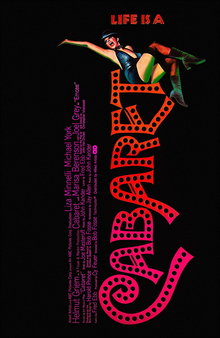
Cabaret (1972) is a landmark American musical drama directed by Bob Fosse, set in Weimar Berlin and noted for its dark themes, stylized choreography, and award-winning performances.
Overview
Cabaret is a 1972 American musical film that adapts the stage musical to the screen while emphasizing a darker, more cinematic tone. Set in early 1930s Berlin, it contrasts the glamour and decadence of the Kit Kat Klub with the accelerating political violence outside. The film is widely recognized for its vivid imagery, mood, and performances.
Image gallery
8 Images





Story and principal characters
The narrative follows the lives of several interlinked characters: a vivacious American performer who becomes a star at the Kit Kat Klub; the club’s enigmatic Emcee; and a British writer whose romantic entanglements reveal social and moral tensions. The plot interleaves musical numbers with the characters’ personal dramas and the ominous rise of authoritarian politics.
Production, sources, and cast
The film is adapted from the stage musical, itself drawn from Christopher Isherwood’s writings about Berlin and earlier dramatic adaptations. Music and lyrics originally by prominent theatrical collaborators provide the score, while Bob Fosse directed and staged distinctive dance sequences. The movie features acclaimed lead performances that became strongly associated with the roles.
Style, choreography, and themes
Fosse’s direction brings a stylized choreography that blends sensuality, irony, and theatrical artifice. Musical numbers function both as entertainment within the club and as commentary on the action, creating a tension between spectacle and reality. Themes include hedonism, political denial, and the social cost of extremism.
Reception and significance
On release the film received critical praise for its daring tone and production quality and won multiple industry awards, including top honors for direction and performance. Its adult-oriented approach helped redefine what a cinematic musical could be, influencing later filmmakers and stage revivals.
Key aspects and further reading
- Genre: Screen musical with dramatic and historical elements.
- Setting: Weimar-era Berlin, early 1930s.
- Notable features: Emphasis on choreography, club-as-microcosm device, and juxtaposition of spectacle with political reality.
For more context on the stage origins and musical lineage, see material about the original theatrical production and the collaborative team behind the score; an overview of the musical form is available at relevant musical resources.
Related articles
Author
AlegsaOnline.com Cabaret (1972 film) Leandro Alegsa
URL: https://en.alegsaonline.com/art/15836