
Brassica juncea (mustard greens and Indian mustard)
Brassica juncea is a mustard species grown for leafy greens, seeds and oil. Cultivated across Asia and worldwide, it is used in cooking, condiments, soil remediation and as a cover crop.
Brassica juncea is a cultivated species of the mustard group whose common names include mustard greens, Indian mustard and Chinese mustard. It belongs to the brassica family and is valued both as a leafy vegetable and as a seed crop. The species has long been associated with parts of Asia but has been introduced and adapted to many other regions for food production, condiments and agricultural uses. For taxonomic context see species and for family relationships see mustard plant. Its primary center of diversity and early cultivation is in Asia, though it is now grown worldwide.
Image gallery
10 Images


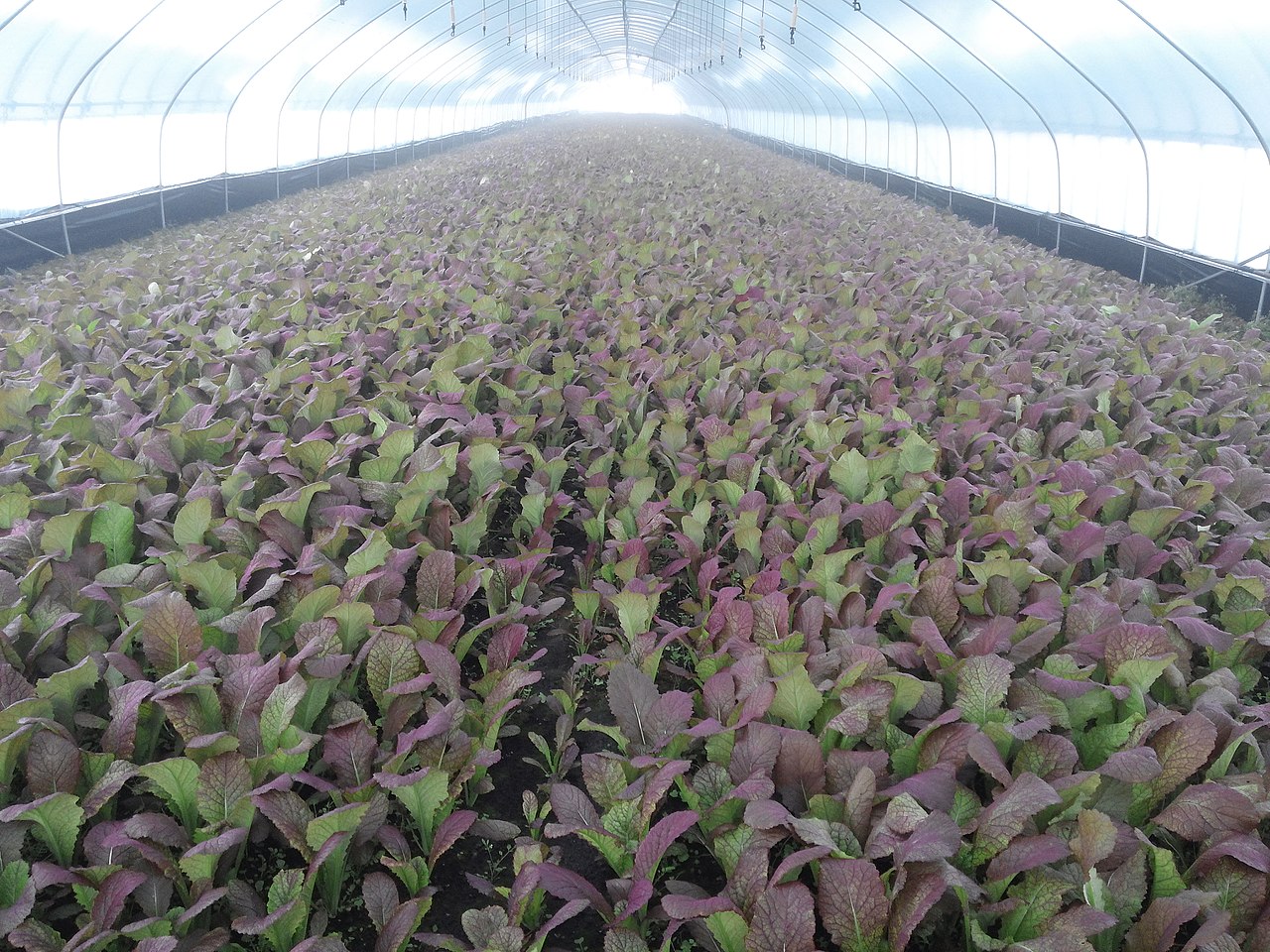


Characteristics and plant parts
Brassica juncea is an annual or biennial herb with edible green leaves, small yellow flowers and spherical seeds. The leaves vary from tender and mild to coarse and pungent depending on variety and growing conditions. The plant produces clusters of flowers whose petals can be eaten or used as garnish. Seeds are small and once mature are harvested for pressing into oil or for grinding into spice. The edible components are often referenced individually: leaves, flowers, and seeds are all used in different culinary and industrial contexts.
Uses and culinary roles
Leaves of B. juncea are widely consumed as a vegetable, particularly in South, East and Southeast Asian cuisines; they may be stir-fried, braised, pickled or used in soups and stews. Many cuisines appreciate the peppery, mustard-like bite of the greens; they are commonly sold under the general name vegetable in markets. The seeds are used whole as a spice, crushed for mustards, or pressed to produce a pungent vegetable oil used in regional cooking. As a spice the seeds are linked to preparations labeled simply as spice, and they are an ingredient in commercial culinary mustard, including numerous Dijon-style mustards (Dijon mustard) that use brown-mustard-type seeds.
Agricultural and environmental roles
Beyond the kitchen, Brassica juncea serves several agronomic functions: it is used as a cover crop to suppress weeds and to add organic matter, and some varieties are grown specifically for seed oil. The species has also been employed in phytoremediation projects because certain cultivars can accumulate heavy metals from contaminated soils, making them useful in environmental cleanup trials. Pressed oil from the seeds is sometimes marketed as vegetable oil for culinary or industrial uses.
Varieties, cultivation and distinctions
There is considerable variation within B. juncea: types are selected for leaf texture and flavor (leaf mustards), stalk and flowering habit, or for high seed yield and oil content. Cultivation practices follow typical brassica guidelines: cool-season planting, fertile well-drained soils, and attention to pests common to cruciferous crops. In markets the plant appears under many local names—Kai Choi, gai choy and others—reflecting its widespread culinary integration. For a general reference on the plant and its uses see leaf uses.
Notable facts
Brassica juncea bridges food, industry and environmental science: it provides nutritious leafy greens rich in vitamins and fiber, seeds used for traditional condiments, and practical benefits in cropping systems. Its multifunctional role explains why the species remains important in both small-scale gardens and commercial agriculture around the world. For further reading on the species and related brassicas consult specialist sources or local extension services linked here: classification, family overview, and practical cultivation guides at regional or vegetable resources.
Related articles
Author
AlegsaOnline.com Brassica juncea (mustard greens and Indian mustard) Leandro Alegsa
URL: https://en.alegsaonline.com/art/13753