
Breadfruit (Artocarpus altilis): tropical staple tree and its fruit
Breadfruit is a large evergreen tree native to Southeast Asia and the Pacific whose starchy, versatile fruit has been a staple food and cultural resource across tropical regions for millennia.
Overview
Breadfruit (Artocarpus altilis) is a tropical evergreen tree in the mulberry family (Moraceae) cultivated for its large, starchy fruits. Native to parts of Southeast Asia and the western Pacific, the species became a key carbohydrate source throughout the Pacific islands and later in other tropical regions. Mature trees can grow into large canopy specimens and produce many round to oblong compound fruits with a potato‑like, mildly sweet flesh when cooked.
Image gallery
10 Images



Characteristics
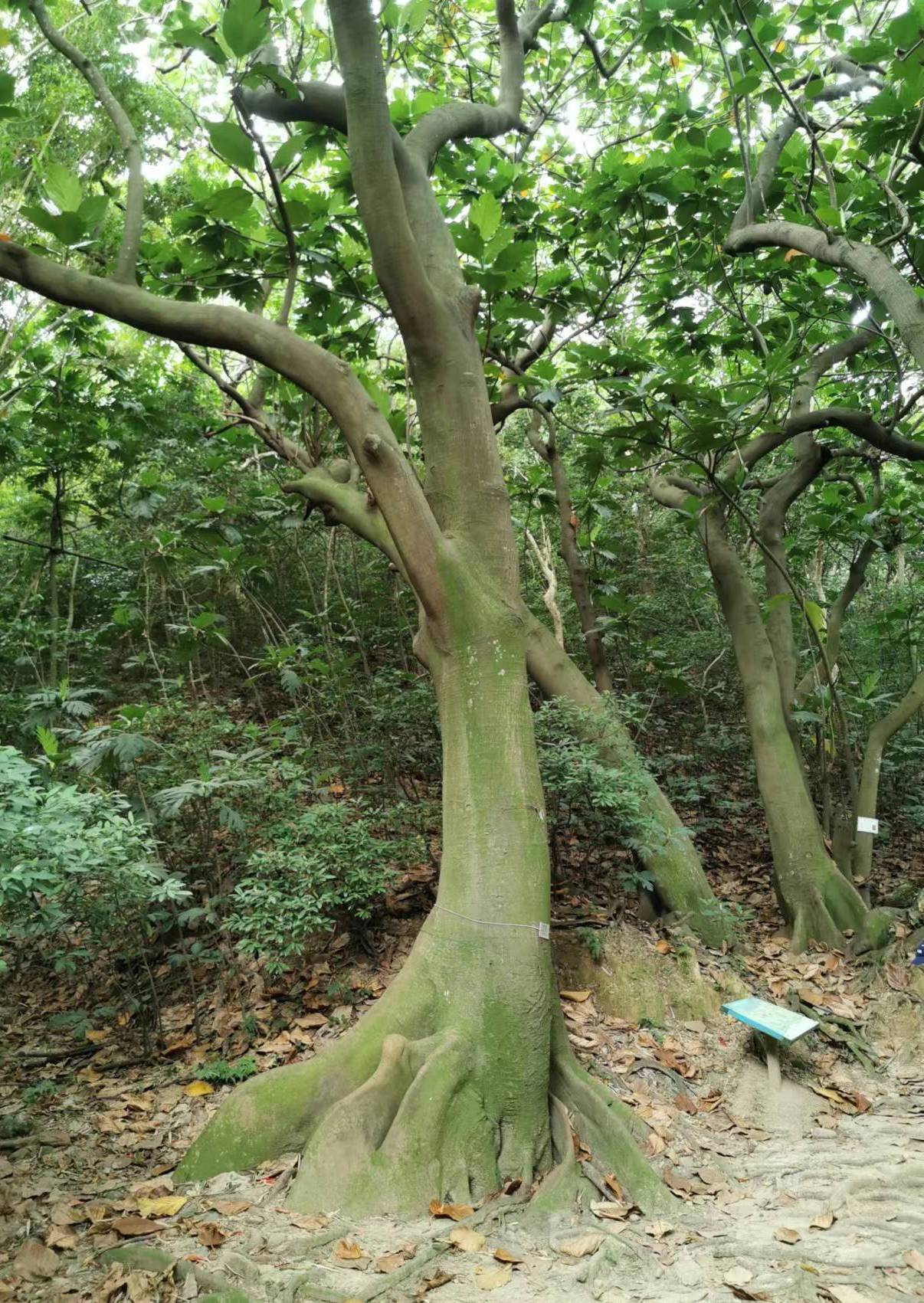
The tree and its fruit have a number of distinctive traits that make breadfruit valuable in agroforestry and household gardens. Leaves are often large and can be deeply lobed on younger trees; the trunk exudes a latex when cut. The fruit is a composite structure containing starchy pulp and, in some wild types, seeds. Many cultivated varieties are nearly seedless and are propagated vegetatively rather than by seed, which preserves desirable traits.
- Size: Trees may reach substantial heights and provide shade and timber as well as food.
- Fruit: Starchy flesh suited to roasting, baking, boiling, frying, or drying into flour.
- Propagation: Commonly propagated from root cuttings, shoots, or grafts in order to maintain cultivar characteristics.
History and spread
Evidence from linguistic, archaeological and botanical studies indicates that breadfruit was taken by Austronesian and Polynesian voyagers from New Guinea and nearby areas into the islands of the Pacific several thousand years ago, becoming an important cultivated staple. In later centuries it was transplanted intentionally by European explorers and botanists to tropical colonies elsewhere. A famous episode in the late 18th century involved the British naval officer William Bligh, who transported breadfruit plants from Tahiti to the Caribbean in an effort to provide an inexpensive food source for plantation societies; that voyage and the earlier one associated with the Mutiny on the Bounty are often recounted in histories of plant transfer and colonial agriculture.
Uses and cultural importance
Breadfruit is used in many culinary roles: as a boiled or roasted staple, as a fried snack, or processed into flour for baking. In island cuisines it may replace or complement root crops and cereals; the immature and mature fruits have different textures and are used in different preparations. Beyond food, parts of the tree serve in traditional crafts and building: timber and branches are used for construction and tools, leaves and bark have ceremonial and practical applications, and the tree features in local lore and place names.
- Common preparations: roasting whole fruits, boiling chunks, frying slices, mashing into stews.
- Processing: dried and milled into a coarse flour or used fresh as a carbohydrate source.
- Nonfood uses: timber, shade, erosion control, and traditional medicine in some cultures.
Cultivation, challenges and significance
Cultivation is suited to moist tropical and subtropical climates with little frost. Breadfruit can form part of sustainable mixed gardens because it provides large yields per tree and long productive life. Pests, disease and the need for suitable propagation material are practical constraints in some areas, and not all introduced plantings have been culturally or economically transformative. Today, breadfruit is promoted in some development and food‑security programs as a climate‑resilient, high‑yield carbohydrate crop with potential to diversify diets and local economies.
Further reading and resources
For more information on botany, cultivation and history, consult specialized references and regional guides:
- Botanical overview and classification
- Morphology and tree description
- Mulberry family context
- Origins in Southeast Asia
- Cultivation techniques
- Distribution in Asia
- Presence in Central America
- South American occurrences
- Caribbean introductions
- Fruit anatomy and composition
- Starch content and nutritional profile
- Comparison with root crops
- Processing into flour
- Polynesian voyaging and plant transfers
- New Guinea and Pacific origins
- Traditional crop choices
- Austronesian expansion
- Limits of cultivation: cooler islands
- Adaptation in temperate zones
- Mutiny on the Bounty and botanical collecting
- William Bligh's voyages
- Tahiti as a source region
- Plantations and colonial agriculture
- Sugarcane era plantations
- Dietary acceptance and change
- Breadfruit in Puerto Rican cuisine
Questions and answers
Q: What is breadfruit?
A: Breadfruit is the name for an evergreen tree in the mulberry family, and its fruit contains a lot of starch.
Q: Where does breadfruit originally grow?
A: Breadfruit originally grew in Southeast Asia.
Q: How tall can a breadfruit tree reach?
A: A breadfruit tree can reach up to 20 metres (66 ft) tall.
Q: How is breadfruit used?
A: The fruits of the breadfruit tree are ground into flour which can then be used for baking.
Q: When were breadfruit trees first discovered?
A: Ancestors of the Polynesians found the trees growing in northwest New Guinea around 3,500 years ago.
Q: Why was William Bligh ordered to load a number of these trees on Tahiti and ship them to the Caribbean?
A: William Bligh was ordered to load a number of these trees on Tahiti and ship them to the Caribbean as a cheap food source for slaves working on plantations at that time.
Q: Was William Bligh's attempt successful in introducing this new food source?
A: Although most slaves refused to eat it, William Bligh's attempt was partially successful as it was accepted into the cuisine of Puerto Rico.
Related articles
Author
AlegsaOnline.com Breadfruit (Artocarpus altilis): tropical staple tree and its fruit Leandro Alegsa
URL: https://en.alegsaonline.com/art/13826
Sources
- ars-grin.gov : "Artocarpus altilis"
- healthaliciousness.com : Nutrition facts for breadfruit · web.archive.org