
British .303 cartridge
The .303 British (three‑oh‑three) is a rimmed rifle cartridge introduced in the late 19th century and used by British and Commonwealth forces in rifles and machine guns until mid‑20th century re‑armament.
Overview
The .303 British (often spoken as "three‑oh‑three") is a rimmed, bottleneck rifle cartridge that fires a nominal 0.303‑inch (7.7 mm) projectile. It was the standard service round of the United Kingdom and many Commonwealth countries from its adoption in the late 19th century until replacement with NATO calibres in the mid‑20th century. The round was chambered in a wide range of small arms, from bolt‑action rifles to light and medium machine guns.
Image gallery
10 Images


Design and characteristics
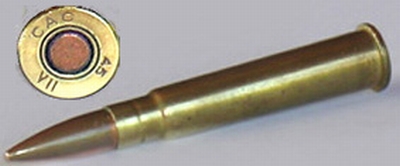
The .303 is distinguished by its rimmed case and bottleneck profile. Its construction evolved from black powder designs to smokeless‑powder loadings, and the cartridge has been offered with many bullet types and weights for different roles: full metal jacket service ball, tracer, armour‑piercing and soft‑point rounds for training or hunting. The .303's rimmed case influenced feeding mechanisms in magazine‑fed weapons and required particular magazine and extractor designs.
Historical development
Introduced for British service in the late 1800s, the cartridge underwent successive updates as propellant and bullet technology advanced. Early versions paired with single‑shot and early magazine rifles; later changes included spitzer‑type bullets and improved propellants that increased range and accuracy. The .303 was produced in enormous quantities through both World Wars and served in colonial conflicts and imperial policing actions as well as major conventional campaigns.
Military use and notable firearms
As the standard round it equipped infantry and support weapons. Typical firearms chambered for the .303 include the iconic Lee‑Enfield family of bolt‑action rifles and the Bren light machine gun. Other weapons such as the Vickers machine gun and various sporting and sniper rifles also used the cartridge. The .303 saw service in rifles and light machine guns across the British Empire and allied forces.
Legacy and replacement
The round remained in front‑line service until the United Kingdom and other NATO members standardized on 7.62×51mm and later 5.56×45mm cartridges. As British defence policy and logistics aligned with NATO standards, the .303 was phased out of regular issue by the mid‑20th century. Surplus weapons and ammunition continued in use for decades with reserve forces and civilian shooters.
Further notes
- The term ".303" commonly refers to both the cartridge and the typical service bullet used in it.
- Its long service life reflects adaptability: varied loadings and widespread manufacturing supported diverse combat roles.
- The cartridge is historically associated with British military identity until the country (referred to here as Britain) moved to alliance standard calibres.
Questions and answers
Q: What is the British .303 cartridge?
A: The British .303 cartridge is the type of ammunition used in British rifles and light machine guns until Britain became part of NATO.
Q: What guns used the .303 cartridge?
A: The Lee-Enfield and the Bren light machine gun were two guns that used the .303 cartridge.
Q: When did Britain stop using the .303 cartridge?
A: Britain stopped using the .303 cartridge when it became part of NATO.
Q: What was the British .303 cartridge used for?
A: The British .303 cartridge was used as the bullet in British rifles and light machine guns.
Q: What other countries used the .303 cartridge?
A: The .303 cartridge was primarily used by the British and the Commonwealth nations.
Q: What was the Lee-Enfield?
A: The Lee-Enfield was a type of British rifle that used the .303 cartridge.
Q: What was the Bren light machine gun?
A: The Bren light machine gun was a type of British light machine gun that used the .303 cartridge.
Related articles
Author
AlegsaOnline.com British .303 cartridge Leandro Alegsa
URL: https://en.alegsaonline.com/art/14235