
Crossbow: design, history, and uses
A concise overview of the crossbow — its components, historical development from ancient China to medieval Europe, tactical uses, and modern sport and legal considerations.
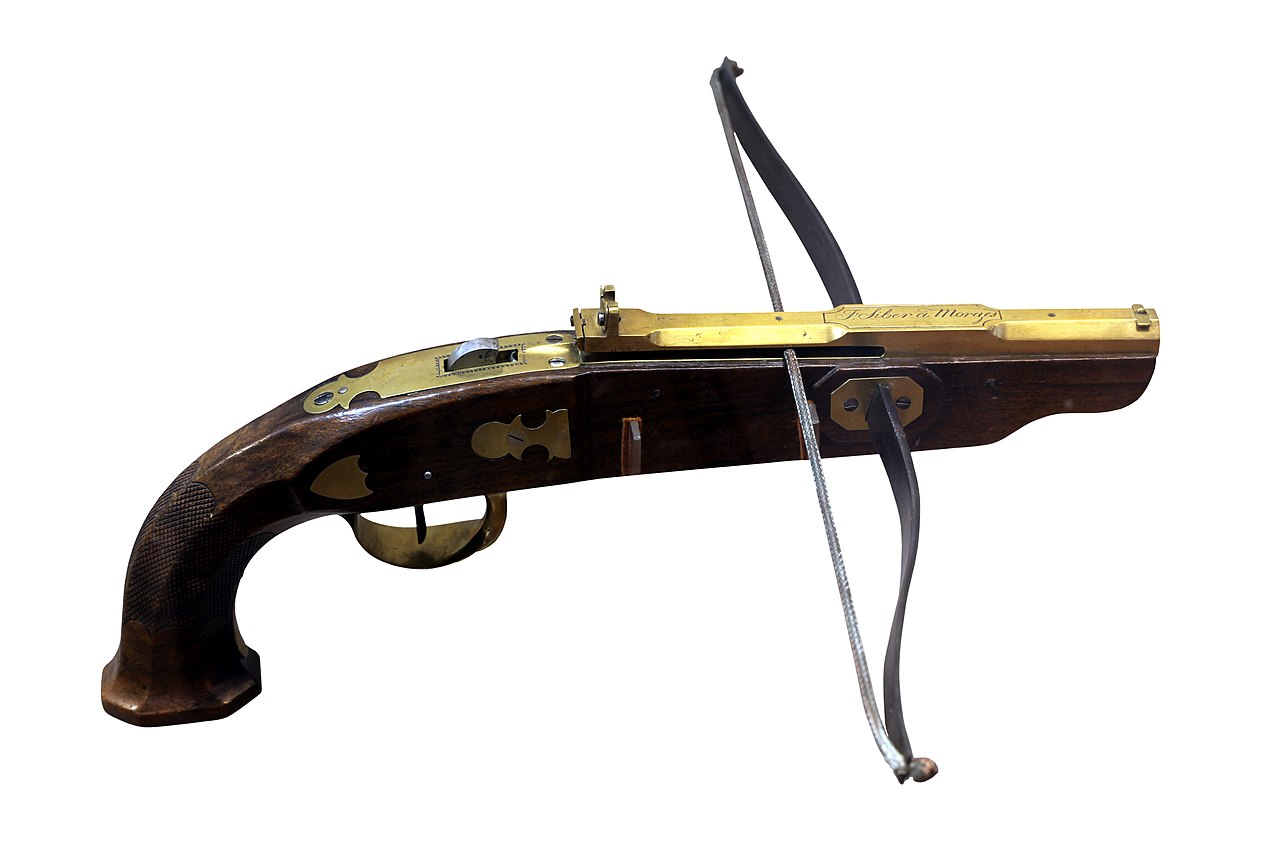
The crossbow is a ranged weapon in which a horizontal bow, called a prod, is mounted on a stock and fired by a trigger mechanism. Unlike a hand-drawn bow, a crossbow is held in a braced position and discharged by releasing a catch that holds the string. Bolts (sometimes called quarrels) are shorter, heavier projectiles used with crossbows and differ from long arrows in length, fletching and flight characteristics. The crossbow combines mechanical advantage with a simple firing action, so a user can achieve powerful shots with relatively little training.
Image gallery
10 Images






Design and main parts
Fundamental components of a crossbow are straightforward and can be described in terms of form and function. Typical parts include:
- Prod — the bow limb or limbs that store the energy; may be one piece (composite or steel) or two limbs in modern designs.
- Stock — the body or tiller that supports the prod and houses the flight groove for the bolt.
- String and nut — the string transmits energy to the bolt; the nut or sear is the catch that holds the string until release.
- Trigger mechanism — a lever or mechanism that disengages the nut; many historical and modern crossbows incorporate safety catches and anti-dry-fire devices.
- Stirrup, windlass or crank — devices used to cock high-draw-weight crossbows by providing mechanical leverage for spanning the string.
Historical development
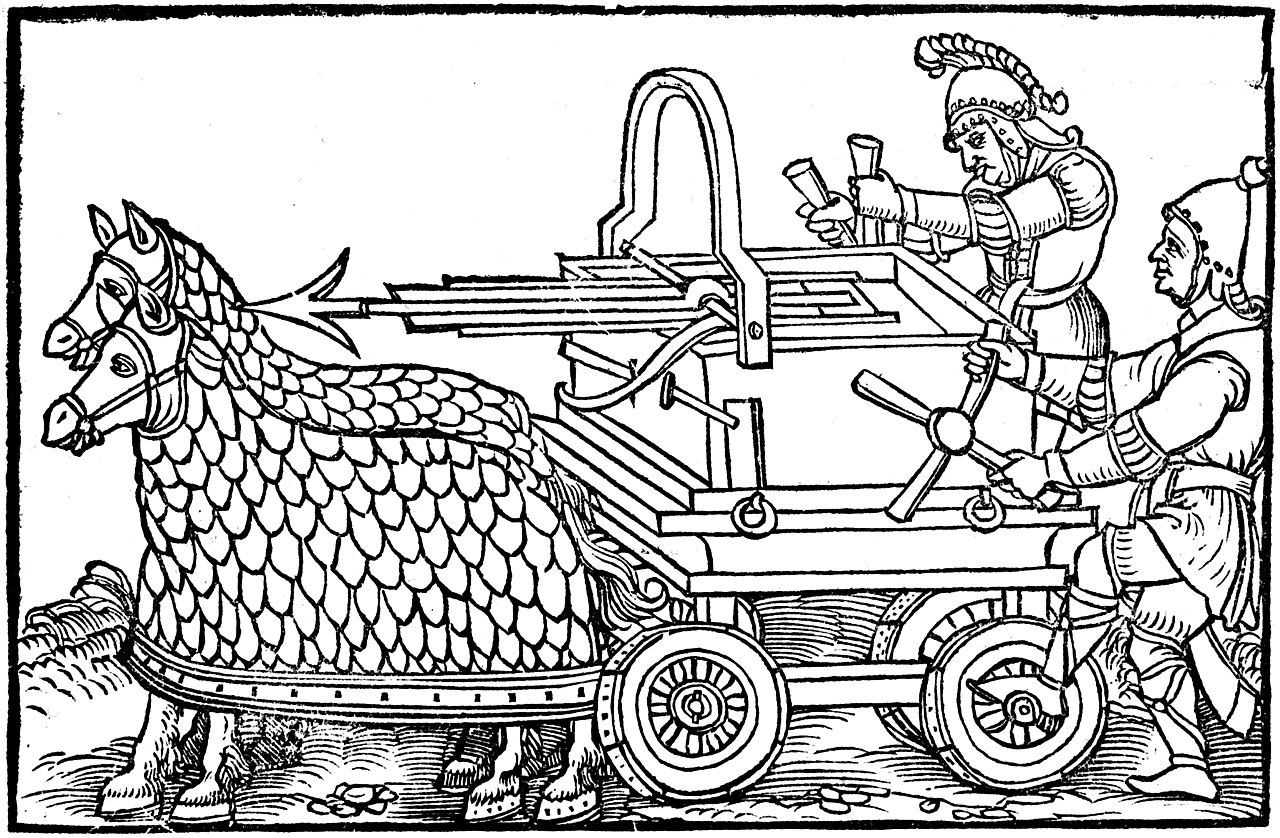
Archaeological and textual evidence indicates that crossbow-like weapons arose independently in several regions. The earliest well-documented development occurred in ancient China by the late Zhou period (roughly the 6th century BCE), where mechanical spanning and trigger mechanisms were refined and widely adopted in warfare. In the Mediterranean world a distinct type of crossbow appeared later and was adapted by Hellenistic and Roman engineers; Roman sources refer to bolt-throwing torsion and arcuballista devices used for both siege and field applications. During the medieval period in Europe the hand-held crossbow became prominent as a military and hunting weapon and was the subject of social and legal restrictions in some areas due to its armor-piercing potential.
Military and civilian uses
Historically the crossbow served both military and hunting roles. Its main advantages were the power it could deliver from a compact platform and the relatively low level of marksmanship training required to use it effectively. These features made it attractive for defending fortifications, ambushes and hunting large game. Over time, developments such as the repeating crossbow in China and mechanical spanning aids in Europe altered how it was employed on the battlefield. In modern times, crossbows are used primarily for sport shooting, hunting under regulated conditions, historical reenactment and experimental archaeology.
Performance, advantages and limitations
Compared with traditional bows, crossbows offer several trade-offs. Advantages include easy aiming from a supported position, high initial projectile energy from compact designs, and a faster learning curve for basic accuracy. Limitations include slower rate of fire because of cocking time, greater weight in heavier war-style models, and in some cases reduced effective range compared with specially trained longbowmen. Mechanical spanning devices such as cranks and windlasses were developed to address the physical effort needed to draw powerful prods.
Modern context and distinctions
Today crossbow shooting is regulated and practised as a sport in many countries and appears in organized competitions and clubs. Modern materials—fiberglass, carbon, steel and synthetic stocks—have improved reliability and consistency. Legal frameworks distinguish crossbows from other firearms and bows for hunting and safety reasons, and many contemporary crossbows incorporate sights, stirrups, safeties and anti-dry-fire mechanisms. For further technical details and historical sources see resources linked here: technical overview, trigger mechanisms, China, Han dynasty, Song dynasty, Middle Ages, longbow, modern sport.
Questions and answers
Q: What is a crossbow?
A: A crossbow, or arbalest, is a bow which consists of a bow-like arc called prod and cross-wise body called stock and trigger mechanism. The stock, a piece of wood is mounted on two other crossing pieces. Crossbows shoot short arrows called bolts which are similar to arrows.
Q: When was the crossbow first created?
A: The crossbow was first created by the Chinese people in circa 6 B.C., during the Warring States period.
Q: Who else invented the crossbow?
A: The Greeks invented their own version of the crossbow in 4th century B.C., which they called arcuballista.
Q: Why was the crossbow so popular in the Middle Ages?
A: The crossbow was very popular in the Middle Ages as it was strong and accurate and could be used as a sharpshooter weapon, making it highly sought after by many armies at that time.
Q: How powerful can a good quality crossbow be?
A: A good quality crossbow can shoot its bolt with immense power that may even pierce armour, making it lethal against unarmoured light opponents with just one shot.
Q: What are some advantages and disadvantages of using a crossbow compared to an ordinary bow?
A: Compared to an ordinary bow, a crossbow fires much stronger and more accurately than an ordinary bow, making shooting accurately easier to learn; however, due to its short prod being very stiff, it takes much longer time to load than an ordinary bow and does not have as good accurate range than a longbow.
Q: Are there any safety mechanisms built into modern daycrossbows?
A: Yes, many modern daycrossbows have crank or windlass mechanisms to pull the string in drawn position as well as safety mechanisms to prevent accidental shots from occurring when loading them up for use.
Tags
Related articles
Author
AlegsaOnline.com Crossbow: design, history, and uses Leandro Alegsa
URL: https://en.alegsaonline.com/art/24338