
Yusef Lateef (1920–2013)
American jazz multi-instrumentalist, composer and educator known for blending jazz with non-Western music; Grammy winner and prominent voice in the Ahmadiyya community.
Overview
Yusef Lateef (born William Emanuel Huddleston, October 9, 1920 – December 23, 2013) was an American performer and teacher who made major contributions to modern jazz. As a multi-instrumentalist and composer, he combined improvisation with careful attention to timbre and form, exploring musical ideas drawn from many parts of the world.
Image gallery
2 Images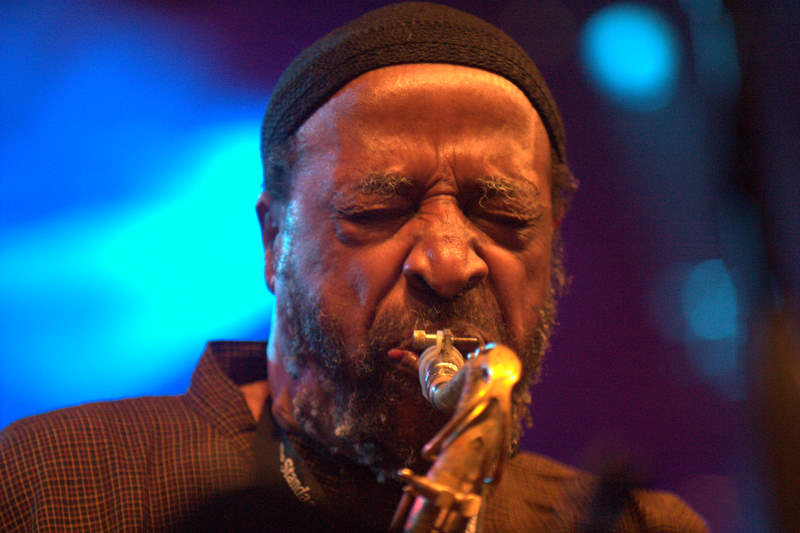

Early life and identity
Born in the southern United States, Lateef adopted his professional name after converting to an Islamic faith tradition in the mid-20th century. He retained a lifelong interest in education and in communicating musical ideas to broader audiences through performance, lectures and recordings.
Instruments and musical approach
Lateef is best known for his work on the tenor saxophone and the flute, but he also used less common woodwinds in jazz such as the oboe and the bassoon. He explored alternative scales, microtonal inflections and rhythmic patterns drawn from Eastern and other non-Western musical systems, seeking new timbral combinations and extended techniques rather than simple stylistic pastiche.
Career and recordings
Over several decades Lateef led ensembles, recorded prolifically and worked with a wide range of musicians. His recordings mixed standards, originals and experimental pieces that emphasized modal improvisation and cross-cultural instrumentation. His work broadened perceptions of what instruments and sounds were appropriate in jazz and influenced later artists interested in world-music fusion. He received recognition including a Grammy Award, a late-career honor that acknowledged his long-standing contributions.
Teaching, writing and outreach
Lateef taught workshops, gave lectures and participated in educational programs that promoted close listening and an appreciation for diverse musical practices. He wrote and spoke about technique, improvisation and the philosophical dimensions of music, encouraging students to study sound beyond conventional boundaries and to learn from sources outside the Western classical tradition.
Religion and public life
Following his conversion in 1950 he became associated with the Ahmadiyya movement and identified with Islam in public statements. He discussed faith as part of his broader identity and sometimes reflected on spiritual themes in interviews and program notes, connecting musical practice with ethical and philosophical ideas.
Honors and influence
- Recognition for innovation in instrumentation and form, cited by critics and fellow musicians.
- Influence on later generations of improvisers and composers seeking to integrate global musical elements into jazz.
- Lifetime accolades including a Grammy Award that highlighted his enduring career.
Later years and legacy
Lateef lived into his early nineties and remained intellectually active until his final years. He died at age 93 in Shutesbury, Massachusetts. Reports of his illness mention he had suffered from prostate cancer. Today he is remembered for expanding the sonic possibilities of jazz, legitimizing uncommon woodwinds in improvised music, and for a pedagogical approach that urged musicians to listen widely and study global musical ideas.
Author
AlegsaOnline.com Yusef Lateef (1920–2013) Leandro Alegsa
URL: https://en.alegsaonline.com/art/133244