
Louis Riel: Métis leader, Red River and North‑West resistances
Louis Riel (1844–1885), Métis political leader who led the Red River and North‑West resistances, helped create Manitoba and remains a contested figure in Canadian history.
Overview
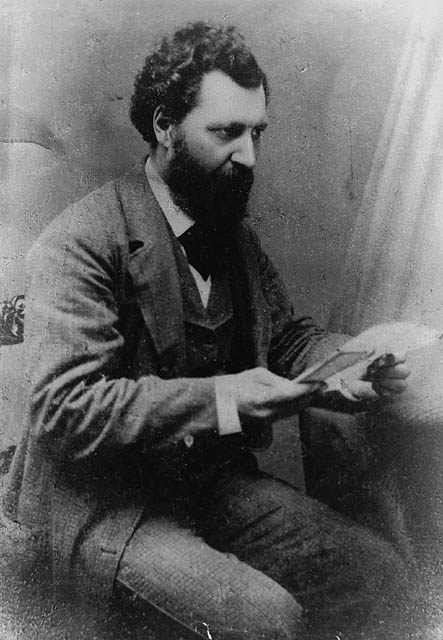
Louis David Riel (22 October 1844 – 16 November 1885) was a central figure in 19th‑century Canadian history. A Métis leader, schoolteacher and political organizer, he led two major uprisings against the government of the Province of Canada and later the Dominion of Canada. Riel helped bring about the creation of the province of Manitoba through the Red River Resistance (1869–1870) and later became the focus of the North‑West Rebellion (1885). He is variously described as a politician, a champion of Métis rights and culture, a controversial rebel and, to many, a Canadian folk hero.
Image gallery
10 Images




Origins and leadership
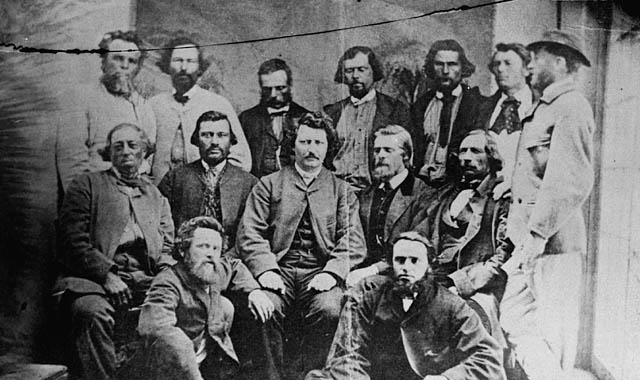
Born in the Red River settlement (near present‑day Winnipeg), Riel belonged to the Métis, a people of mixed Indigenous and European ancestry with a distinct language, culture and landholding practices. Riel rose to prominence as a spokesperson for Métis grievances over land, legal recognition and language rights after Canada purchased Rupert’s Land from the Hudson’s Bay Company. He organized a provisional government in 1869–1870 to negotiate terms for entering Confederation and to protect Métis interests during the transfer of authority to Ottawa.
Red River Resistance and Thomas Scott
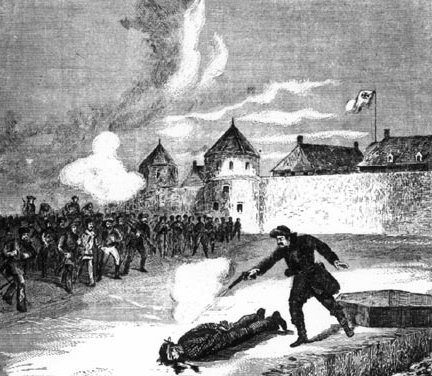
The Red River episode resulted in negotiations that led to Manitoba joining Canada in 1870 and brought Riel temporary national prominence. During that crisis tensions between English Protestant settlers and the French‑speaking Métis escalated. One notable and enduring episode was the arrest, trial and execution of Thomas Scott by a Métis provisional court. Scott’s conduct in captivity antagonized the English‑speaking community, especially in Ontario, where many viewed his death as murder. The execution—carried out by a firing squad—intensified calls in Ontario for government action and contributed to Riel’s reputation as an outlaw among his opponents.
Exile, return and the North‑West Rebellion
After the Red River events Riel spent periods in exile and in the United States; he struggled with personal and mental health challenges that contemporary observers discussed at length. He was elected to the federal House of Commons several times but never took his seat because of legal and political obstacles. In 1884–1885 mounting Métis and Indigenous frustrations in the Saskatchewan district prompted Riel to return and take up leadership of a new resistance. The resulting North‑West Rebellion brought him into direct conflict with the federal government of Sir John A. Macdonald and Canadian troops. The rebellion was suppressed by military force and Riel was captured.
Trial, execution and legal controversy
Riel was tried in Regina in 1885 on charges of high treason. His defense raised questions about his mental state; the jury ultimately convicted him and he was sentenced to death. His execution on 16 November 1885 made him a martyr in some communities and a convicted traitor in others. Historians and legal scholars have debated the fairness of the trial, the political pressures on judicial proceedings, and the extent to which regional and linguistic divisions in Canada shaped both public reaction and government policy.
Legacy and interpretations
Riel’s legacy is complex. For many Métis and others he symbolizes resistance to marginalization and a struggle for recognition of language, land and cultural rights. For others at the time he epitomized rebellion against legitimate authority. Over the 20th and 21st centuries, public perception shifted significantly: Riel has been reinterpreted in political history, literature and commemoration as a founder of Manitoba and a leader who sought to defend his people’s rights. His life is often discussed in relation to Indigenous rights, settler colonialism and the development of Canadian federal institutions.
Key facts and notable points
- Birth and death: 22 October 1844 – 16 November 1885.
- Leader of the Red River Resistance (1869–1870) and the North‑West Rebellion (1885).
- Instrumental in negotiations that led to the formation of the province of Manitoba and protections for Métis land claims.
- Execution followed a treason trial; the case remains a subject of historical debate over justice and political context.
- Riel is central to discussions about Métis rights, Canadian nation‑building and the treatment of Indigenous peoples; he has been described as a Métis leader, an elected representative, and a controversial national figure.
Scholars continue to reassess Riel’s life and the events around him, recognizing both his role in creating political space for the Métis and the deep divisions his actions provoked within a young Canada. For additional context on his political activity and the broader events, see primary historical collections and modern syntheses of Canadian history and Indigenous studies (political biography, resistance studies, legal history, military campaigns, and regional reactions).
Related articles
Author
AlegsaOnline.com Louis Riel: Métis leader, Red River and North‑West resistances Leandro Alegsa
URL: https://en.alegsaonline.com/art/125400