
Boa constrictor: biology, range, behavior, and relations with people
Overview of the boa constrictor: a non-venomous boid of the Americas, its appearance, distribution, behavior, reproduction, taxonomy, interactions with people, and conservation considerations.
Boa constrictor is a large, non-venomous member of the family Boidae and one of the best-known constricting snakes. The common name is the same as the scientific name, which sometimes causes casual confusion; see general material on the species concept for context. Boa constrictors show considerable variation in size, build and coloration, and they occupy a wide geographic area across mainland and island landscapes.
Image gallery
5 Images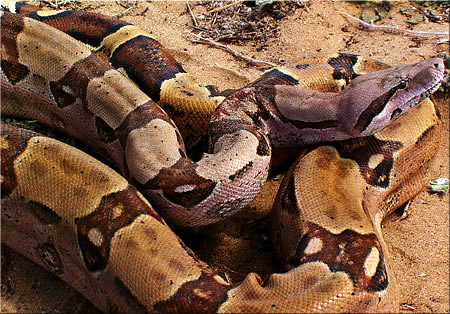
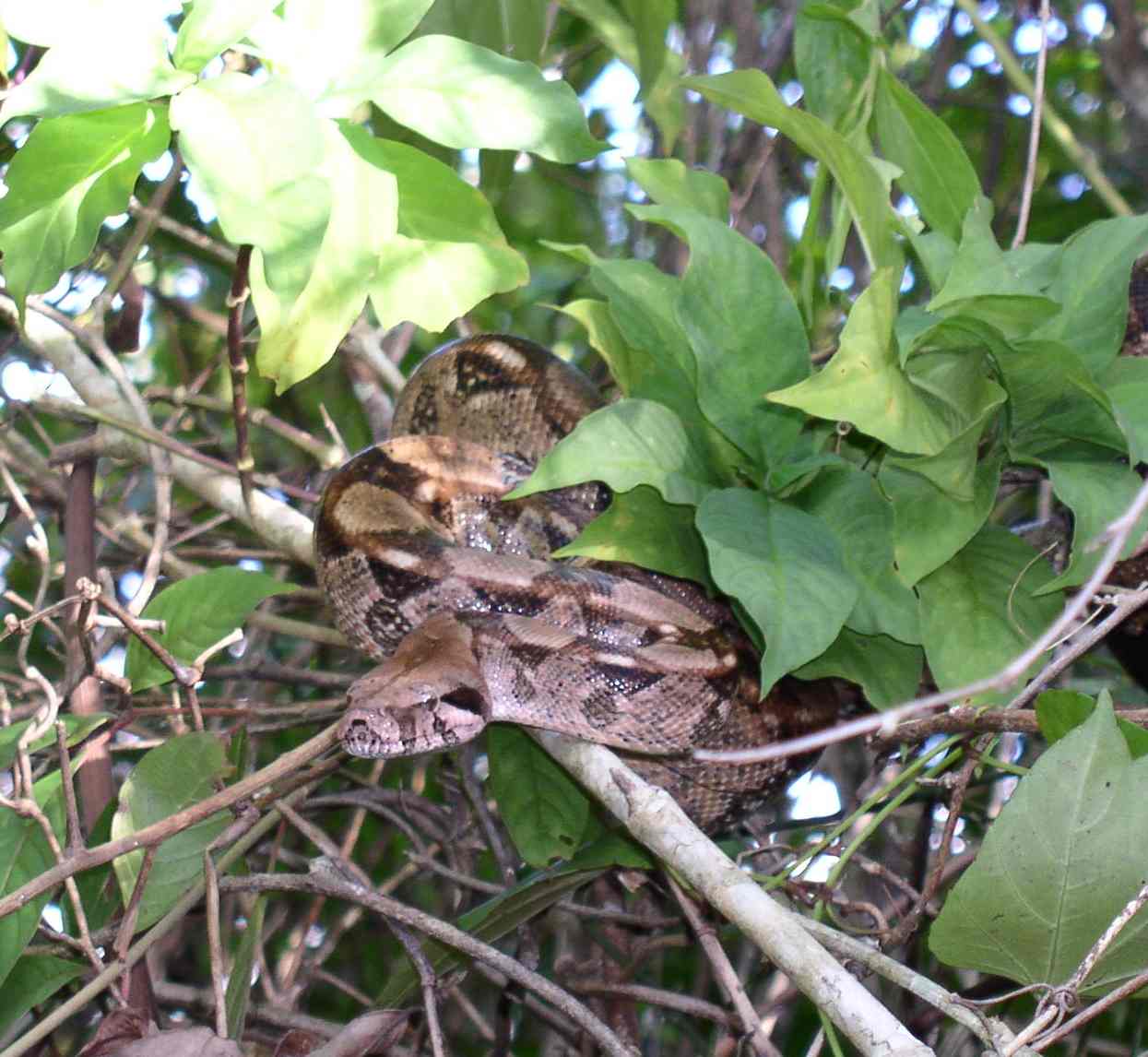
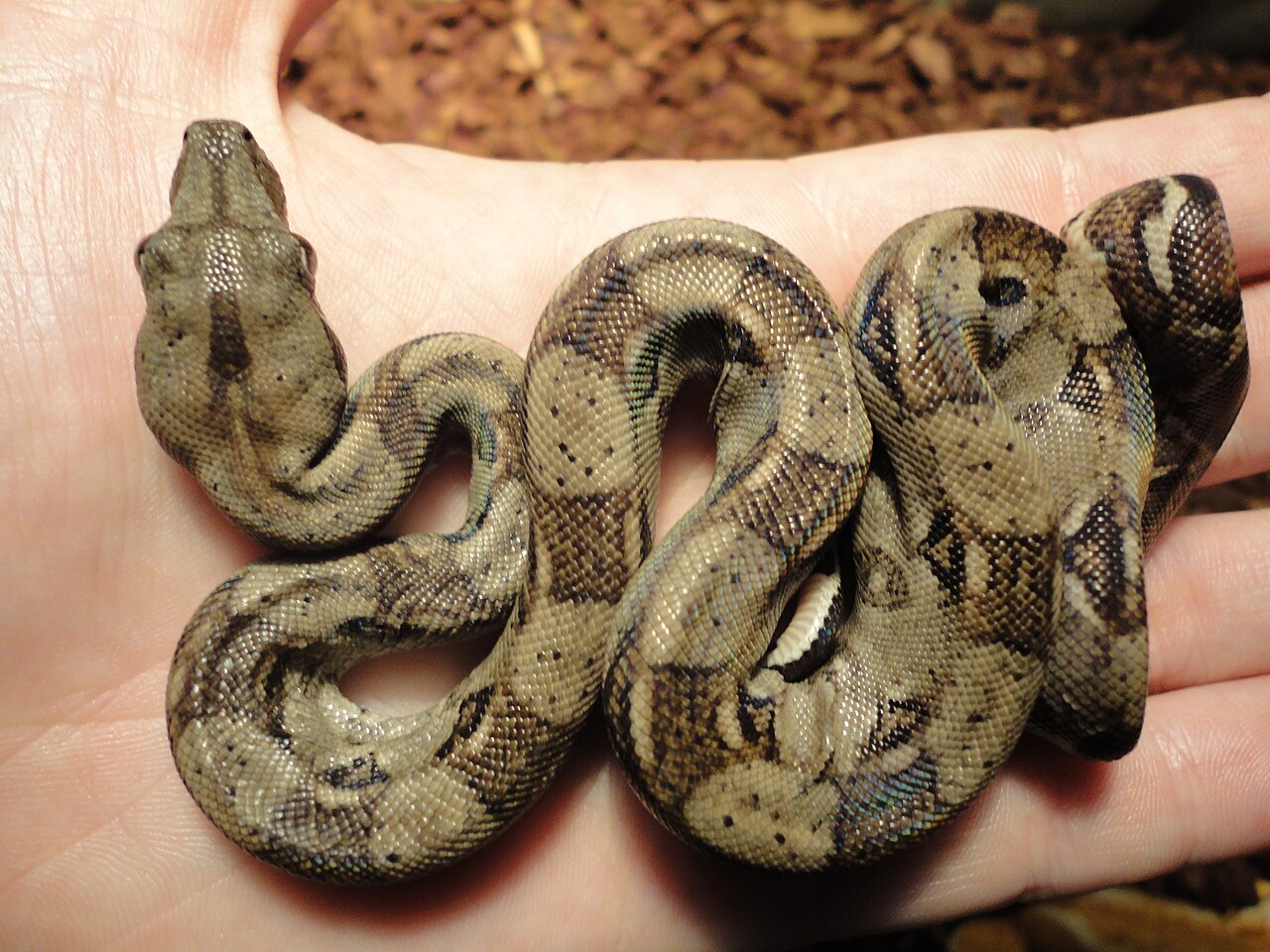

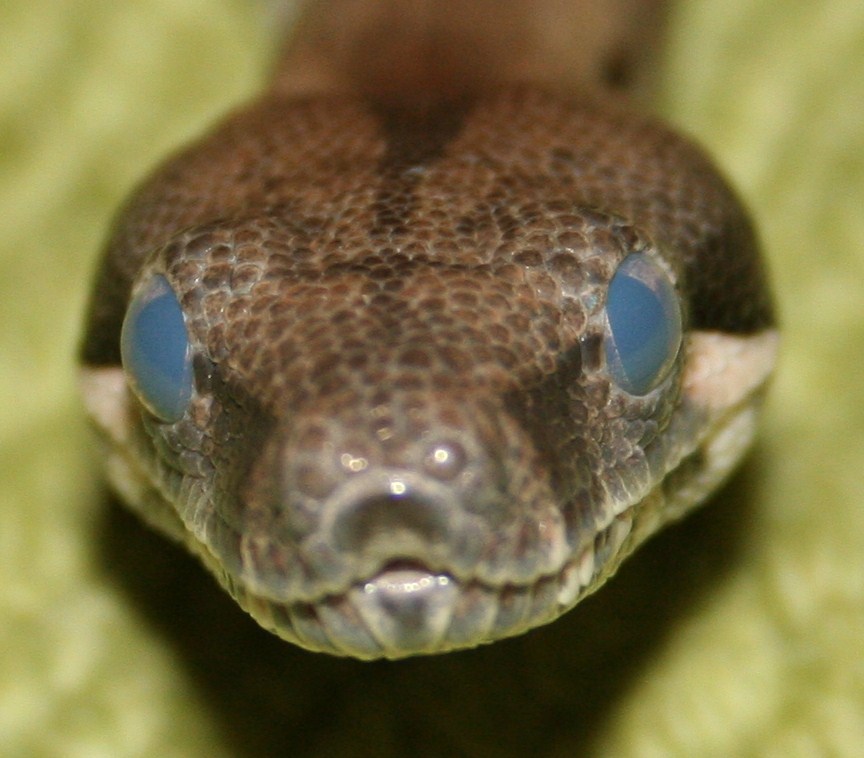
Physical characteristics
Boa constrictors have stout, muscular bodies adapted for subduing prey by constriction. Adults commonly measure around 2 to 4 metres in total length, though size varies with locality and sex and some individuals may be larger or smaller. Coloration ranges from pale tan through brown to reddish tones, with darker saddle-shaped markings along the back; regional differences in color and pattern are pronounced and useful for field identification. They possess heat-sensitive facial pits that aid in detecting warm-blooded prey, and keeled or smooth scales depending on the population.
Range and habitat
The species occurs throughout much of Central America and South America and is present on several Caribbean islands. Habitats include tropical rainforest, dry forest, savanna, scrub, and human-modified areas such as agricultural edges and plantation habitats. Many populations use both terrestrial and arboreal niches: juveniles are frequently more arboreal while adults spend more time on the ground, though adults may climb to ambush prey or escape threats.
Behavior, diet and reproduction
Boa constrictors are primarily nocturnal or crepuscular hunters that take mammals, birds and occasionally reptiles, with prey size scaling to the snake’s own size. They capture prey by bite and constriction—coiling around the quarry until it is subdued—then swallow it whole. Reproduction is ovoviviparous: females retain eggs internally and give birth to live young. Litter sizes vary by individual and region, ranging from a few young to several dozen. Lifespan in captivity commonly exceeds a decade and often reaches or surpasses twenty years with proper care.
Taxonomy and variation
Taxonomists have long recognized multiple geographically distinct forms within Boa constrictor. Traditional treatments listed around ten named subspecies, though taxonomic revisions and genetic studies have prompted reassessment of some populations; work on relationships within the group continues in herpetological literature. Local populations can differ in scale counts, color pattern and body proportions.
Human interactions and conservation
Boa constrictors play an ecological role as mid-to-top-level predators that help control rodent populations. They are also frequently encountered in the exotic pet trade: many are captive-bred and popular among hobbyists because of their size, striking patterns and generally tractable temperament. Responsible ownership requires secure, appropriately sized housing, temperature and humidity control, and long-term commitment. Wild populations face threats from habitat loss, persecution, hunting and unsustainable collection; the species is subject to international and national trade and nomenclature regulations in many areas and regional conservation status varies. For general family- and species-level information consult resources on the Boidae and the boa constrictor specifically.
- Notable facts: heat-sensing pits aid nocturnal hunting; live birth (ovovivipary) is typical; color and pattern are highly variable across the range (pattern overview).
- Care and research: widely studied in herpetology and common in private collections; consult regional field guides and specialists before attempting handling or collection.
- Further reading: regional faunal lists and museum pages provide occurrence records for Central America, South America and specific island populations; taxonomic notes and current subspecies lists are available through specialist publications (Caribbean records, subspecies summaries).
For identification, husbandry, or conservation actions consult peer-reviewed studies, regional field guides and authoritative databases. Local experts and government wildlife agencies can provide up-to-date legal and conservation guidance for particular populations.
Questions and answers
Q: What type of snake is a Boa constrictor?
A: Boa constrictor is a non-venomous Boa species.
Q: Where can Boa constrictors be found?
A: Boa constrictors are found in Central and South America, and on some islands in the Caribbean.
Q: What is the common name for Boa constrictor?
A: The common name for Boa constrictor is the same as the scientific name, which is unusual.
Q: Can the color pattern of a Boa constrictor's skin vary?
A: Yes, the color pattern of a Boa constrictor's skin can vary considerably.
Q: How big can Boa constrictors grow?
A: Boa constrictors can grow to a large size.
Q: How many subspecies of Boa constrictor exist?
A: There are ten subspecies of Boa constrictor.
Q: Are Boa constrictors venomous?
A: No, Boa constrictors are non-venomous.
Related articles
Author
AlegsaOnline.com Boa constrictor: biology, range, behavior, and relations with people Leandro Alegsa
URL: https://en.alegsaonline.com/art/12444
Sources
- itis.gov : "Boa constrictor"