
Bongo (antelope)
A large, forest-dwelling antelope with spiral horns in both sexes. Two subspecies — lowland (western) and mountain (eastern) — occupy African forests; the mountain bongo is critically endangered.
Overview
The bongo (Tragelaphus eurycerus) is a distinctive, primarily nocturnal forest antelope native to Africa. Recognizable by its deep chestnut coat marked with thin white stripes and long, spiraled horns present in both sexes, the bongo is one of the largest species adapted to dense forest habitats. Its secretive habits and flattened, rounded ears suit life in shaded, vegetated areas. Learn more about its nocturnal behavior here.
Image gallery
10 Images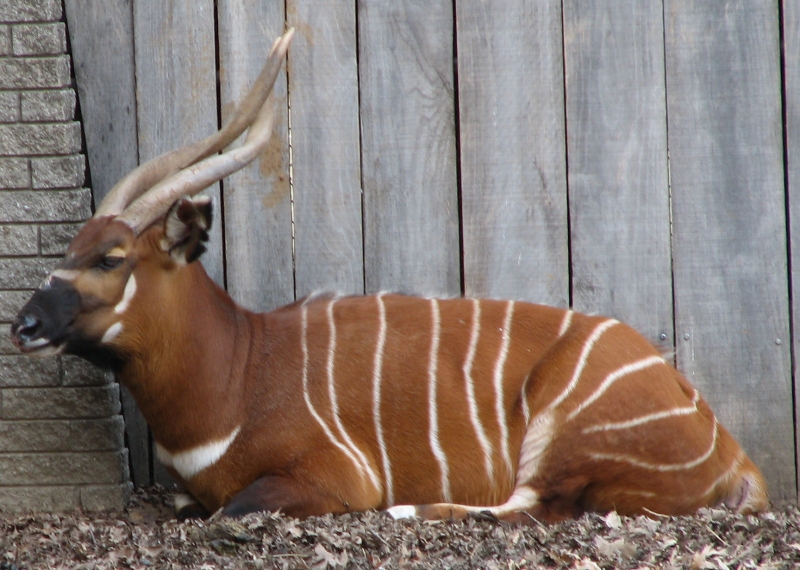


Description and behavior
Bongos are built for movement through undergrowth: they have strong, muscular bodies, long legs, and broad hooves. Both males and females grow horns; males typically have thicker, heavier horns. Their coloration and vertical white stripes provide camouflage in the dappled light of the forest. Bongos are largely browsers and feed on a variety of plants, leaves, shoots, bark and fruits rather than grazing on grass—see notes on their plant-based diet here.
Subspecies and geographic range
There are two commonly recognized subspecies. The western, or lowland bongo, inhabits tropical and submontane forests across parts of Central and West Africa. The eastern, or mountain bongo, occupies montane forests and is known in the wild only from areas of Kenya. Both subspecies rely on forested landscapes and are absent from open savanna. For general information on African forest habitats, see this resource.
Conservation status and threats
The lowland bongo faces population pressures and is considered near threatened in many assessments; the mountain bongo is critically endangered and has experienced severe declines. Primary threats include habitat loss and fragmentation, poaching for meat or trophies, and disease. Conservationists have focused on habitat protection, anti-poaching measures, and managed breeding programs to prevent local extinctions. For listings and conservation priorities, consult this reference.
Importance, captivity, and recovery efforts
Bongos are kept in zoos and breeding centers worldwide, where captive populations contribute to research, education, and reintroduction planning. Successful conservation requires protecting forest corridors, engaging local communities in stewardship, and coordinating in-situ and ex-situ programs. While captive herds can maintain genetic stock, restoring secure, connected forest habitat is essential for long-term survival of both subspecies.
- Key features: spiral horns in both sexes, striped chestnut coat, large forest antelope.
- Main threats: habitat loss, hunting, small isolated populations.
- Conservation focus: habitat protection, anti-poaching, captive breeding.
Related articles
Author
AlegsaOnline.com Bongo (antelope) Leandro Alegsa
URL: https://en.alegsaonline.com/art/12889
Sources
- iucnredlist.org : "Tragelaphus eurycerus"