
Boidae: the boa family of nonvenomous constricting snakes
Boidae is a family of nonvenomous snakes known as boas. This article summarizes their appearance, behavior, distribution, taxonomy, ecological role, and relationships to other snakes.
Overview — Boidae, commonly called boas or boids, is a family of generally large, nonvenomous snakes noted for killing prey by constriction. Members include well-known forms such as the boa constrictor and the anaconda. These snakes are distributed mainly through the Americas, but representatives also occur in parts of Africa, Asia, Europe and on some Pacific islands. The family is often cited in field guides and the pet trade as one of the most familiar groups of large serpents (Boidae, snakes).
Image gallery
10 Images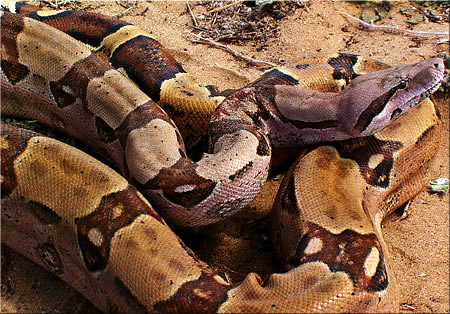




Physical characteristics
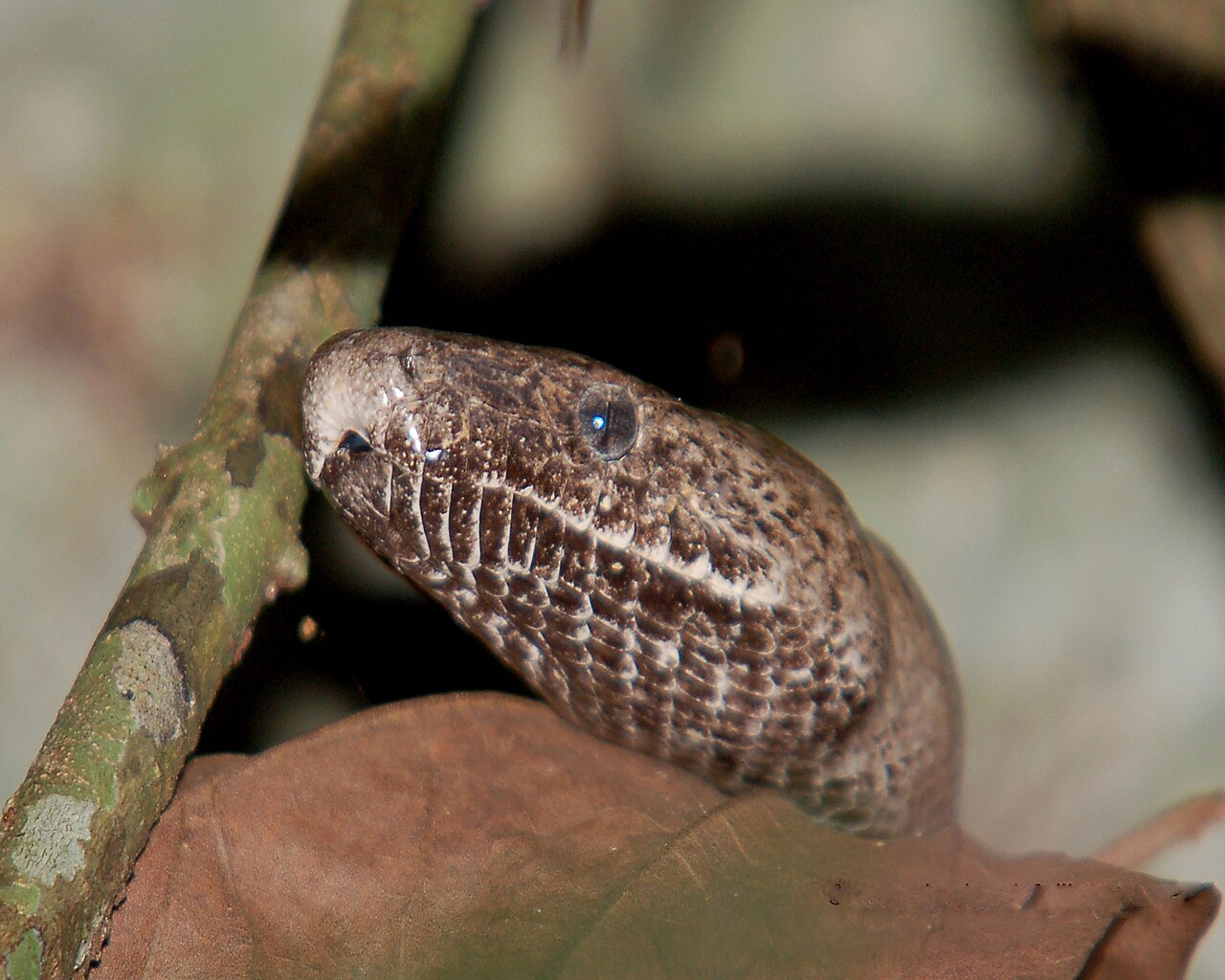
Boids range from medium-sized, stout snakes to very large species. A few general traits are typical: they are nonvenomous, give birth to live young rather than laying eggs in most cases, and many retain small pelvic spurs — vestiges of hind limbs — visible near the cloaca. Sexual dimorphism is common, with females often exceeding males in size. Ecological specializations vary: some are primarily arboreal, others terrestrial, and several are semi-aquatic.
Taxonomy and diversity
The family has been treated in different ways by taxonomists. Traditionally Boidae is subdivided into two subfamilies, encompassing roughly eight recognized genera and on the order of forty to fifty species. Molecular studies over recent decades have refined relationships within the group and with other snake families, leading to reassignment of some taxa and clearer understanding of evolutionary splits.
Natural history and distribution
Boids inhabit a wide range of habitats from tropical forests and wetlands to arid scrub and island ecosystems. Their geographic spread reflects ancient biogeographic events and the capacity of some lineages to disperse across water or via land connections. As predators they feed mainly on mammals, birds and occasionally other reptiles; larger species can take sizeable prey relative to their own mass.
Human interactions and conservation
Several boa species are popular in the exotic pet trade and appear frequently in cultural material. Their ability to control rodent populations gives them ecological importance, but habitat loss, hunting, and collection for trade threaten some populations. Conservation measures vary by region and species, and monitoring often relies on both field surveys and captive-breeding programs.
Notable distinctions
- Reproduction: boids are generally viviparous (live-bearing), contrasting with many pythons that lay eggs and may brood them.
- Anatomical: pelvic spurs are a distinguishing feature linked to their evolutionary history.
- Ecology: some genera are adapted to water (for example, anacondas) while others are specialist burrowers or tree-dwellers.
For further reading on classification, life history, and species accounts, see specialized resources and reviews under the family name Boas and related entries (Boidae, genera, species). Additional region-specific information is available through field guides and faunal surveys covering the Americas, Africa, Asia, Europe and Pacific islands.
Tags
Related articles
Author
AlegsaOnline.com Boidae: the boa family of nonvenomous constricting snakes Leandro Alegsa
URL: https://en.alegsaonline.com/art/12710
Sources
- itis.gov : "Boidae"