
Bobcat (Lynx rufus): North American wild cat
Overview of the bobcat, its appearance, behavior, habitat, ecological role, relationship to lynx, and interactions with people across North America.
The bobcat (Lynx rufus) is a medium-sized wild cat native to much of North America. Recognizable by its short, "bobbed" tail, spotted coat and tufted ears, it occupies a wide variety of environments from forests and swamps to mountains, prairie and some desert regions. Generally most active at dawn and dusk, the bobcat is a solitary, adaptable predator whose presence influences prey populations and local ecosystems.
Image gallery
10 Images

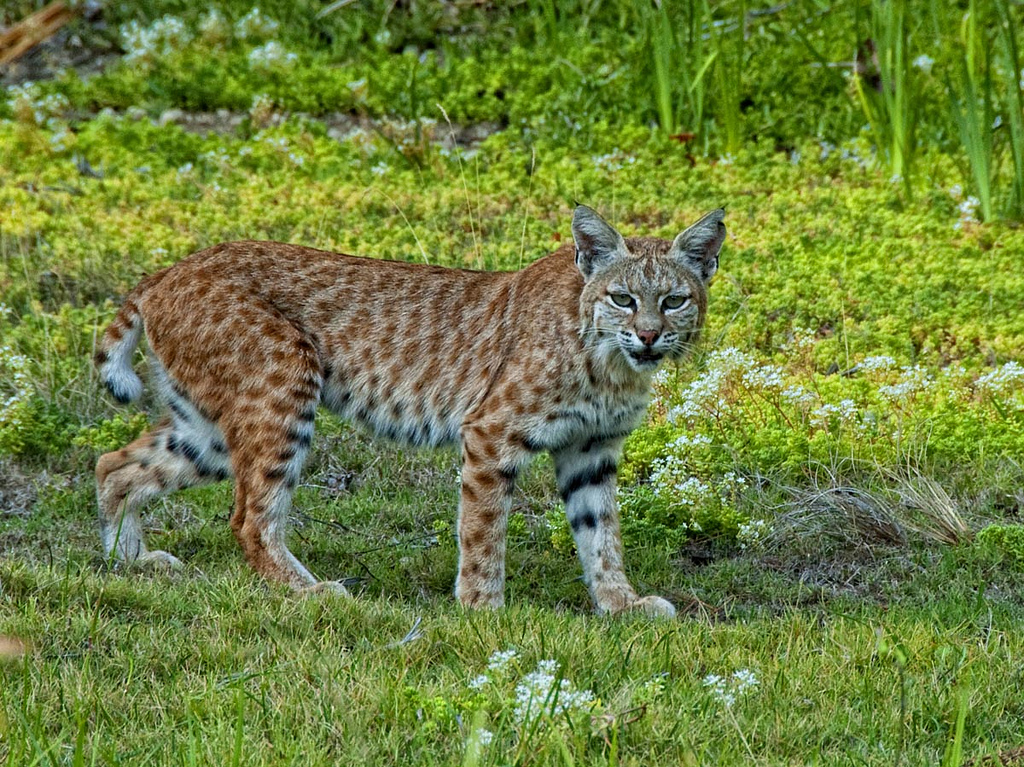


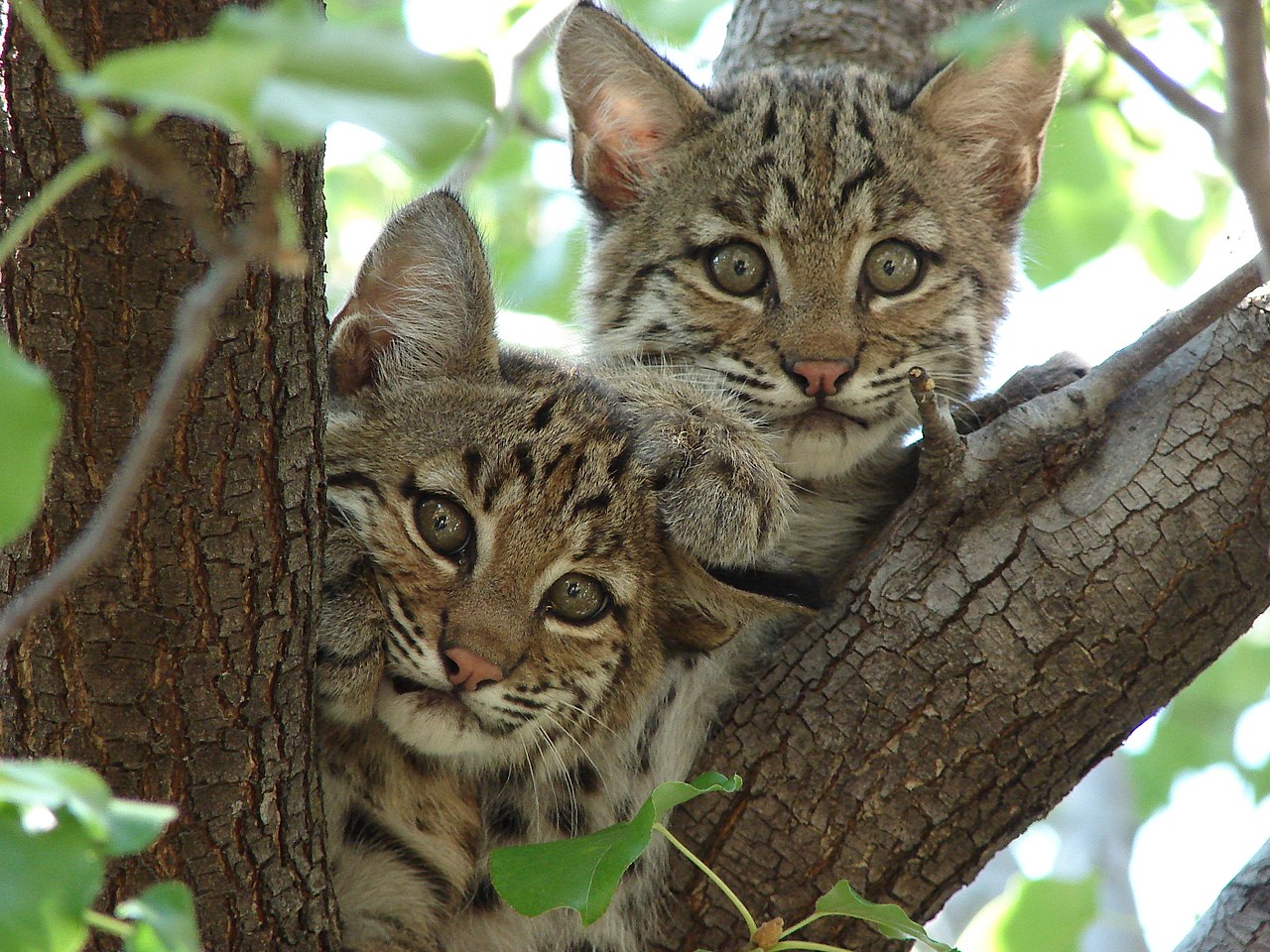

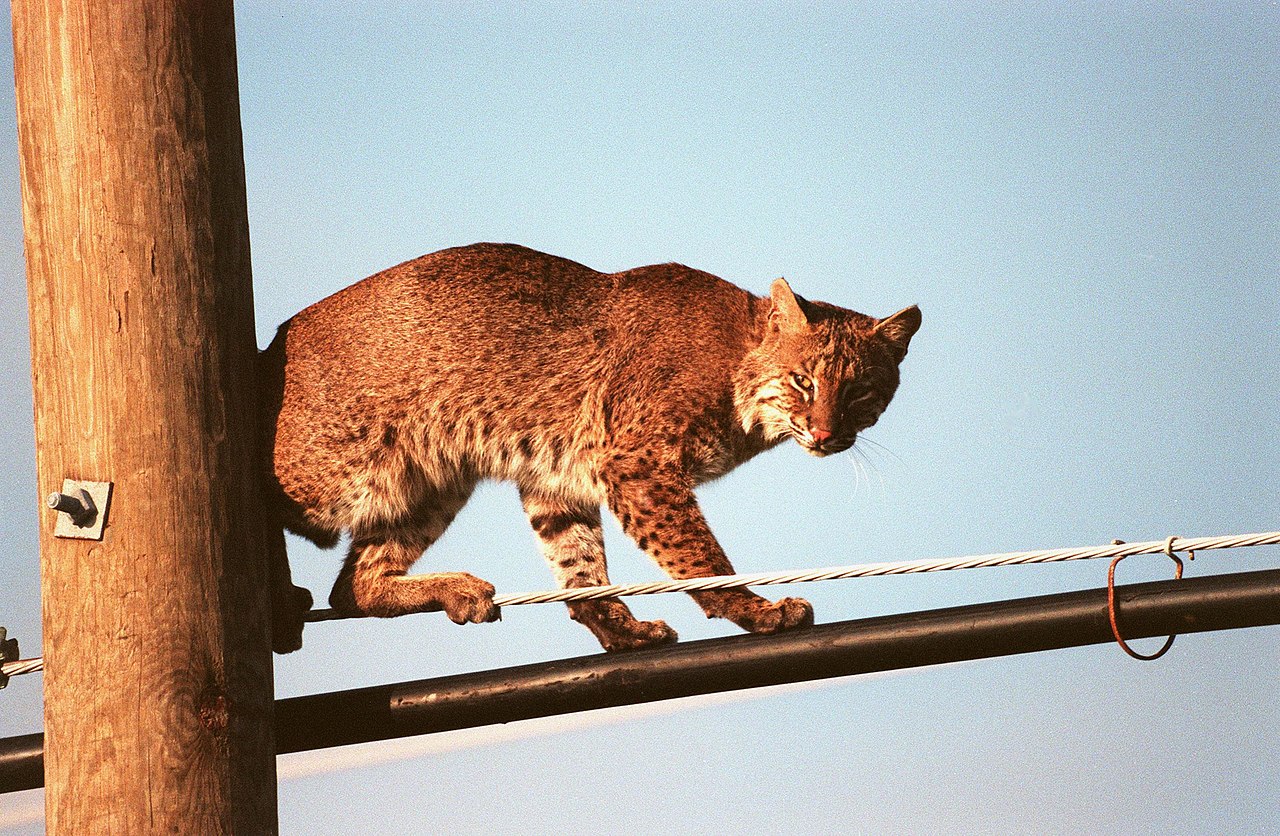

Physical characteristics and behavior
Bobcats are larger than most domestic cats but smaller than true lynxes. Their fur is usually a mix of brown and buff with darker spotting or streaking that provides camouflage. Distinctive features include a short tail with a black tip, pointed ears often with small tufts, and powerful legs that allow climbing and stalking. They are capable swimmers. Activity patterns are primarily crepuscular and nocturnal; during the day they rest in dens such as rock crevices, hollow logs, or thick brush. For more species information see bobcat profile.
Habitat and range
Bobcats occupy diverse habitats across much of North America, including temperate forests, swamps and wetlands, mountainous areas and open desert edges. Their adaptability enables them to live near agricultural lands and fragmented landscapes as well as more remote areas. Distribution and regional ecology are discussed further at North American range resources and in habitat-focused summaries such as wetland and swamp studies or desert-edge ecology.
Diet, reproduction and life cycle
Bobcats are carnivores that hunt small to medium-sized mammals and birds; rabbits, rodents and ground-dwelling birds make up much of their diet. They hunt by stalking and ambush, relying on concealment and short bursts of speed. Breeding usually occurs in late winter or early spring, with females raising a litter of kittens in sheltered dens. In the wild bobcats commonly live for around a decade, though some individuals may live longer under favorable conditions.
Ecological role and human interactions
As mid-sized predators, bobcats help regulate populations of prey species and contribute to ecosystem balance. They occasionally prey on poultry or small livestock, which can bring them into conflict with people. Bobcats have been hunted and trapped historically for their fur and for population control, but in many places regulated management aims to balance human interests and conservation. For management and cultural aspects consult species management resources.
Distinctions and notable facts
- The species name rufus refers to its reddish-brown tones in some populations.
- Bobcats are closely related to the larger lynx; comparisons highlighting differences in size, paw width, ear tufts and snow adaptations can be found at lynx comparison.
- They are solitary and territorial, marking ranges with scent and scratch marks.
Overall, the bobcat is an adaptable and widespread carnivore whose secretive habits make it familiar in many regions yet often unseen. Conservation status varies locally; while not generally considered at risk across its whole range, habitat loss, vehicle collisions and trapping affect some populations and require ongoing monitoring and management.
Related articles
Author
AlegsaOnline.com Bobcat (Lynx rufus): North American wild cat Leandro Alegsa
URL: https://en.alegsaonline.com/art/12565
Sources
- iucnredlist.org : "Lynx rufus"
- species.wikimedia.org : Lynx rufus
- wikidata.org : Q131907
- animaldiversity.org : Lynx_rufus · web.archive.org
- eol.org : 328602
- gd.eppo.int : LYNXRU
- fs.fed.us : lyru
- fossilworks.org : 47824
- gbif.org : 2435246
- inaturalist.org : 41976
- irmng.org : 10199263
- itis.gov : 180582
- apiv3.iucnredlist.org : 12521