
Blister (skin lesion)
A blister is a fluid-filled sac that forms within the skin, usually from friction, heat, cold, or injury. This entry explains types, how blisters form, basic care, prevention, and when to seek medical help.
Overview
A blister is a visible, raised pocket of fluid that develops between layers of the skin. It most often contains clear serum or plasma but can sometimes hold blood when small blood vessels rupture. The fluid-filled sac serves as a protective cushion for the tissue beneath while that area heals. For a concise visual and technical reference see general blister information.
Image gallery
5 Images
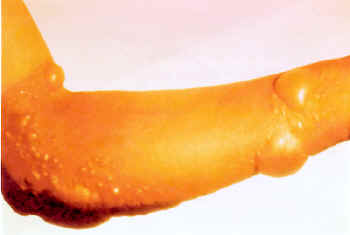


Causes and common types
Blisters arise when the skin is damaged and layers separate, allowing fluid to collect. Typical causes include:
- Friction from repetitive rubbing, especially on feet and hands (friction blisters).
- Thermal injury such as burns or scalds that produce burn blisters (burn-related blisters).
- Cold injury from freezing or frostbite that damages skin layers (frostbite blisters).
- Blisters from infections (viral or bacterial), allergic reactions, or autoimmune skin conditions; these may appear as many small vesicles or larger bullae.
- Blood blisters, where the pocket contains blood due to ruptured vessels (blood blister).
Anatomy and formation
Typical blisters are classified by size: small vesicles are usually under 5 millimetres and larger fluid-filled lesions are called bullae. Most contain clear fluid composed mainly of serum or plasma (serum, plasma) which helps nearby cells recover. The roof of the blister is made from outer epidermis and acts as a sterile barrier while new epidermal cells regenerate underneath.
Care and treatment
Simple measures often suffice: protect the blister with a padded dressing, avoid further friction, and keep the area clean. Intact blisters are usually best left unpunctured because the roof reduces infection risk. If a blister is large, painful, or in a location that prevents use of a limb, sterile drainage by a trained person can relieve pressure while preserving the overlying skin. If a blister breaks, wash with mild soap and water, apply an antiseptic if appropriate, and cover with a sterile dressing.
Prevention and when to seek help
Preventative steps include wearing well-fitting shoes, moisture-wicking socks, gloves for repetitive hand tasks, and protective padding on pressure points. See a clinician if a blister shows signs of infection (increasing pain, spreading redness, pus), if it follows a severe burn or chemical exposure, or if you have a condition that impairs healing. For more clinical guidance and images refer to cold injury resources and burn care information.
Notable distinctions
Not all raised fluid lesions are the same: small grouped vesicles are often viral, whereas single large bullae are more likely from friction or burns. Identify the cause by the lesion’s size, distribution, and recent activity or exposure. For patient-oriented guidance and additional references, consult friction blister care and a general clinical resource at this overview.
Related articles
Author
AlegsaOnline.com Blister (skin lesion) Leandro Alegsa
URL: https://en.alegsaonline.com/art/12195