
Burn (injury): causes, classification, treatment and prevention
An overview of burns—skin and soft-tissue injuries caused by heat, chemicals, electricity, cold, friction or radiation—covering types, severity assessment, first aid, medical care and prevention.
Overview
A burn is a tissue injury that most commonly affects the skin and, in deeper cases, underlying flesh. Burns result when the body is exposed to extreme heat, intense cold, electrical current (electricity), corrosive substances, damaging friction or ionizing radiation. Globally, the most frequent causes are scalds from hot liquids, contact with hot surfaces and flames. Social and occupational factors influence who is affected; for example, use of open fires or unsafe stoves raises risk in some communities, while certain workplaces increase exposure among men. Substance use such as alcoholism and habits like smoking also contribute to burn incidents, and burns may occur in contexts of self-harm or interpersonal violence.
Image gallery
8 Images



Classification and severity
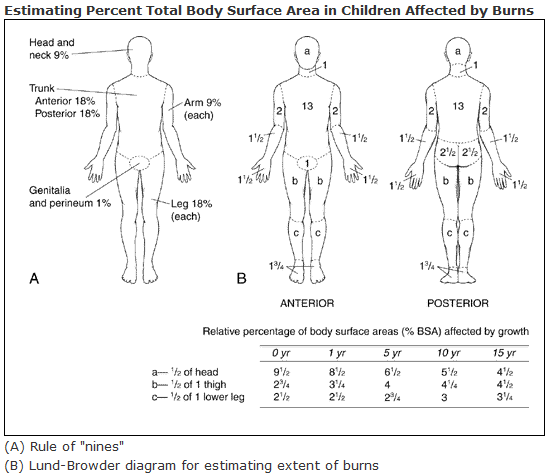
Clinicians describe burns by depth and extent. Depth categories—commonly called first, second and third degree—reflect whether only the outer layer of skin, the deeper skin layers, or full thickness through skin and into fat and muscle are involved. Extent is measured as the percentage of total body surface area affected; smaller proportions may be managed conservatively, while larger burns can produce systemic effects. Children are considered at risk when roughly five percent of their skin is burned; adults tolerate somewhat larger percentages—traditionally around ten percent—before systemic care is usually required. Large or deep burns can provoke whole‑body responses such as circulatory shock, inflammatory complications and infectious risks including sepsis.
Signs, immediate care and first aid
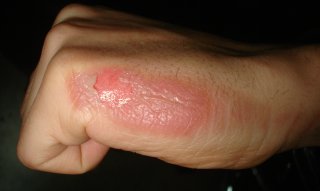
Visible signs range from redness, pain and blistering to charred or painless leathery skin. First aid priorities are to remove the person from the cause, stop the burning process and protect the airway and circulation. Cooling the area with cool running water (not ice) and removing tight clothing or jewelry can limit injury. Covering the wound with a clean, nonadhesive dressing and seeking prompt evaluation is important. Deep, large, circumferential limb burns, electrical injuries or burns involving the face, hands, feet, genitals or major joints warrant urgent professional assessment and may be a medical emergency. Severe burns can be fatal if not treated; in some cases they lead to death.
Medical management
Treatment depends on depth and extent. For minor superficial burns outpatient care and topical dressings may suffice. More extensive injuries require fluid resuscitation, pain control, wound cleaning and debridement, and sometimes hospitalisation in a burn centre. Surgical options include excision of nonviable tissue and skin grafting to promote healing and reduce scarring. Rehabilitation—physical therapy, occupational therapy and scar management—helps restore function and appearance. Infection prevention, nutritional support and psychological care are also central to recovery.
Complications and prognosis
Complications include infection, contractures (loss of mobility where scars tighten), chronic pain, pigment changes and emotional trauma. Outcome depends on burn depth, total body surface area involved, patient age and coexisting conditions. Early, appropriate care reduces complications and improves long‑term function.
Prevention and public health
Effective prevention combines education, safer equipment and environmental measures: safer cooking appliances, smoke alarms, workplace training, flame‑retardant materials and restrictions on hazardous chemicals. Reducing risk factors such as alcoholism and ensuring safe work practices can lower incidence. Public health programs and legislation have reduced burns in many places, but the burden remains substantial where exposure to open fires or unsafe appliances persists. For more resources, consult clinical guidelines and safety agencies via links such as heat injury resources, cold exposure guidance or occupational safety pages like electrical safety, friction burn advice, radiation precautions, and community stove safety initiatives at stove safety. Additional information on emergency response and recovery can be found through trauma centers and burn associations (injury information, skin care, tissue repair, violence prevention, mortality data, emergency protocols, shock management, sepsis guidance).
- Key points: Burns vary by cause and depth; prompt first aid and specialized care reduce harm.
- Prevention focuses on safer environments, public education and reducing risky behaviours.
Related articles
Author
AlegsaOnline.com Burn (injury): causes, classification, treatment and prevention Leandro Alegsa
URL: https://en.alegsaonline.com/art/15485