
Blood draw (venipuncture): purpose, procedure, equipment and safety
Blood draw (venipuncture) is the collection of blood for testing, transfusion or donation using needles and vacuum tubes; includes equipment, steps, risks and common variations.
Overview
A blood draw, commonly called venipuncture, is the controlled removal of blood from a person for laboratory testing, transfusion, donation or monitoring. Most routine samples are taken from a peripheral vein in the arm using a needle and collection device. Alternative methods include fingerstick (capillary) samples and arterial puncture when specific measurements are needed.
Image gallery
4 Images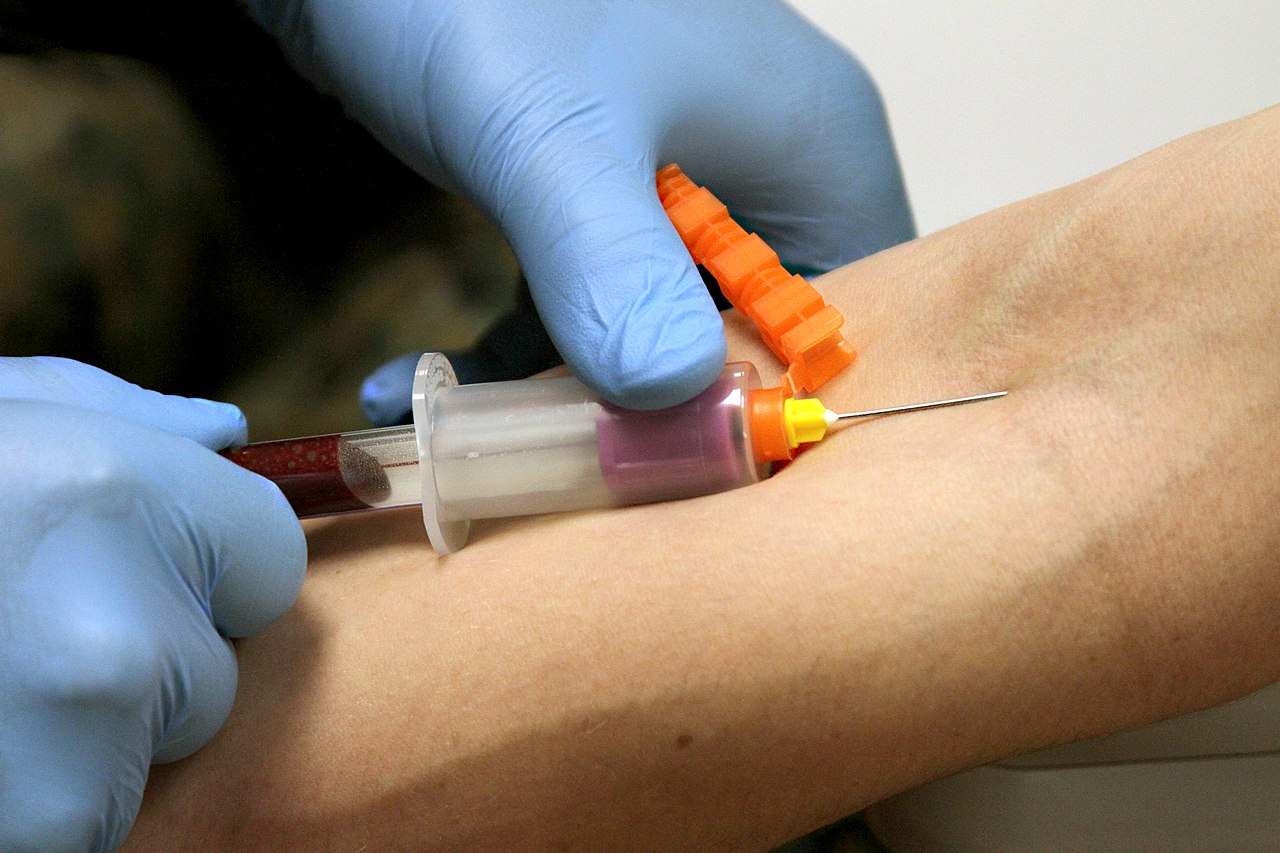


Equipment and materials
Standard equipment for a venipuncture includes a sterile needle or a winged "butterfly" assembly, a collection system (vacuum tubes often known by the brand name vacutainer), a tourniquet, antiseptic swabs, gauze and a bandage. Tubes may contain a vacuum and common additives such as anticoagulants or clot activators; cap colors help identify the tube's purpose.
Procedure and important steps
The basic steps are: apply a tourniquet to locate a vein, cleanse the skin, insert the needle, collect the required tubes in the recommended order to avoid additive cross‑contamination, remove the needle and apply pressure to the site. A healthcare professional may use either a direct syringe, a vacuum tube holder, or a winged needle depending on patient needs and sample requirements.
Uses, interpretation and variations
Blood draws supply samples for biochemical assays, hematology, serology, drug level monitoring and blood typing. Results guide diagnosis, treatment and monitoring of conditions such as infection, anemia, metabolic disorders and organ function. Different tests require particular tubes and handling—some need refrigeration, immediate processing, or protection from light.
Safety, complications and notable facts
- Common minor complications: bruising (hematoma), brief dizziness or small bleeding.
- Rare risks: infection at the puncture site or nerve irritation; trained technique and sterile materials minimize these.
- Distinctions: venous vs capillary vs arterial sampling and vacuum tube vs syringe collection affect volume and test suitability.
- For information about veins and needle types see vein anatomy and hypodermic needle.
Modern venipuncture evolved as sterile technique and syringe technology advanced; it remains a fundamental clinical procedure performed worldwide by trained personnel in clinics, hospitals and blood banks.
Related articles
Author
AlegsaOnline.com Blood draw (venipuncture): purpose, procedure, equipment and safety Leandro Alegsa
URL: https://en.alegsaonline.com/art/12248