
Humphry Davy — British chemist, inventor and pioneer of electrochemistry
Concise overview of Sir Humphry Davy (1778–1829), his experimental work in electrochemistry, isolation of elements, invention of the safety lamp, studies of nitrous oxide and his scientific legacy.
Overview
Sir Humphry Davy, 1st Baronet was a leading British experimental chemist whose work around 1800 helped establish electrochemistry and advanced laboratory practice. Born in Penzance, in Cornwall, England, he combined public lectures, polished demonstrations and original research. Modern accounts and biographies outline his life and writings (biography) and place his later years and death in Geneva (Geneva).
Image gallery
10 Images




Life and career
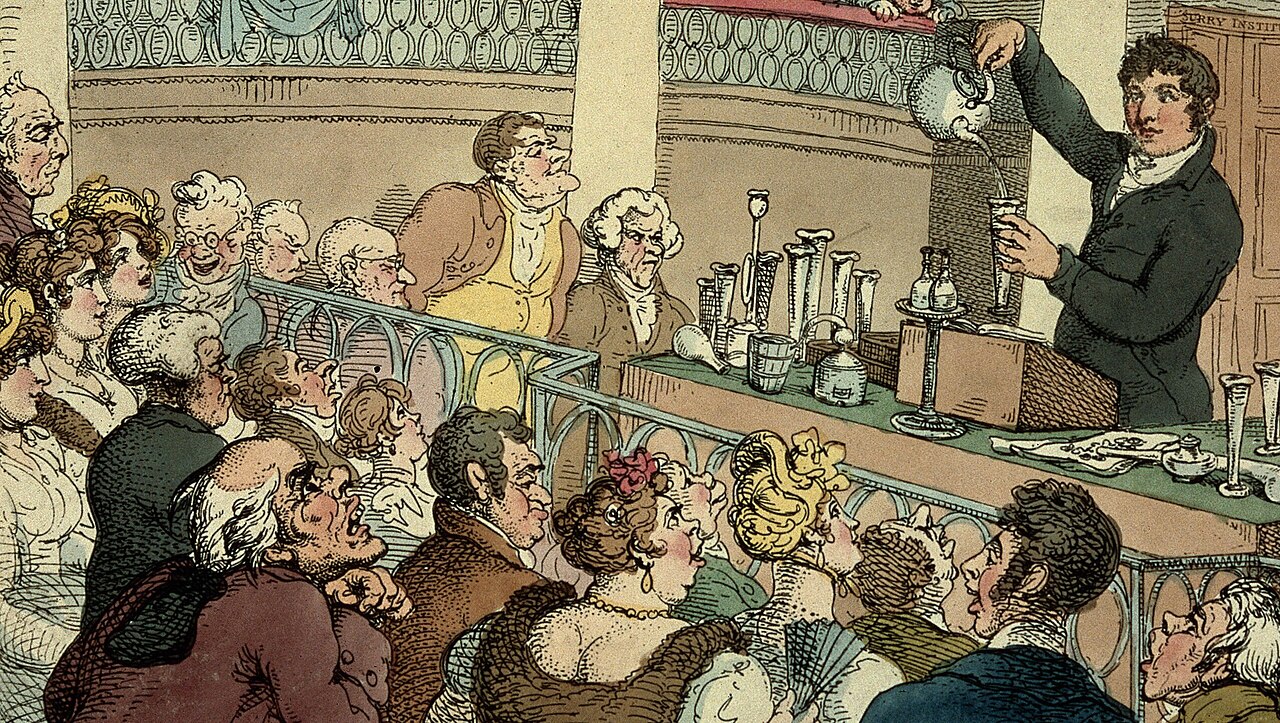
Davy was trained as a practical chemist and became known for clear public presentations and for directing the laboratory at the Royal Institution. He is often described as Cornish by regional histories. His lectures and published reports made experimental methods accessible to a wide audience and influenced a generation of chemists.
Scientific contributions
Davy demonstrated that electrical currents could decompose compounds and thereby produce simple substances previously known only in combination. By applying voltaic cells and molten-electrolyte methods he isolated several alkali and alkaline earth metals and helped to confirm the elemental nature of chlorine and other substances. His work appears in reviews of early chemistry and histories of the elements. He also carried out electrolysis experiments on compounds such as water (water decomposition) and obtained reactive metals including sodium, among others.
Inventions and practical work
- Developed the Davy safety lamp, a device that reduced the risk of firedamp explosions in mines and became an important safety innovation.
- Advanced laboratory techniques for isolating and characterizing reactive metals, influencing later industrial processes.
- Investigated gases such as nitrous oxide and documented physiological effects that stimulated medical and physiological interest.
Legacy
Davy's combination of careful experimentation, demonstration and clear exposition helped professionalize chemistry in Britain. He was central to the emergence of electrochemistry and his students and correspondents carried forward research in organic and physical chemistry. For introductions to his life, technical work and regional context consult the cited biographies and institutional summaries (biography), local histories of Penzance and Cornwall, national surveys of science in England and archival material from places where he worked and died (Geneva). Additional background on his field and experiments is available in general chemistry overviews (chemistry), element histories (elements), discussions of electrolysis and water decomposition (water), and accounts of the isolation of alkali metals such as sodium.
Related articles
Author
AlegsaOnline.com Humphry Davy — British chemist, inventor and pioneer of electrochemistry Leandro Alegsa
URL: https://en.alegsaonline.com/art/120794
Sources
- britannica.com : "Sir Humphry Davy, Baronet - British chemist"
- chem.ch.huji.ac.il : chem.ch.huji.ac.il
- woodrow.org : woodrow.org