
Chemist: roles, methods, history and applications
A chemist studies chemical substances and reactions; this article explains their activities, subfields, methods, history, applications, and distinctions from related professions.
Overview
A chemist is a scientist who studies the composition, structure, properties and transformations of matter. The term sometimes has regional meanings: for example, in parts of the United Kingdom the word pharmacist is commonly called a "chemist," and a retail outlet that dispenses medicines is called a chemist's shop. In scientific contexts a chemist typically investigates atoms, molecules and chemical reactions to understand how substances behave and to develop new materials and processes. For a general introduction to the discipline see chemistry and other foundational summaries for scientific careers at scientist-oriented resources.
Image gallery
8 Images



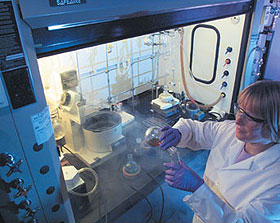
What chemists do
Chemists work in many settings—laboratories, industry, regulatory agencies and hospitals—and their tasks vary with specialization. Common activities include:
- Designing and synthesizing new molecules for use in medicines, materials and consumer products.
- Analyzing samples to determine composition, purity and concentration using instrumental techniques.
- Studying reaction mechanisms and developing catalysts to make processes more efficient.
- Working on quality control, safety testing and environmental monitoring.
Methods, tools and subdisciplines
Chemists rely on both experimental and computational tools. Laboratory methods include synthesis, purification and classical wet chemistry, while analytical techniques include spectroscopy, chromatography and mass spectrometry. Computational chemistry models molecular structure and reactivity. Major subdisciplines include organic, inorganic, physical, analytical and biological chemistry; each emphasizes different questions and techniques but often overlaps in practice.
History and development
The field evolved from ancient practices such as metallurgy, dyeing and alchemy into a systematic science over several centuries. Discoveries in atomic theory, thermodynamics and structural analysis established modern chemical principles and enabled industrial-scale production of materials such as polymers and fertilizers. The professional role of the chemist expanded with the rise of research institutions, universities and pharmaceutical industry partnerships that translated laboratory findings into practical applications.
Applications and examples
Chemical research underpins many technologies and everyday products: pharmaceuticals and vaccines, agricultural chemicals, polymers and plastics, cleaning agents, adhesives and energy storage materials. For instance, chemists develop formulations for better adhesives such as glue, optimize drug candidates used by doctors, and contribute to pharmacology and public health efforts. Analytical chemists help detect pollutants and ensure product safety.
Professional distinctions, safety and ethics
While chemists focus on understanding and manipulating matter at a molecular level, related professions have distinct emphases: chemical engineers apply chemistry to design scalable processes and industrial equipment; pharmacists focus on dispensing medications and advising patients in clinical settings. Chemists must follow safety standards for handling hazardous materials and adhere to ethical norms concerning environmental impact, data integrity and responsible research practices. In some countries, the title and practice of pharmacists and chemists are regulated separately, which affects qualifications and workplace roles.
For further reading and professional guidance consult standard educational resources and regulatory bodies; basic reference materials and introductions are available through institutions that describe the role of a scientist and the scope of chemistry. Additional context about regional terminology appears in descriptions of occupational naming in England and other jurisdictions.
Related articles
Author
AlegsaOnline.com Chemist: roles, methods, history and applications Leandro Alegsa
URL: https://en.alegsaonline.com/art/19202