
George Everest: Surveyor General of India and namesake of Mount Everest
Biography of Sir George Everest (1790–1866), his role in the Great Trigonometric Survey, methods and legacy, and how his name came to be applied to the world's highest peak.
Overview
Sir George Everest (4 July 1790 – 1 December 1866) was a British surveyor and geographer best known for his leadership in the trigonometrical mapping of the Indian subcontinent and as the eponym of Mount Everest. Trained in the techniques of geodesy and large‑scale triangulation, he served as Surveyor General of India from 1830 to 1843 and played a central role in completing a demanding meridian arc survey that extended from southern India northwards toward Nepal.
Image gallery
5 Images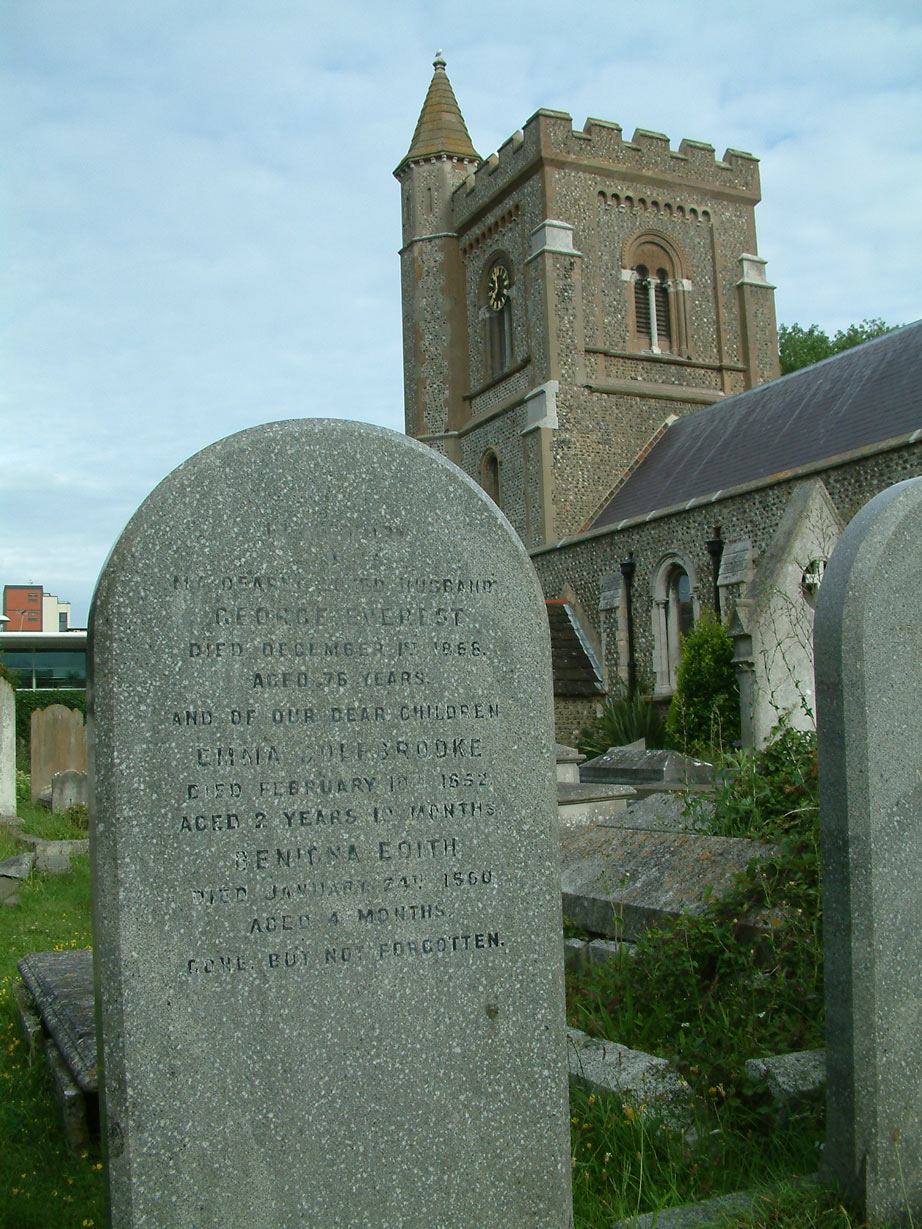



Early life and career
Everest was born in Wales at Gwernvale Manor near Crickhowell and was baptised in Greenwich. His early professional life brought him to India where he joined the survey effort that had been begun years earlier. He rose through the ranks of the surveying establishment and eventually succeeded to the office of Surveyor General, directing mapping and geodetic work across varied terrain and climates.
The Great Trigonometric Survey
One of Everest's principal responsibilities was the continuation and refinement of the Great Trigonometric Survey, a long‑term program started by William Lambton in 1806. This project used the principles of triangulation and astronomical observations to determine accurate positions over long distances. Everest helped complete the survey of a meridian arc covering roughly 2,400 kilometres from southern India north toward Nepal. The work required repeated baseline measurements, angle observations at trig stations, and careful adjustment of networks to produce reliable maps and geodetic data.
Methods and contributions
The survey depended on systematic, repeatable procedures: establishing straight baselines, erecting trigonometrical stations on hills and mountain tops, observing angles with precision instruments, and performing astronomical fixes to control latitude and longitude. Everest emphasized accuracy, training of assistants, and improvements in field organization. His administrative and technical direction helped transform a piecemeal set of observations into a coherent national triangulation that underpinned modern mapping in the region.
Naming of Mount Everest and legacy
In 1865 the Royal Geographical Society approved a recommendation by Andrew Scott Waugh, Everest's successor as Surveyor‑General of India, to name the highest known Himalayan summit after Sir George Everest. Everest himself reportedly objected to using his name for the mountain and preferred local names, but the new name nevertheless became established in Western cartography. The peak had been identified and its height estimated through the survey methods pioneered during the Great Trigonometric Survey.
Importance and notable facts
- Everest's leadership helped turn scattered triangulation work into a large, continuous geodetic framework that improved map accuracy across the subcontinent.
- His career illustrates the 19th‑century expansion of scientific surveying as a tool for navigation, administration, and scientific study.
- Although the mountain now bears his name, debates about local versus colonial place names and recognition of indigenous toponymy continue to be part of his legacy.
For further reading on related topics, consult biographical summaries and histories of the survey: biography and career, the broader context of British surveying in India (survey history), regional background for his birthplace (Gwernvale and Powys), and archival records of baptism and early life (baptismal record, Greenwich connections). Details of the Great Trigonometric Survey are covered in specialized studies (Great Trig Survey overview), including the meridian arc and mapped corridor (meridian arc) that reached toward Nepal (northern survey). The naming episode and its administrative background can be found in institutional histories (Mount Everest naming, Royal Geographical Society records), and records of Everest's later life and death are held in British archives (London records, England registries).
Related articles
Author
AlegsaOnline.com George Everest: Surveyor General of India and namesake of Mount Everest Leandro Alegsa
URL: https://en.alegsaonline.com/art/119583
Sources
- everest1953.co.uk : "Naming Mount Everest"
- infoplease.com : "Sir George Everest"