
Archduke Franz Ferdinand of Austria — heir whose assassination triggered World War I
A concise encyclopedia article on Archduke Franz Ferdinand (1863–1914): his life, morganatic marriage, political views, assassination in Sarajevo and the consequences that led to World War I.
Archduke Franz Ferdinand (Franz Ferdinand Karl Ludwig Josef; 18 December 1863 – 28 June 1914) was a senior member of the Habsburg dynasty and the heir to the Austro-Hungarian throne from 1896 until his death. Known by the dynastic style Erzherzog von Österreich-Este, he combined a conservative outlook with an interest in reforming the structure of the multiethnic empire. His assassination in Sarajevo by a Bosnian Serb nationalist is widely recognized as the immediate spark that produced the diplomatic crisis and declarations of war leading to the First World War.
Image gallery
10 Images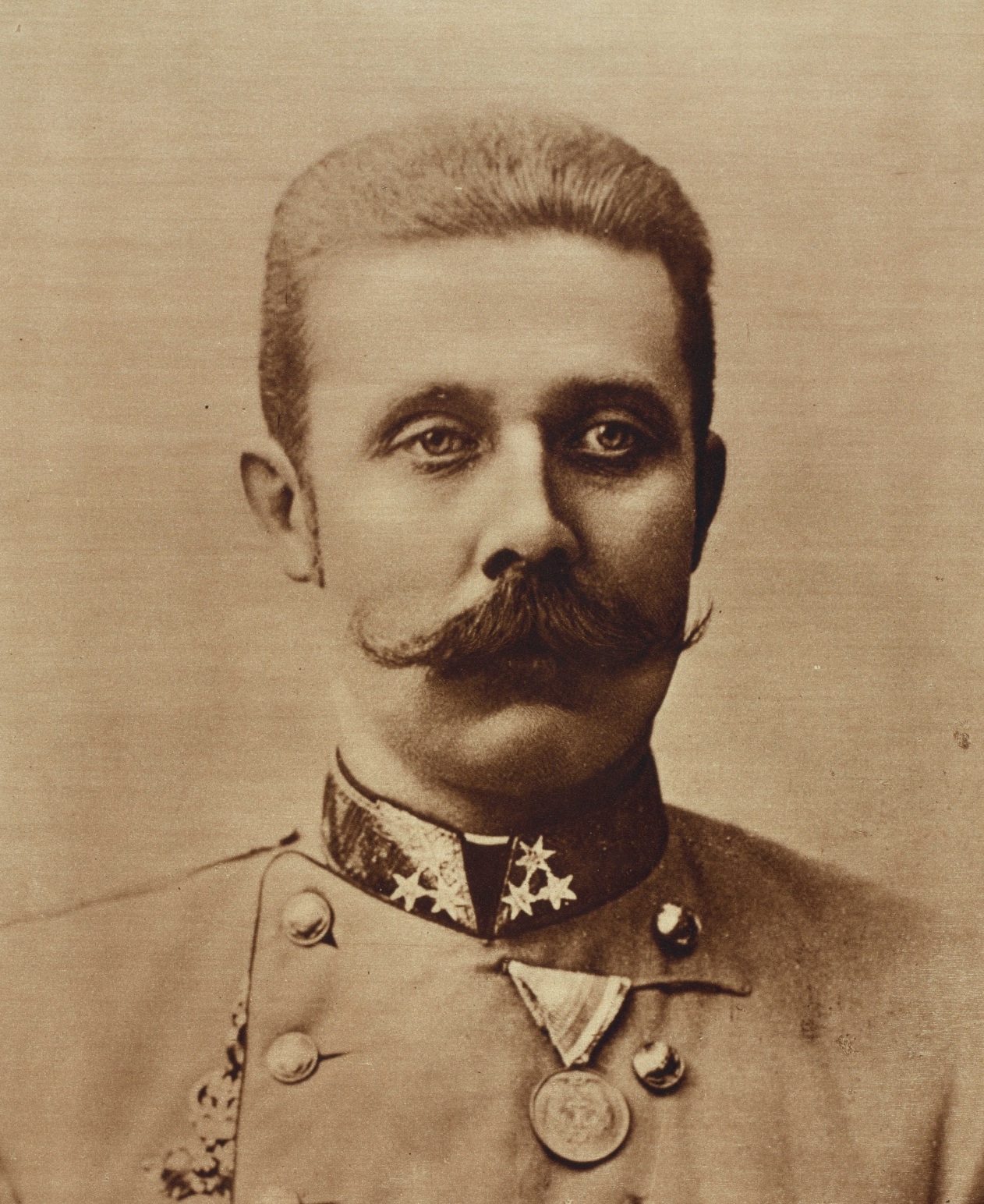


Early life and position in the dynasty
Born into the imperial family in 1863, Franz Ferdinand rose in the line of succession after a series of deaths among closer heirs. He served in the Austro-Hungarian military and took on public duties, travelling across the empire and representing the monarchy on ceremonial occasions. As heir, his opinions carried weight inside the imperial court even when they clashed with more conservative elements surrounding Emperor Franz Joseph.
Marriage, family and dynastic controversy
In 1900 he married Countess Sophie Chotek. Their union was classed as morganatic: because Sophie was not of equal rank to the archduke, she and their children were denied the full imperial titles and succession rights typically afforded to dynastic spouses. The couple had three children, and the restrictions imposed on Sophie generated continuing tension within the court; Franz Ferdinand insisted on her presence at official functions but refused to compromise on her unequal status. The arrangement shaped public perceptions of the archduke and coloured reactions to his death.
Political views and proposals
Franz Ferdinand was not a liberal reformer, but he advocated changes intended to stabilize the Habsburg realms. He favored reorganising the dual monarchy to grant greater recognition and autonomy to Slavic peoples — a policy sometimes described as trialism — and he believed restructuring the empire might defuse ethnic tensions. He also supported strengthening the army and maintaining imperial authority. These positions made him a controversial figure among nationalists and political factions both inside and outside the monarchy.
Assassination in Sarajevo
On 28 June 1914 the archduke and his wife visited Sarajevo in the province of Bosnia and Herzegovina. Their motorcade was attacked by members of a South Slav nationalist group. An initial bomb attack injured several members of the entourage but failed to kill them. Later the party continued its route and, after apparent confusion in the motorcade, a young gunman drew close to the car and fatally shot Franz Ferdinand and Sophie. The assassin, a 19‑year‑old nationalist, was arrested at the scene and later imprisoned. The deaths shocked Europe and set off a chain of diplomatic demands, including an ultimatum from Austria-Hungary to Serbia, that escalated into general war.
Consequences and legacy
The killing in Sarajevo catalysed long-standing rivalries among the major powers and precipitated the July Crisis of 1914. Within weeks alliances activated and full-scale war began. The archduke’s death is therefore remembered not only as a personal tragedy and a dynastic crisis but also as the proximate cause of a global conflict that reshaped the twentieth century.
Key facts and notable points
- Full name and title: Franz Ferdinand of Austria-Este; heir to the Austro-Hungarian throne from 1896.
- Marriage: Countess Sophie Chotek; morganatic marriage, children excluded from succession.
- Assassination: 28 June 1914 in Sarajevo; assassin was a South Slav nationalist linked to conspiratorial networks.
- Aftermath: Austria-Hungary’s reaction to the killing led to an ultimatum and to wider declarations of war among European powers.
For further reading on the event, the political context and the participants in the Sarajevo plot, consult detailed histories and archival materials. Useful starting points include biographies of Franz Ferdinand and studies of the July Crisis and the origins of the First World War. See also contemporary primary sources and analyses that examine the role of nationalist movements, imperial diplomacy and military planning in the summer of 1914.
Archduke biography • Habsburg family context • Succession and titles • Austria-Hungary 19th–20th century • Sarajevo assassination • Bosnia and Herzegovina • Gavrilo Princip and conspirators • July Crisis • Origins of World War I
Related articles
Author
AlegsaOnline.com Archduke Franz Ferdinand of Austria — heir whose assassination triggered World War I Leandro Alegsa
URL: https://en.alegsaonline.com/art/114504