
Archibald Vivian Hill — English physiologist and Nobel laureate
Overview of A. V. Hill (1886–1977), his Nobel Prize-winning work on heat production in muscle, the Hill equation for muscle mechanics, and his influence on quantitative physiology and biophysics.
Archibald Vivian Hill (26 September 1886 – 3 June 1977) was an English physiologist whose experimental and mathematical work helped shape modern quantitative physiology. He is best known for precise studies of the heat produced by contracting muscles and for formulating mathematical descriptions of muscle function.
Image gallery
3 Images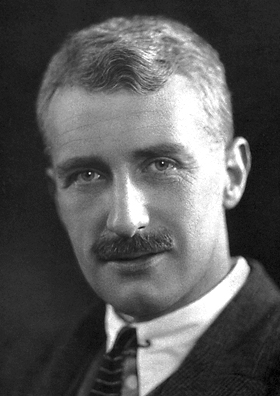


Key discoveries and methods
Hill devised sensitive experiments to follow temperature changes and mechanical work during muscle contraction, linking chemical energy to mechanical output. That body of research earned him the Nobel Prize in Physiology or Medicine in 1922, awarded for discoveries concerning heat production in muscles. He combined careful measurement with theoretical analysis, an approach that gave rise to analytic descriptions still referenced in muscle physiology.
Major contributions
- Quantitative measurements of heat and work in muscle contraction, clarifying energy conversion in living tissue.
- The force–velocity relationship for muscle, often called Hill's equation, which models how muscle shortening speed depends on load.
- Promotion of mathematical and physical methods in physiological research, helping to establish biophysics as a discipline.
Hill's work bridged experiment and theory: he showed how precise instrumentation and mathematical models could illuminate biological function. The Hill equation and his thermodynamic perspective influenced later studies in muscle mechanics, metabolism, and exercise physiology.
Beyond the laboratory, Hill was active in scientific organization and communication, advocating for rigorous quantitative standards in research and for wider public understanding of science. His legacy endures in textbooks, experimental techniques, and the continuing use of his models as a foundation for more detailed molecular studies.
Notable facts: he lived from 1886 to 1977 and remains a central figure in the history of physiological science because of the combination of experimental ingenuity and theoretical clarity he brought to problems of muscle and energy.
Related articles
Author
AlegsaOnline.com Archibald Vivian Hill — English physiologist and Nobel laureate Leandro Alegsa
URL: https://en.alegsaonline.com/art/114506
Sources
- nobelprize.org : "Biography of Archibald Hill"
- nobelprize.org : "The Nobel Prize in Physiology or Medicine 1922"