
Assassination of Archduke Franz Ferdinand of Austria (1914)
The 28 June 1914 killing of Archduke Franz Ferdinand and his wife Sophie in Sarajevo by Gavrilo Princip; the act touched off the July Crisis and precipitated the First World War.
Overview
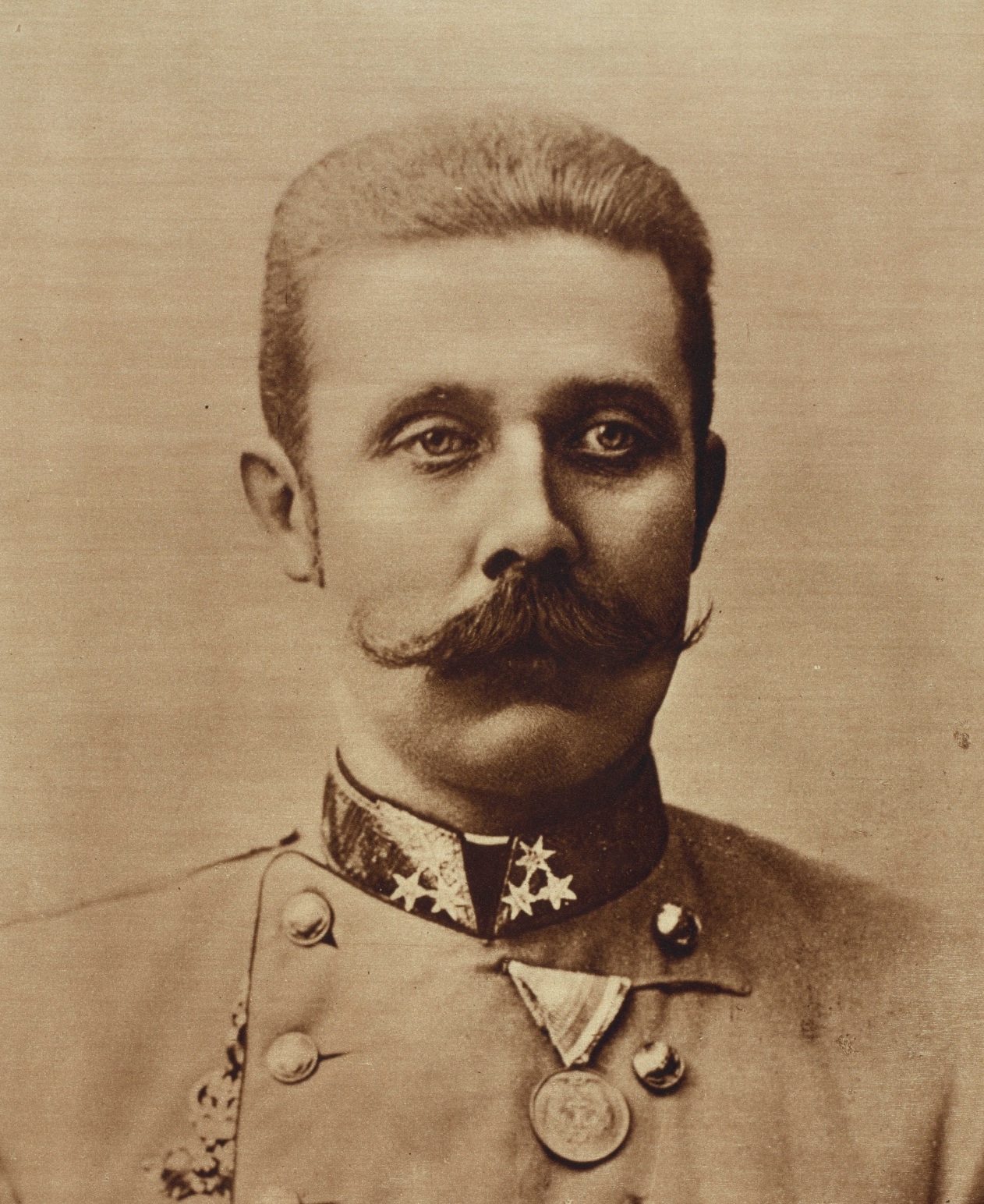
The assassination of Archduke Franz Ferdinand, heir to the Austro-Hungarian throne, and his wife Sophie, Duchess of Hohenberg, on 28 June 1914 in Sarajevo is one of the most consequential political killings of the 20th century. The shooters were associated with South Slav nationalist circles and a clandestine network; the best-known figure among them was Gavrilo Princip. The event is commonly referred to simply as the assassination.
Image gallery
10 Images




Background
At the time, the multi-ethnic state of Austria-Hungary was grappling with rising national movements among its subject peoples. South Slav nationalists sought to detach the South Slav provinces from imperial rule and to pursue greater unity or independence. These pressures intersected with secret societies and paramilitary groups that advocated direct action; some conspirators had links with organizations often identified by historians as the Black Hand, while others acted within looser nationalist networks. Franz Ferdinand's prominent position as heir presumptive made him a symbolically important target.
The plot and attack
The assassination resulted from a small conspiracy in which several young men took positions along the archducal motorcade route. An initial attempt earlier in the day failed to kill the archduke. Later, after changes in itinerary and an accidental halt of the motorcade, Gavrilo Princip was able to fire at close range. Contemporary reports and subsequent inquiries reconstructed a sequence of confusion, missed opportunities and chance that culminated in the fatal shots. The killing occurred in public streets, produced immediate arrests, and shocked observers across Europe.
Immediate aftermath
Authorities detained the conspirators, and Austro-Hungarian investigators pressed for information about possible accomplices and external links. Austria-Hungary presented Serbia with demands and, following diplomatic exchanges known as the July Crisis, used the assassination as the immediate cause for declaring war on Serbia. The ruling elites and governments of the great powers then mobilized in accordance with alliance commitments and contingency plans, and the local crisis escalated into a broader European war within weeks.
Trials, punishment and memory
The captured plotters were tried under Austro-Hungarian law. Some received long prison terms and several died in custody; others were convicted under penal provisions then in force. The assassination has since been the subject of extensive historical research and debate: scholars examine the degree of planning, the role of the Black Hand and Serbian officials, and how the killing intersected with the wider structural tensions that made Europe vulnerable to general war. Public memory of the event varies across the successor states of the former empire and beyond, and the incident remains a focal point for discussion about nationalism, state responsibility and political violence.
Significance and interpretation
Historians commonly treat the Sarajevo assassination as the immediate spark that set off the July Crisis, yet they stress that long-term causes — militarism, alliances, imperial rivalries, and nationalist conflicts — created the conditions in which a single event could trigger a continental conflagration. Different interpretations emphasize contingency, intentionality, or systemic pressures; the episode is frequently cited as an example of how local acts can have massive international consequences when combined with rigid mobilization timetables and alliance obligations.
Key facts and timeline
- Date: 28 June 1914.
- Location: Sarajevo.
- Victims: Franz Ferdinand and Sophie.
- Perpetrators: a group of conspirators including Gavrilo Princip, linked to South Slav nationalist networks and contacts with the Black Hand.
- Consequences: the assassination precipitated the July Crisis and contributed directly to the outbreak of the First World War.
For further introduction, readers can consult concise overviews of the assassination, studies of Austria-Hungary in 1914 and treatments of the South Slav question; archival collections and documentary editions provide primary-source material for in-depth research. Debates over the extent of Serbian state involvement and the precise chain of command among conspirators continue to be examined in scholarly literature, reflecting the complexity of attributing responsibility in a charged international context. Public commemorations and scholarly assessments keep the event in view as a pivotal moment in modern European history.
Related topics and resources: the status of the imperial succession (heir presumptive), the city and politics of Sarajevo, and contemporary responses within the Balkans and the great powers are useful angles for further study.
Questions and answers
Q: Who was assassinated on 28 June 1914 in Sarajevo?
A: Archduke Franz Ferdinand of Austria and his wife, Sophie, Duchess of Hohenberg, were assassinated.
Q: Who was responsible for the assassination?
A: The assassination was carried out by a group of seven assassins from the Black Hand secret society, including Gavrilo Princip.
Q: What was the political reason for the assassination?
A: The political reason for the assassination was to break off Austria-Hungary's South Slav provinces so they could be combined into a new country, Greater Serbia.
Q: When did the outbreak of war in Europe occur?
A: The outbreak of war in Europe occurred at the end of July 1914.
Q: Who declared war on Serbia?
A: Austria-Hungary declared war on Serbia.
Q: What happened as a result of the declaration of war?
A: Both country's allies became involved in the war.
Q: Which countries were involved in the war?
A: The countries involved in the war were Austria-Hungary, Serbia, and their respective allies.
Tags
Related articles
Author
AlegsaOnline.com Assassination of Archduke Franz Ferdinand of Austria (1914) Leandro Alegsa
URL: https://en.alegsaonline.com/art/6701