
Four Dimensions (4D): Geometry, History, and Physical Meaning
An accessible overview of the concept of four dimensions: geometric ideas, historical development, physical interpretation as spacetime, visualization methods, and important distinctions.
The term "4D" commonly denotes a system with four independent coordinates or degrees of freedom. In mathematics and everyday explanation it often means one more direction added to the familiar three: length, width and depth. That extra degree of freedom can be treated abstractly in pure mathematics or interpreted concretely in physics as time joined to space. Modern discussion of 4D ranges from the study of four-dimensional shapes and topologies to the geometric framework of relativity.
Image gallery
10 Images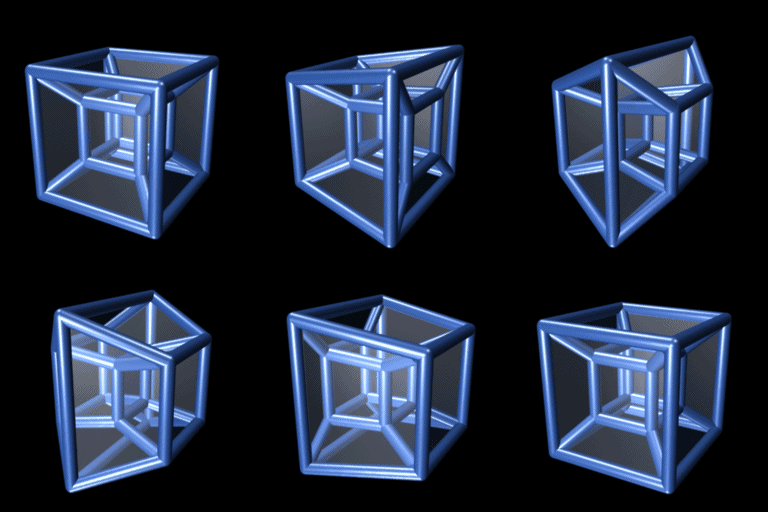



Visualization and geometric ideas
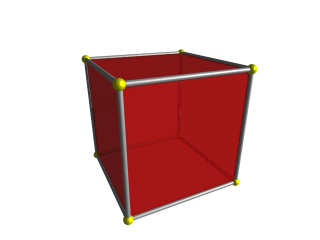
Visualizing a fourth spatial direction is difficult because human perception is adapted to three dimensions. Mathematicians therefore use analogies and projections. For example, just as a line segment extended perpendicular to itself produces a square and a square extended similarly produces a cube, a cube extended into a fourth orthogonal direction yields the four-dimensional hypercube, often called a tesseract. Projections, sections and shadow-like representations (analogous to the way a three-dimensional object casts a two-dimensional shadow) are common pedagogical tools.
- Basic elements: points, lines, planes and 3D volumes generalize to 4D objects with additional coordinates.
- Examples: hypercubes (tesseracts), 4D simplices, and 4-manifolds.
- Techniques: stereographic projection, coordinate systems, and algebraic descriptions.
Foundational work on four-dimensional geometry and higher dimensions was developed by many 19th-century mathematicians, including August Ferdinand Möbius, Ludwig Schläfli, Bernhard Riemann (Riemann) and Charles Howard Hinton. Their contributions helped formalize the study of higher-dimensional spaces and the idea of manifolds that locally resemble Euclidean space but can have different global properties.
4D in physics: spacetime
In physics, the most familiar four-dimensional concept is spacetime, which combines three spatial coordinates with one temporal coordinate. This framework became central in the 20th century with the work of Albert Einstein (Einstein) and predecessors who recognized that time must be treated alongside space to describe motion and gravity consistently. Classical 3D notions (three-dimensional space) assume Euclidean geometry (Euclidean), but the relativistic picture uses a different metric structure. The resulting model is commonly called Minkowski spacetime in special relativity and is generalized to curved four-dimensional manifolds in general relativity.
When discussing the fourth coordinate in physics it is customary to refer to time (time) as the extra dimension, and to discuss its physical consequences — for instance, how intervals between events combine spatial separations and elapsed time, and how observers moving relative to one another disagree on measurements that mix space and time. For introductory context on geometric aspects of the subject see material on geometry and on canonical examples like the square (square) and cube (cube), together with four-dimensional analogues such as the tesseract.
Uses, distinctions and notable facts
Four-dimensional thinking appears across disciplines. In pure mathematics, 4D topology and differential geometry are rich areas with phenomena not present in other dimensions. In physics, the 4D viewpoint is essential for modern theories of motion and gravitation (physics). It is also used as a modeling tool in computer graphics, animation, and data analysis where an additional parameter or attribute plays the role of an extra coordinate.
Important distinctions: "four-dimensional" can mean either an additional spatial direction (a fourth space axis) or the inclusion of time as the fourth coordinate; the two uses lead to different mathematical structures and physical interpretations. For further reading on historical development, mathematical formalism and physical consequences, consult introductory texts and specialized sources that follow the lineage from early geometric explorers through Riemannian ideas to the relativistic spacetime framework (Riemann, Einstein, Minkowski).
The concept of 4D serves both as a literal extension of spatial reasoning and as an organizing principle that unifies separate quantities into a single geometric language, helping clarify relationships between coordinates, motion and observed phenomena across mathematics and physics.
Related articles
Author
AlegsaOnline.com Four Dimensions (4D): Geometry, History, and Physical Meaning Leandro Alegsa
URL: https://en.alegsaonline.com/art/112928