
Bernhard Riemann — German mathematician and pioneer of modern geometry
Concise encyclopedia entry on Bernhard Riemann (1826–1866): biography, main mathematical contributions (analysis, Riemann surfaces, Riemannian geometry, zeta function) and his influence on mathematics and physics.
Overview
Georg Friedrich Bernhard Riemann (17 September 1826 – 20 July 1866) was a German mathematician whose ideas transformed analysis, geometry and number theory. Born near Hanover and deceased in Selasca, Italy, Riemann published relatively little but introduced concepts that became foundations for later developments in pure and applied mathematics.
Image gallery
3 Images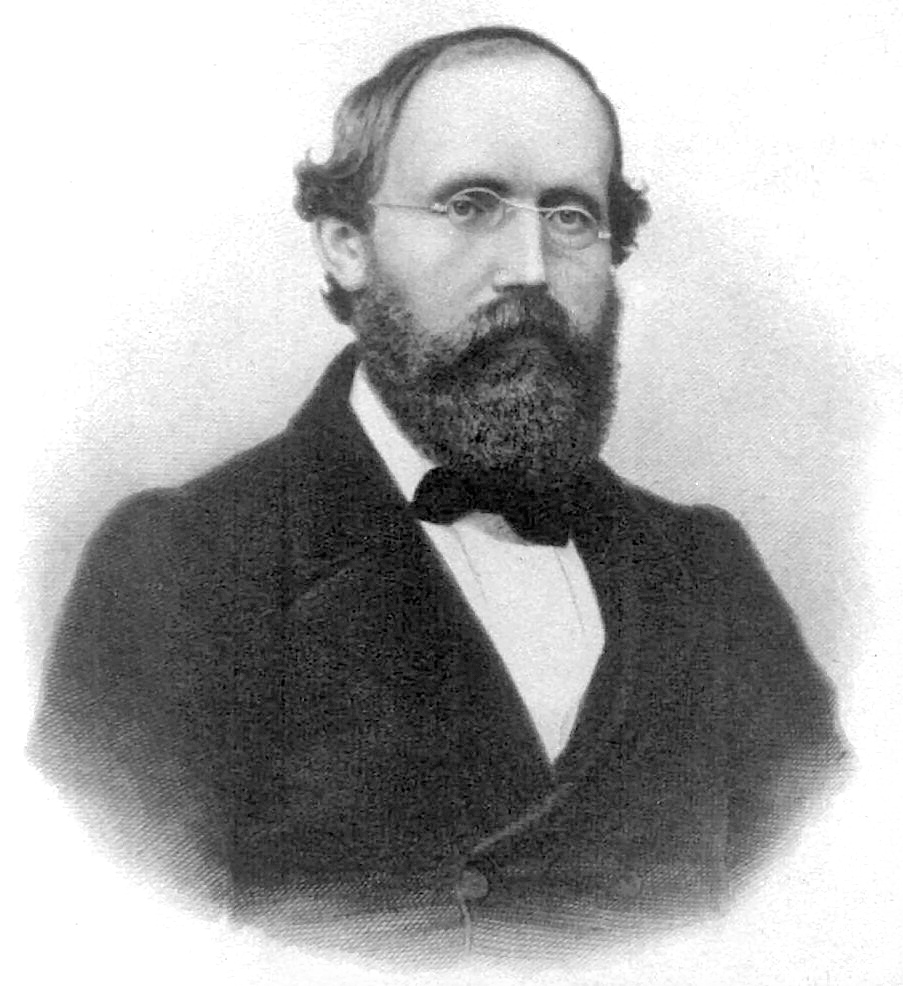


Life and education
Riemann trained in the German university tradition and studied under leading mathematicians of his time. He spent much of his academic career at Göttingen, where his lectures attracted attention and many notes and posthumous publications preserved his striking but often concise style. Ill health shortened his life and limited his published output, yet his surviving works display deep geometric and analytic insight.
Major mathematical contributions
Riemann worked across several areas: analysis, geometry, mathematical physics and number theory. His principal contributions include:
- Riemann integration and foundations of analysis: his formulation of the integral and related ideas about convergence and the behavior of functions helped shape rigorous analysis.
- Riemann surfaces and complex analysis: he introduced surfaces on which multi‑valued complex functions become single‑valued, establishing existence theorems and methods that are central to modern complex analysis.
- Riemannian geometry: he generalized the notion of distance by defining a smoothly varying metric on a manifold and gave the first systematic treatment of curvature for such metrics. This formulation provided a flexible language for describing curved spaces.
- Zeta function and primes: his study of the analytic continuation and zeros of the zeta function linked complex analysis to the distribution of prime numbers and led to the famous Riemann hypothesis, an open problem that remains central in number theory.
Influence and applications
Riemann's geometric language became essential in later physical theories. The idea of a metric on a manifold and the attendant curvature concepts provided mathematical tools that were used in the development of the theory of relativity, as later articulated by Albert Einstein. In analysis and mathematical physics, Riemann's methods underpin techniques for solving boundary value problems, potential theory and aspects of spectral theory. In number theory, his zeta function framework continues to guide research into prime distribution.
Style, publications and legacy
Riemann favored concise presentations of deep ideas rather than lengthy expositions. Many of his most influential concepts were disseminated through lectures and a small number of papers; several important manuscripts were published posthumously. Terms such as Riemann sums, Riemann integral, Riemann surface and Riemannian metric are now standard vocabulary across mathematics.
Why Riemann matters today
Riemann's work unified analytic and geometric viewpoints and introduced structures that made it possible to treat problems of space, curvature and complex functions in a coherent framework. This unity continues to inspire both pure research—topology, global analysis and analytic number theory—and applied fields where curved spaces and spectral properties play a role.
Further reading
For accessible introductions consult standard texts on complex analysis and mathematical analysis, and treatments of differential geometry for the development of Riemannian geometry. Historical and technical accounts of Riemann's work and its impact on mathematical physics and number theory are available in specialized literature. Biographical notes often situate his Göttingen period and teaching activities in context.
Riemann's influence remains visible across mathematics and physics: his concepts continue to be taught as core material and to serve as starting points for current research in geometry, analysis and arithmetic.
Questions and answers
Q: Who was Georg Friedrich Bernhard Riemann?
A: Georg Friedrich Bernhard Riemann was a German mathematician born on September 17, 1826 near Hanover, who contributed to many fields of mathematics.
Q: What was the impact of Riemann's discoveries?
A: Although Riemann did not write down very much, the things he discovered were extremely important and had a revolutionary effect on mathematics.
Q: In which fields of mathematics did Riemann contribute?
A: Riemann contributed to many fields of mathematics, such as analysis, geometry, mathematical physics, and number theory.
Q: What is Riemannian geometry?
A: Riemannian geometry is the kind of geometry that Riemann started, which is one of the bases of the theory of relativity, developed by Albert Einstein.
Q: What is complex analysis?
A: Complex analysis is the branch of mathematics dealing with complex numbers and their functions.
Q: Why is Riemann considered a great mathematician?
A: Riemann is considered a great mathematician because of his significant contributions to many fields of mathematics and his impact on the development of the theory of relativity.
Q: When and where did Riemann pass away?
A: Riemann passed away in Selasca, Italy on July 20, 1866.
Related articles
Author
AlegsaOnline.com Bernhard Riemann — German mathematician and pioneer of modern geometry Leandro Alegsa
URL: https://en.alegsaonline.com/art/10837
Sources
- wikidata.org : wikidata.org/wiki/Q42299
- authority.bibsys.no : 90392370
- catalogo.bne.es : XX1473607
- catalogue.bnf.fr : cb13746681j
- data.bnf.fr : (data)
- cantic.bnc.cat : a1098060x
- d-nb.info : 118600869
- isni.org : 0000 0001 0865 3450
- id.loc.gov : n81005064
- genealogy.math.ndsu.nodak.edu : 18232
- id.ndl.go.jp : 00454204
- aleph.nkp.cz : kup20010000082831
- nla.gov.au : 35567457
- data.nlg.gr : 140544
- uli.nli.org.il : 000214853