
Square (plane geometry)
A square is a regular quadrilateral: four equal sides and four right angles. This article explains its defining properties, formulas, symmetries, relations to other polygons, history and common uses.
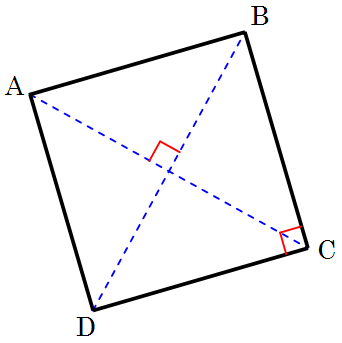
A square is a simple, regular polygon in the plane defined by four equal straight sides and four right angles. It is the most symmetric four-sided figure, combining features of both rectangles and rhombi. The compact visual form of a square is familiar in everyday objects and symbolic design; an illustration might show a labeled square with vertices A, B, C and D followed by an image placeholder: . For a concise definition and basic description see common geometry references.
Image gallery
10 Images



Core properties
Key geometric properties of a square include:
- All sides are congruent (equal length) and adjacent sides meet at right angles (90°). For a practical overview of side and angle properties see angle relationships.
- Diagonals have equal length, bisect one another, intersect at right angles, and each diagonal bisects the vertex angles it connects; more on diagonal behavior is available at diagonals in quadrilaterals.
- Symmetry: a square has four lines of reflectional symmetry and rotational symmetry of order four (it maps to itself after rotations of 90°), a fact elaborated under symmetry groups.
- Classification: a square is both a rectangle (all angles 90°) and a rhombus (all sides equal); it is therefore a particular type of parallelogram. The connection between these classes is discussed at quadrilateral types.
Measurements and simple formulas
When the side length is denoted by s, standard formulas are straightforward and commonly used: area = s × s (often written s^2), and perimeter = 4s. The diagonals have length s times the square root of 2 and meet at the square's center, which is both the centroid and the center of the inscribed and circumscribed circles. The radius of the inscribed circle (inradius) equals s/2 and the radius of the circumscribed circle (circumradius) equals s/√2. These relationships are useful in coordinate geometry and when placing a square in a lattice or grid.
History, construction and examples
Squares have been studied since antiquity: they appear in early measurements, land surveying, and classical geometry. Straightedge-and-compass constructions can produce a square from a given side or from a given diagonal; conversely, squaring a rectangle (producing an equal-area square) was a classical problem of interest in applied geometry. In modern use, squares are fundamental in tiling (a regular tessellation of the plane), digital pixel grids, architectural plans, floor tiles, and many design motifs and logos where equal proportions and orthogonality are desired.
Relations, distinctions and notable facts
Although a square meets the definitions of several quadrilateral families, some distinctions matter in problem-solving: every square is a rectangle and a rhombus, but not every rectangle or rhombus is a square. In three dimensions the square is the two-dimensional analogue of the cube; more generally, an n-dimensional hypercube has square (2D) faces. For comparisons and broader context see quadrilateral relations and discussions of higher-dimensional analogues at polytope analogues.
Further reading and resources
Readers can explore constructions, symmetry proofs, coordinate representations, and applications in education and design through the suggested links above and introductory geometry texts. Squares remain a central object in Euclidean geometry because of their symmetry, simplicity, and ubiquity across mathematical and practical contexts.
Related articles
Author
AlegsaOnline.com Square (plane geometry) Leandro Alegsa
URL: https://en.alegsaonline.com/art/92940
Sources
- onlinemschool.com : "Square. Formulas and Properties of a Square"