
Four (number)
An overview of the number four: mathematical properties, notations, history, cultural significance, and common uses in geometry, time, and symbolism.
The number four is an integer that follows three and precedes five. Written as 4 in Hindu–Arabic numerals, it is represented in Roman numerals as IV. As a common small number, it appears frequently in counting systems, measurements and everyday language.
Image gallery
3 Images
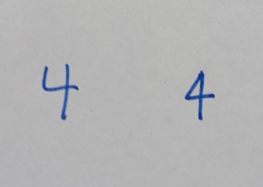

Mathematical characteristics
Four is an even composite number. Its positive divisors are 1, 2 and 4, and it equals 2 squared (2^2), making it a perfect square and a prime power. In binary notation it is 100. Because 4 = 2^2 it is the first nontrivial square and the smallest composite integer.
Representations and examples
- Numerals: 4 (Arabic), IV (Roman), 100 (binary).
- Geometry: a square has four sides; a regular tetrahedron has four faces.
- Algebra and number theory: 4 often serves as the size of small groups and rings used in examples and exercises.
History and cultural significance
The concept of four appears across cultures: classical Western thought listed four elements (earth, water, air, fire), many calendars divide the year into four seasons, and navigation uses four cardinal directions. Some cultures treat the number with special feeling—for example, certain East Asian languages have a pronunciation for four similar to that of the word for death, which has influenced customs and numbering in buildings and products.
Uses and notable facts
In practical contexts the number four is ubiquitous: most common time signatures in Western music are 4/4, many sets and groups are arranged in fours for symmetry, and basic combinatorial examples often begin with four elements. It is also the only even number that is the square of a prime (2^2), a fact sometimes used to illustrate prime powers and squares in elementary courses.
Because of its frequent appearance in language, art and science, four serves as a useful early example when teaching counting, arithmetic and geometry. For further reading on numeral systems and cultural uses, follow the linked terms above.
Related articles
Author
AlegsaOnline.com Four (number) Leandro Alegsa
URL: https://en.alegsaonline.com/art/112937