
Albert Einstein: life, contributions, and lasting scientific influence
A concise encyclopedia overview of Albert Einstein, his major theories (including relativity and E = mc²), career, historical context, and the scientific legacy he left.
Albert Einstein (1879–1955) was a theoretical physicist whose ideas reshaped how scientists understand space, time and matter. Born in the German Empire and later a citizen of the United States, Einstein combined deep thought experiments with mathematical insight to produce theories that challenged and extended classical concepts. His name is most often linked to the theory of relativity and to the compact formula E = mc², which relates energy, mass and the speed of light.
Image gallery
10 Images

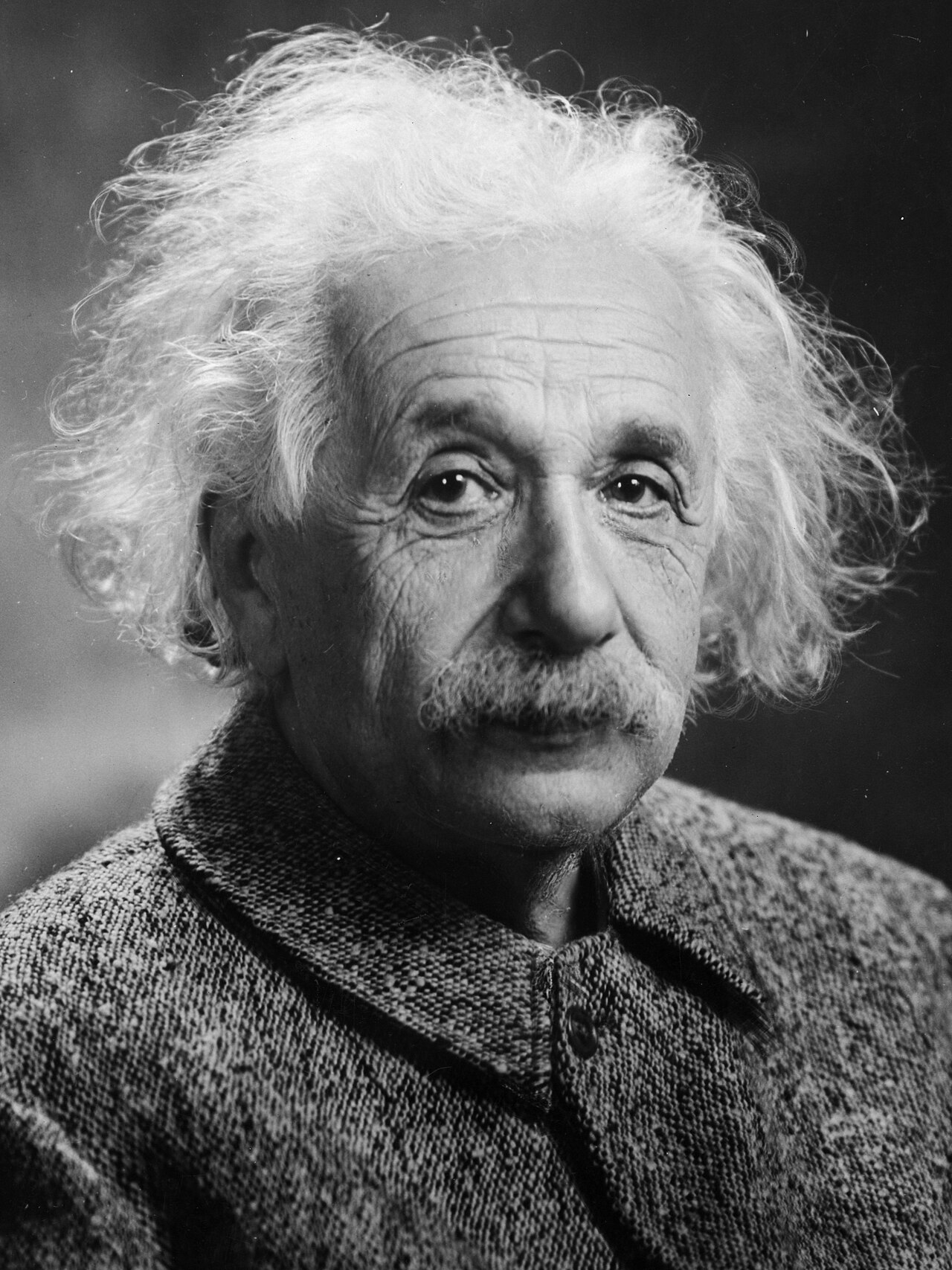


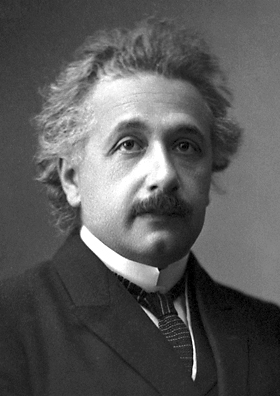


Overview of major ideas
Einstein's work overturned assumptions rooted in Isaac Newton's approach to motion and mechanics, while integrating the behavior of electric and magnetic fields. Where classical mechanics treated time and space as absolute, Einstein showed they are interwoven and relative to the observer's state of motion. His 1905 papers introduced special relativity and offered new perspectives on light, simultaneity and the conservation of energy. Later, his 1915–1916 development of general relativity replaced Newton's account of gravity with a geometric description of spacetime curvature.
Key contributions and concepts
- Special relativity: revised notions of time, length and simultaneity for observers in uniform motion (relativity).
- Mass–energy equivalence: the relationship E = mc² linking energy, mass and light speed.
- General relativity: a relativistic theory of gravitation explaining planetary motion, light bending and the dynamics of massive bodies (general relativity).
- Foundational work in the early development of quantum mechanics, including explanations of the photoelectric effect that earned him the Nobel Prize.
Career, context and historical events
Einstein began his remarkable publishing streak while working at the Swiss patent office and later held academic posts across Europe. He was a prominent public intellectual during tumultuous decades; the rise of Adolf Hitler and the Nazi regime prompted his decision not to return to Germany in the 1930s. Settling in the United States, he accepted a position at the Institute for Advanced Study near Princeton and became an American citizen. In the late 1930s he warned political leaders about the possibility of powerful new weapons and co-signed a letter to President Franklin D. Roosevelt that helped catalyze research efforts which later became associated with the Manhattan Project. The subsequent use of atomic bombs in Japan and the broader course of World War II weighed heavily on many scientists of the era.
Legacy and influence
Einstein's theories provided a framework that influenced nearly all twentieth-century physics, from cosmology to particle physics. His insights on relativity reshaped how experiments are interpreted and how precision technologies operate, while his early contributions to quantum theory helped set the stage for later breakthroughs. He is often listed among the most influential scientists in history, and his name remains synonymous with inventive genius and public engagement with scientific issues. His judgment and public statements also sparked debate about the social responsibilities of scientists, especially in relation to military applications and international cooperation.
Notable facts and distinctions
- Einstein received the Nobel Prize in Physics in 1921 for his explanation of the photoelectric effect, recognizing his role in developing quantum ideas.
- Throughout his life he corresponded and debated with many contemporaries; some later participants in wartime projects, including figures like Richard Feynman, reflected on the moral implications of scientific work.
- His public profile made him a symbol of modern science and an advocate for civil rights, internationalism and peaceful uses of technology.
Today, Einstein's work continues to be tested and extended. General relativity underpins modern cosmology and GPS technology, while questions he raised about the foundations of quantum theory still motivate research. For readers seeking primary sources and accessible introductions, many translations and collections of his writings, lectures and letters are available through science libraries and reputable archives (mass, Newton, and physics resources provide useful context).
Questions and answers
Q: When was Albert Einstein born?
A: Albert Einstein was born on 14 March 1879.
Q: What did he work on in theoretical physics?
A: Albert Einstein worked on bringing together the laws of classical mechanics and the laws of the electromagnetic field.
Q: What did he receive the Nobel Prize in Physics for?
A: Albert Einstein received the Nobel Prize in Physics in 1921 for his work in theoretical physics.
Q: What is his famous equation?
A: His famous equation is E = mc2 (E = energy, m = mass, c = speed of light).
Q: What did he think about Isaac Newton's idea of gravity?
A: Albert Einstein thought that Isaac Newton's idea of gravity was not completely correct, so he extended his ideas on special relativity to include gravity.
Q: Why didn't he return to Germany when Adolf Hitler and the Nazis came to power?
A: Due to Hitler’s anti-Semitic policies, Albert Einstein did not return to Germany when Adolf Hitler and the Nazis came to power.
Q:What led to the Manhattan Project?
A:Albert Einstein sent a letter to President Franklin D. Roosevelt explaining that Germany was making a nuclear weapon; this led to him recommending that the U.S should also make one which eventually led to The Manhattan Project.
Related articles
Author
AlegsaOnline.com Albert Einstein: life, contributions, and lasting scientific influence Leandro Alegsa
URL: https://en.alegsaonline.com/art/113561
Sources
- books.google.com : The Oxford Companion to the History of Modern Science
- doi.org : "Albert Einstein. 1879–1955"
- doi.org : 10.1098/rsbm.1955.0005
- nobelprize.org : "Albert Einstein – Biography" · web.archive.org
- theatlantic.com : "The Scientist and the Fascist"
- books.google.com : The Oxford Companion to United States History
- dx.doi.org : "Surely You're Joking, Mr. Feynman!"
- doi.org : 10.2307/1578389
- time.com : "Einstein's Lost Child"
- books.google.com : Einstein:: The Life and Times
- jewishvirtuallibrary.org : Albert Einstein on his decision not to accept the Presidency of Israel
- fr.jpost.com : Olmert backs Peres as next president
- mbe.doe.gov : mbe.doe.gov/me70/manhattan/publications/LANLHiroshimaNagasakiYields.pdf