
Zimmermann Telegram: catalyst for American entry into World War I
A diplomatic dispatch from Germany in January 1917 proposing an alliance with Mexico and promising lost U.S. territories, whose interception helped bring the United States into World War I.
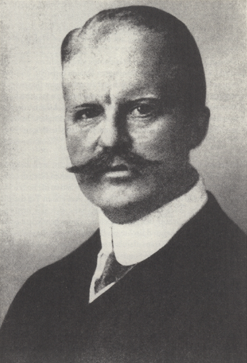
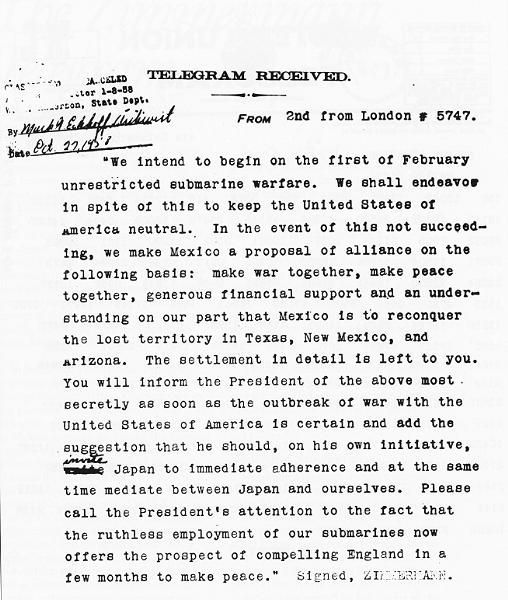
The Zimmermann Telegram was a secret diplomatic message sent by the German Foreign Office on January 16, 1917. Drafted by Foreign Secretary Arthur Zimmermann, it proposed a military alliance between Germany and Mexico if the United States entered the war against Germany. Its interception and publication played a decisive role in changing public opinion in the United States and contributed to the American decision to declare war on Germany in April 1917.
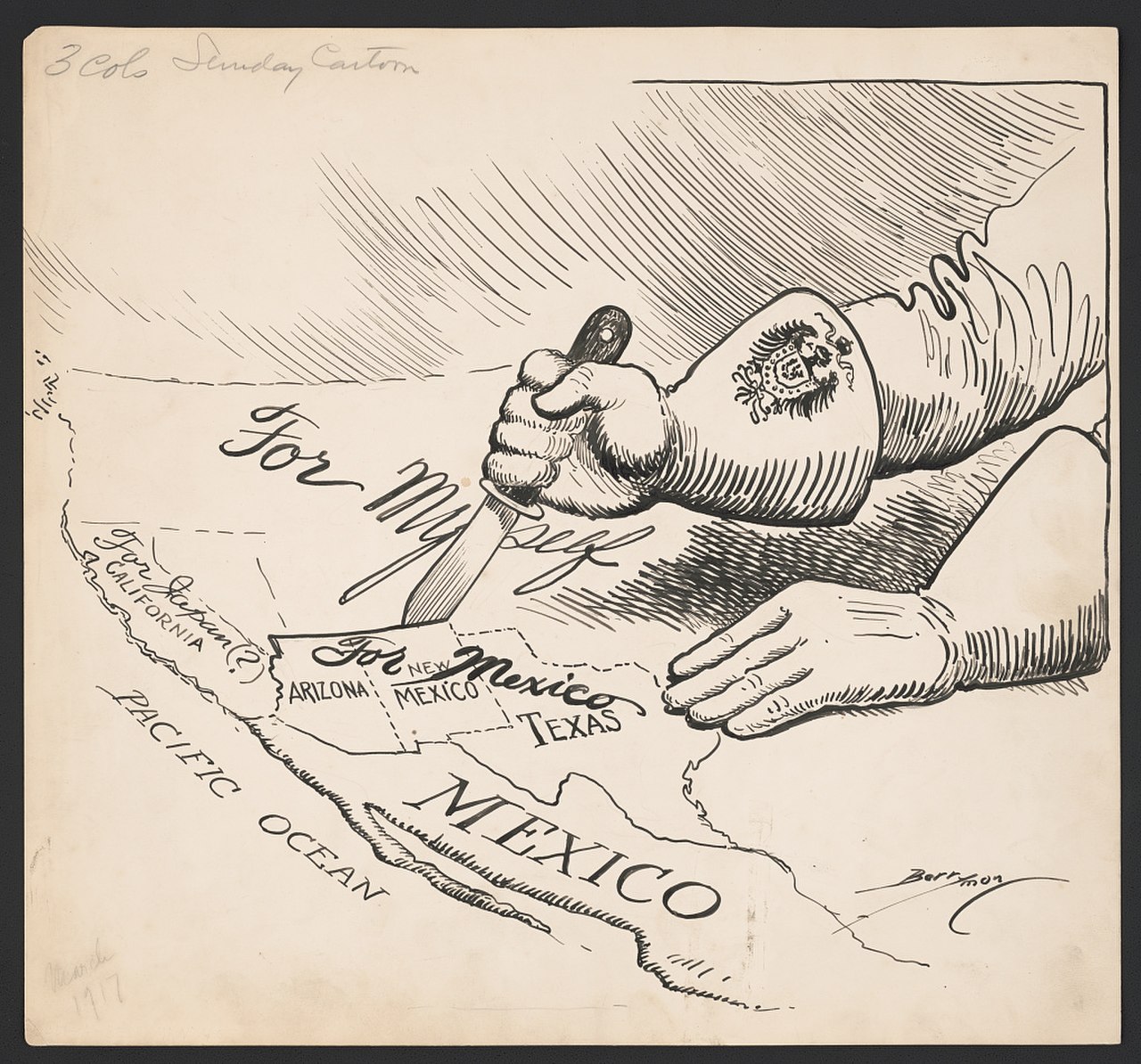
The text of the message instructed the German diplomatic network to approach Mexico with the offer of coordinated military action, financial support and a promise to assist Mexico in reclaiming territories lost in the 19th century. The note travelled from Zimmermann to the German ambassador in Washington, Johann von Bernstorff, and onward to the German ambassador in Mexico, Heinrich von Eckardt. It specifically named former Mexican lands—territories the United States had acquired following the Mexican–American War—including Texas, New Mexico and Arizona. The message also tied the proposal to Germany's planned resumption of unrestricted submarine warfare, a naval policy intended to blockade Britain but likely to provoke the United States.
British intelligence obtained a copy of the telegram, were able to decrypt it, and after careful consideration passed it to the United States government. The British cryptanalytic effort that uncovered the telegram is an example of early 20th-century signals intelligence and codebreaking. The decoded content was presented to President Woodrow Wilson in late February 1917; copies were then released publicly. The revelation outraged many Americans, who saw an explicit invitation to foreign aggression against the United States, coming at the same time that German submarine attacks on merchant and passenger ships were already causing indignation.
Public reaction to the published telegram was swift. Media coverage amplified outrage, while officials in Washington invoked the telegram as proof of hostile German intentions. President Wilson used the incident, together with continuing losses from German submarine warfare, to justify asking the United States Congress for authority to use force. Congress debated and then approved a resolution for war; formal action followed the request and the nation entered World War I. The naval strategy and the diplomatic gambit embodied in the telegram therefore became linked in historical accounts as a pair of causes that pushed American policy from neutrality to belligerence.
Image gallery
9 Images





Why the telegram mattered
- The message demonstrated German willingness to pursue risky diplomacy and secret dealings in the Western Hemisphere, undermining claims that Germany wished to avoid a broader conflict.
- Its interception highlighted the strategic value of signals intelligence and codebreaking in modern diplomacy and warfare.
- It provided a vivid, politically useful example that national leaders used to justify a shift from neutrality to war.
Mexico declined the German overture. At the time, Mexico was dealing with internal unrest stemming from the Mexican Revolution, and its leaders judged that alliance with Germany was impractical. In addition to Mexico's refusal, practical obstacles—the greater military and logistical power of the United States and distance from Europe—made the proposal unlikely to succeed.
Historians continue to examine the Zimmermann Telegram as both a diplomatic episode and a turning point in wartime propaganda. Some emphasize that unrestricted submarine warfare and economic ties to the Allies were already pushing the United States toward intervention; others note how the telegram crystallized public opinion and offered a clear illustrative case of German hostility. Whatever the balance of causes, the telegram remains one of the best-known examples of how intercepted communications can alter the course of international affairs.
For additional context on the people, places and institutions involved, see diplomatic biographies and primary documents about the German foreign service and American decision-making in 1917. Relevant institutional actors include the German Foreign Office and its envoys, the British codebreakers who decoded the note (often described in overviews of early intelligence work), and the American executive and legislative branches whose responses turned a diplomatic incident into a declaration of war. Further reading can be found in specialized histories of World War I, the Mexican Revolution, and the development of signals intelligence.
Sources and further links: German Foreign Secretary, German ambassador in Washington, Mexican–American War, Texas, New Mexico, Arizona, Mexican Revolution, decoding and interception, President Wilson, United States Congress, declaration of war, submarine warfare.
Related articles
Author
AlegsaOnline.com Zimmermann Telegram: catalyst for American entry into World War I Leandro Alegsa
URL: https://en.alegsaonline.com/art/110614