
Cryptanalysis: methods, history, and modern practice
Study of techniques for recovering plaintext or secret keys from encrypted data. Covers classical methods, attack models, mechanical and digital eras, modern mathematical and side‑channel attacks, and ethical issues.
Cryptanalysis is the discipline concerned with understanding and defeating cryptographic protections: extracting the original message (plaintext) or the secret key used to produce an encrypted message. The term derives from Greek roots; see Greek etymology. In everyday language it is often called codebreaking or cracking, though technically there is a distinction between codes and ciphers. Cryptanalysis operates without authorized access to secret information and seeks to exploit weaknesses in algorithms, implementations, or usage to reveal encrypted information.
Image gallery
4 Images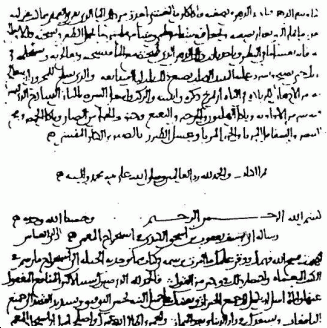

Common attack models
- Ciphertext-only — attacker has only intercepted ciphertext and must infer plaintext or key.
- Known-plaintext — attacker knows one or more plaintext/ciphertext pairs and uses them to recover further plaintext or the key.
- Chosen-plaintext — attacker can obtain ciphertexts for plaintexts of their choice (useful in adaptive testing).
- Chosen-ciphertext — attacker can request decryptions of chosen ciphertexts to reveal structure or keys.
- Side-channel — attacker exploits physical leakages such as timing, power consumption, or electromagnetic emanations.
These models are frameworks for evaluating how much information an adversary needs to break a system. Practical cryptanalysis often combines models: for example, an attacker might use statistical patterns from a ciphertext-only scenario and then refine hypotheses using chosen-plaintext probes.
Classical methods and mechanical breakthroughs
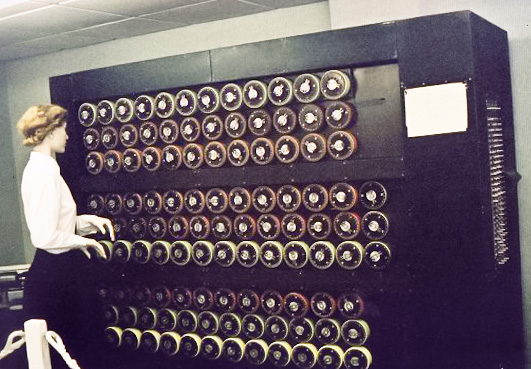
Early cryptanalysis relied on language statistics and human intuition. Frequency analysis—observing how often symbols occur—defeats simple substitution ciphers. Techniques such as transposition analysis, pattern recognition, and "cribbing" (guessing known phrases) were developed over centuries. The 20th century introduced mechanical and electro‑mechanical aids: devices that automated repetitive calculations or hypothesis testing. Examples from that era include British and Allied efforts using machines like the Colossus and the bombe, which played prominent roles during World War II and in the intelligence work that continued through the Cold War. These efforts demonstrated how engineering and mathematics together accelerated cryptanalytic capability.
Modern cryptanalysis
Today cryptanalysis is largely mathematical and computational. For symmetric ciphers analysts use differential and linear cryptanalysis, slide attacks, and statistical tests to find non-random structure. For hash functions and message digests, collision and preimage attacks are central concerns. Public-key systems bring different targets: factoring large integers and solving discrete logarithm problems underpin the security of many widely used algorithms, and improvements in factoring or discrete-log algorithms directly weaken those schemes. Side-channel and implementation attacks bypass theoretical strength by exploiting real-world devices.
Advances in algorithms, available computing power, and new paradigms such as quantum computing have become important topics. While large-scale quantum computers remain an active research area rather than an immediate practical threat, they have motivated the development of quantum-resistant cryptography and renewed interest in assessing long-term resilience.
Importance, practice, and distinctions
Cryptanalysis is essential to cybersecurity and to the design of robust cryptographic systems. Breaks and discovered weaknesses lead to improved algorithms, formal security proofs, and standards. The field spans academic research, government intelligence work, and responsible vulnerability disclosure by private researchers. Ethically and legally, the practice sits at the junction of national security, privacy, and commercial interests; authorized testing and coordinated disclosure are standard ways to handle newly discovered flaws.
It is useful to distinguish codes (word- or phrase-replacement schemes) from ciphers (algorithmic transformations applied to streams of data); modern cryptanalysis mostly targets ciphers and protocols. The interplay between cryptanalysis and cryptography is iterative: new attacks expose weaknesses, and designers respond with stronger constructions and proofs. For introductory resources and historical case studies see further reading and archival collections (general references: etymology and history, technical surveys: cipher examples, wartime developments: Colossus records, historical accounts of wartime efforts: World War II, and Cold War-era developments: Cold War history).
Related articles
Author
AlegsaOnline.com Cryptanalysis: methods, history, and modern practice Leandro Alegsa
URL: https://en.alegsaonline.com/art/24451