
Wind power in Texas: resources, growth, and major projects
Overview of wind energy in Texas: resource advantages, policy and transmission drivers, major wind farms, economic and environmental impacts, integration challenges, and outlook.
Overview
Wind power in Texas is the largest state-level source of wind-generated electricity in the United States. The state combines extensive wind resources, wide areas of leaseable land and a competitive wholesale electricity market that has supported rapid growth in utility-scale wind farms. Today Texas produces more wind energy than any other U.S. state and has well over 9,000 MW of installed capacity from many projects across the Panhandle, West Texas and other regions. Wind has become a significant and growing component of the state's electricity mix and of broader efforts to reduce greenhouse gas emissions from the power sector.
Image gallery
9 Images




Resource and technical characteristics
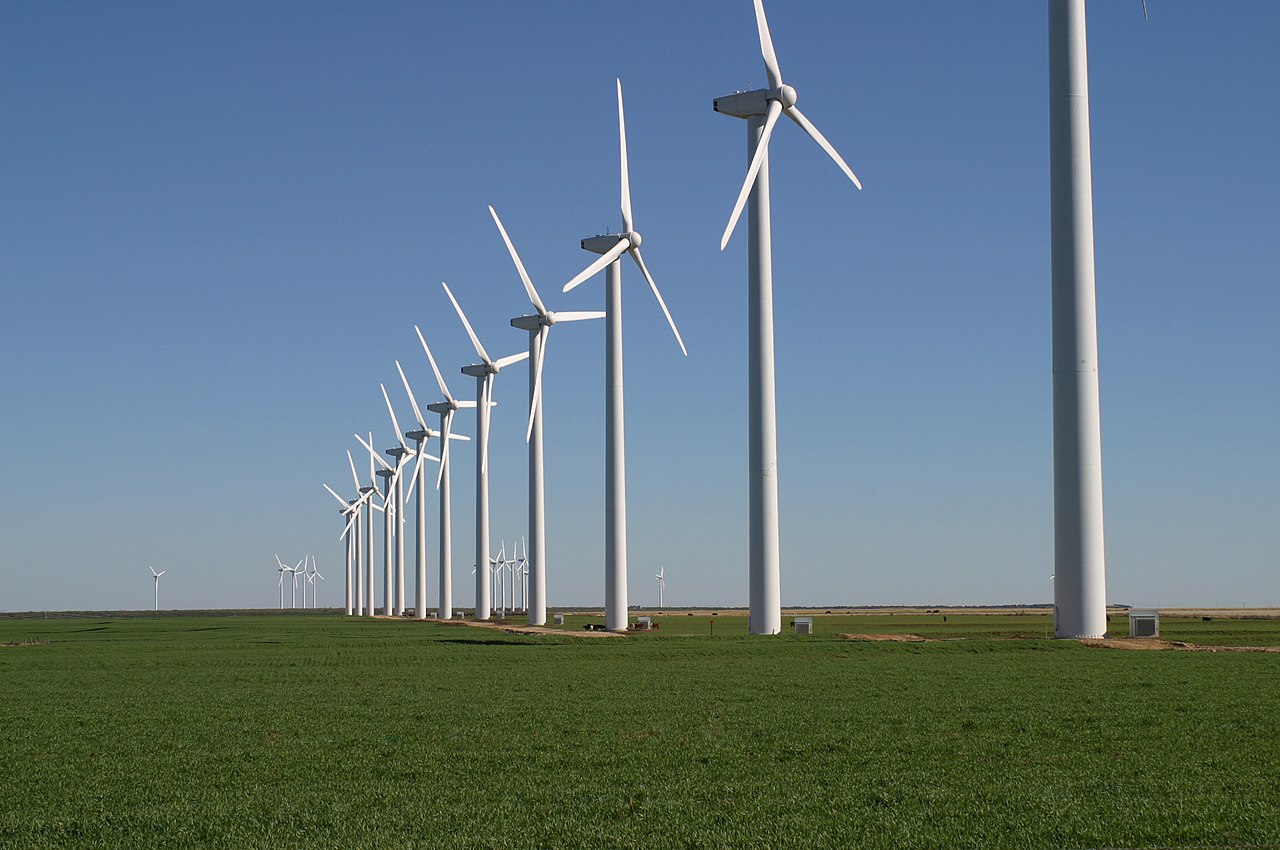
Large parts of the state—from the northern Panhandle through much of West Texas—offer persistent wind speeds suitable for modern multi-megawatt turbines. Developers use tall towers and large rotors to capture stronger winds at higher altitudes. Projects vary in size from dozens to several hundred turbines and typically connect to the grid via high-voltage transmission lines. Output from wind turbines fluctuates with weather and time of day, so system operators use a combination of forecasting, geographic diversity, and grid-balancing resources to integrate generation from many sites.
History, policy and transmission drivers
The growth of wind in Texas accelerated from the late 1990s and 2000s, driven by market, policy and infrastructure changes. The Electric Reliability Council of Texas (ERCOT), which operates most of the state's grid, is a nodal wholesale market where prices reflect marginal cost and can make wind economically competitive at times. State and federal incentives aided early deployment, and a major turning point was targeted transmission investment under programs that built lines to move power from high-wind zones to population centers. A well-known example of this approach is the Competitive Renewable Energy Zone (CREZ) effort, which enabled many projects to proceed by improving access to markets.
Major projects and examples
Texas hosts many large-scale wind farms, some of which have been among the largest in the world by combined capacity. For a broad listing of projects see the statewide directory: Texas wind farms directory. For context on Texas within national data see U.S. state wind generation data and the state energy profile: Texas energy overview.
- Roscoe Wind Farm — a large complex that demonstrated how aggregation of many turbines can achieve major scale.
- Horse Hollow Wind Energy Center — an early multi-site development that helped establish economies of scale.
- Sherbino Wind Farm — an example of modern utility-scale deployment in West Texas.
- Sweetwater Wind Farm — one of the larger early clusters of turbines in the state.
- Other notable installations include Capricorn Ridge, Buffalo Gap, King Mountain, Desert Sky, Wildorado and Brazos wind farms.
Economic and social impacts
Wind development has created construction and operations jobs, supported local supply chains, and generated lease income for many landowners who often continue agricultural uses beneath turbines. Wind projects also contribute property and sales tax revenues that fund public services in rural counties. Public attitudes vary: many communities welcome the economic benefits, while others raise concerns about visual changes, local noise, or impacts during construction. Careful siting and community engagement are common practices to reduce conflict.
Environmental considerations
Compared with fossil-fueled generation, wind energy reduces fuel consumption and greenhouse gas emissions associated with electricity production. However, wind farms can have localized environmental effects, including habitat alteration, collision risks for birds and bats, and surface impacts from access roads and infrastructure. Developers and regulators typically use pre-construction studies, mitigation measures and operational adjustments to minimize wildlife impacts and to comply with environmental rules.
Integration challenges and future outlook
As the share of wind generation increases, grid integration focuses on managing variability and ensuring reliability. Tools include improved forecasting, broader geographic dispersion of projects, flexible thermal generation, demand response, interconnection upgrades and energy storage systems such as batteries. Continued growth will depend on transmission capacity, market mechanisms that value flexibility and reliability services, and technological advances in turbines, controls and storage. With strong wind resources and a history of large-scale deployment, Texas is well positioned to remain a national leader in wind power, provided planning and investment keep pace with new capacity.
For additional project-level information and comparative statistics consult state and national sources: state project list, state energy profile, and national comparisons. Individual farm pages include Roscoe, Horse Hollow, Sherbino, and Sweetwater.
Questions and answers
Q: What is the total installed generating capacity of wind power in Texas?
A: The total installed generating capacity of wind power in Texas is 9,410 MW from over 40 different projects.
Q: Which state in the US produces the most wind power after Texas?
A: Iowa produces the most wind power after Texas with 3,670 MW.
Q: What are some advantages of wind power in Texas?
A: Several forces are working to the advantage of wind power in Texas, including the large wind resource in many areas of the state, ease of siting large projects, and the relatively high market price of electricity because it is set by natural gas prices.
Q: How is the wind power industry impacting the job market in Texas?
A: The wind power industry in Texas is creating many jobs.
Q: How can farmers in Texas earn extra income from wind power?
A: Farmers in Texas can earn extra income by leasing their land to wind developers.
Q: What is the name of the world's largest wind farm, and where is it located?
A: The world's largest wind farm is the Roscoe Wind Farm, and it is located in Texas.
Q: Name some other large wind farms in Texas.
A: Other large wind farms in Texas include the Horse Hollow Wind Energy Center, Sherbino Wind Farm, Capricorn Ridge Wind Farm, Sweetwater Wind Farm, Buffalo Gap Wind Farm, King Mountain Wind Farm, Desert Sky Wind Farm, Wildorado Wind Ranch, and the Brazos Wind Farm.
Related articles
Author
AlegsaOnline.com Wind power in Texas: resources, growth, and major projects Leandro Alegsa
URL: https://en.alegsaonline.com/art/108478
Sources
- awea.org : awea.org
- awea.org : awea.org/projects/Default.aspx
- renewableenergyaccess.com : Wind Riding Favorable Policy Breeze Toward Record Year
- seco.cpa.state.tx.us : The New Cash Crop
- windenergy.org : "Alternative Energy Institute"
- renewableenergyaccess.com : Airtricity Finalizes 209-MW Wind Project in Texas
- treia.org : Texas operational wind plants
- awea.org : AWEA 3rd Quarter 2008 Market Report
- pepei.pennnet.com : "Babcock & Brown Gulf Coast wind project clears legal hurdle"
- caller.com : "Wind power advances"
- renewableenergyworld.com : E.ON Delivers 335-MW of Wind in Texas
- seco.cpa.state.tx.us : Texas wind energy
- infinitepower.org : "Texas Wind Energy Resources"
- nytimes.com : "Move Over, Oil, There's Money in Texas Wind"