
Wind farm
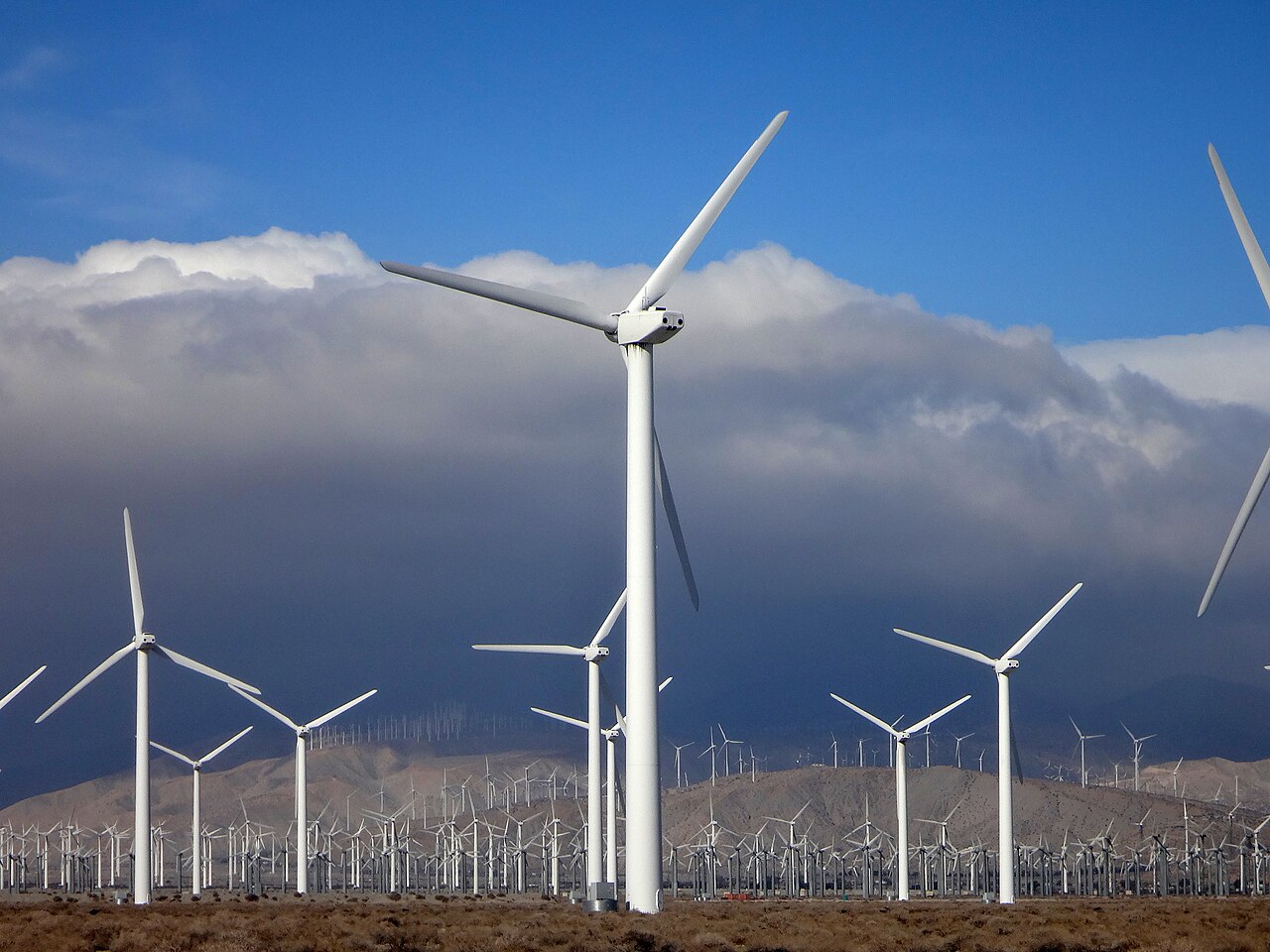
A wind farm is a collection of wind turbines in a single location that generate electricity from wind. They can be onshore or offshore and vary widely in size, technology, and grid connection.
A wind farm is a group of wind turbines that operate together to produce electricity from the kinetic energy of moving air. Individual turbines capture wind energy with rotating blades, convert it through a generator housed in a nacelle, and deliver alternating current to a local transformer or substation for distribution to the grid. Wind farms range from a handful of turbines serving a local community to large arrays covering many square miles or sea areas.
Image gallery
10 Images




Characteristics and main components
Typical components of a wind farm include:
- Wind turbines (blades, hub, nacelle, generator and tower) — see wind turbines for more technical detail.
- Foundations and access roads that secure and reach each turbine.
- Electrical collection systems and a substation that step up voltage for transmission.
- Monitoring and control systems to balance output and protect equipment.
Onshore and offshore
Wind farms may be sited on land (onshore) or at sea (offshore). Offshore farms benefit from stronger, more consistent winds and can use larger turbines, but they require more complex foundations and marine construction. Onshore sites are often less costly to build and maintain but can face more constraints from land use and local opposition.
History and development
The modern utility-scale wind farm grew from earlier mechanical windmills and the small turbines used for remote power in the mid-20th century. Rapid technological advances and policy support since the late 20th century have driven larger machines, improved reliability and economies of scale. As a result, both the number and capacity of wind farms have grown worldwide, with notable large installations that have become reference examples: the Roscoe Wind Farm and the Horse Hollow Wind Energy Center are often cited among large onshore projects, while the Thanet Offshore Wind Project and Horns Rev II are examples of earlier large offshore developments.
Uses, importance and impacts
Wind farms produce electricity without direct fuel combustion, lowering greenhouse gas emissions from power generation when they displace fossil-fuel sources. They contribute to energy security, can provide local jobs during construction and operation, and are used in combination with other renewables and storage to balance grids. Environmental and social impacts include visual and noise concerns, effects on birds and bats, and land-use competition; careful siting, technology choices and monitoring help manage these issues.
Notable distinctions and trends
Key distinctions include scale (community versus utility-scale), ownership (private, corporate, community-owned) and site type (onshore vs offshore). Current trends emphasize larger turbines, floating foundations for deeper water, repowering older farms with newer turbines, and integration with battery storage and grid services to handle variability.
Wind farms are a central component of many countries' plans to decarbonize electricity systems. Their design and deployment continue to evolve with improvements in turbine efficiency, grid integration, and environmental mitigation practices, shaping how wind energy contributes to sustainable power systems.
Related articles
Author
AlegsaOnline.com Wind farm Leandro Alegsa
URL: https://en.alegsaonline.com/art/108472
Sources
- britannica.com : "wind power (energy)"