
Woodworking joints: types, material behavior, and common uses
An overview of woodworking joints: principles, common types, historical context, how wood properties affect joint design, and practical uses in furniture and construction.
Woodworking joints are the engineered connections used to join pieces of wood into larger assemblies. They range from simple butted edges held with glue to complex interlocking forms such as dovetails and mortise-and-tenon that transfer loads and resist movement. Joinery is a core element of woodworking, and it relies on an understanding of wood as a material as well as the intended function—structural framing, cabinetry, toys, or decorative objects.
Image gallery
10 Images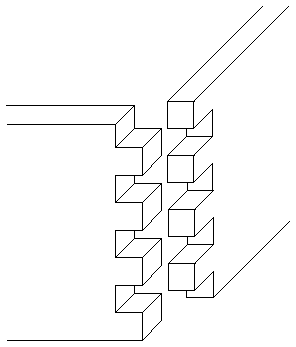




Material behavior and design implications
Successful joints exploit the strengths and recognize the weaknesses of wood. Wood is anisotropic: it is strongest along the grain (longitudinally) but comparatively weak across the grain (radial and tangential). This directional behavior affects how joints are cut, reinforced, and oriented. Another central factor is dimensional change: wood swells and shrinks with changes in moisture content, and this movement is typically small along the grain but appreciable and unequal across it. Designers and makers account for that movement to avoid splitting, glue failure, or distortion, and by choosing joint forms that allow or restrict movement where appropriate.
Common joint types
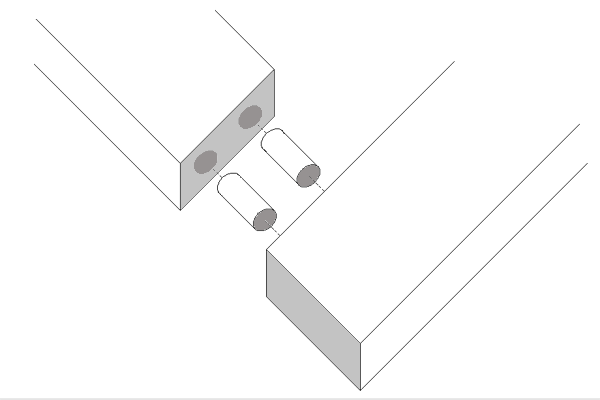
- Butt joint — the simplest meeting of two ends or edges; fastened with glue, dowels, screws, or plates, but weak unless reinforced.
- Lap joint — one piece overlaps another; used in framing and simple furniture for larger glue surfaces.
- Mortise and tenon — a tenon on one member fits into a mortise in another; valued for strength and tradition in furniture and timber framing.
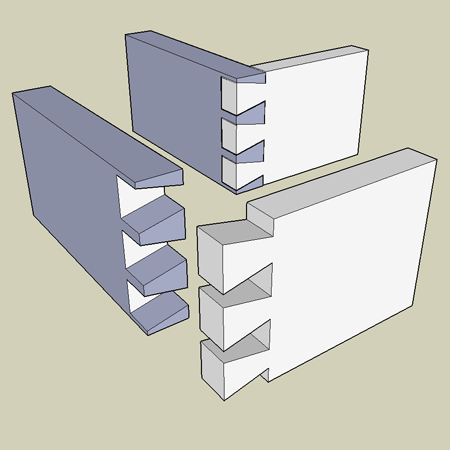
- Dovetail — interlocking trapezoidal pins and tails; commonly used in drawer construction for mechanical resistance to tension.
- Box or finger joint — repeated square fingers increase glue surface for strong corner joints in boxes and panels.
- Tongue and groove — complementary ridges and slots that align boards, frequently used for flooring and paneling.
- Rabbet and mitre — recesses and angled cuts that create neat corners and allow for edge joining and trim work.
- Bridle, dowel, and biscuit joints — variations that offer differing balances of alignment, strength, and speed for production and repair.
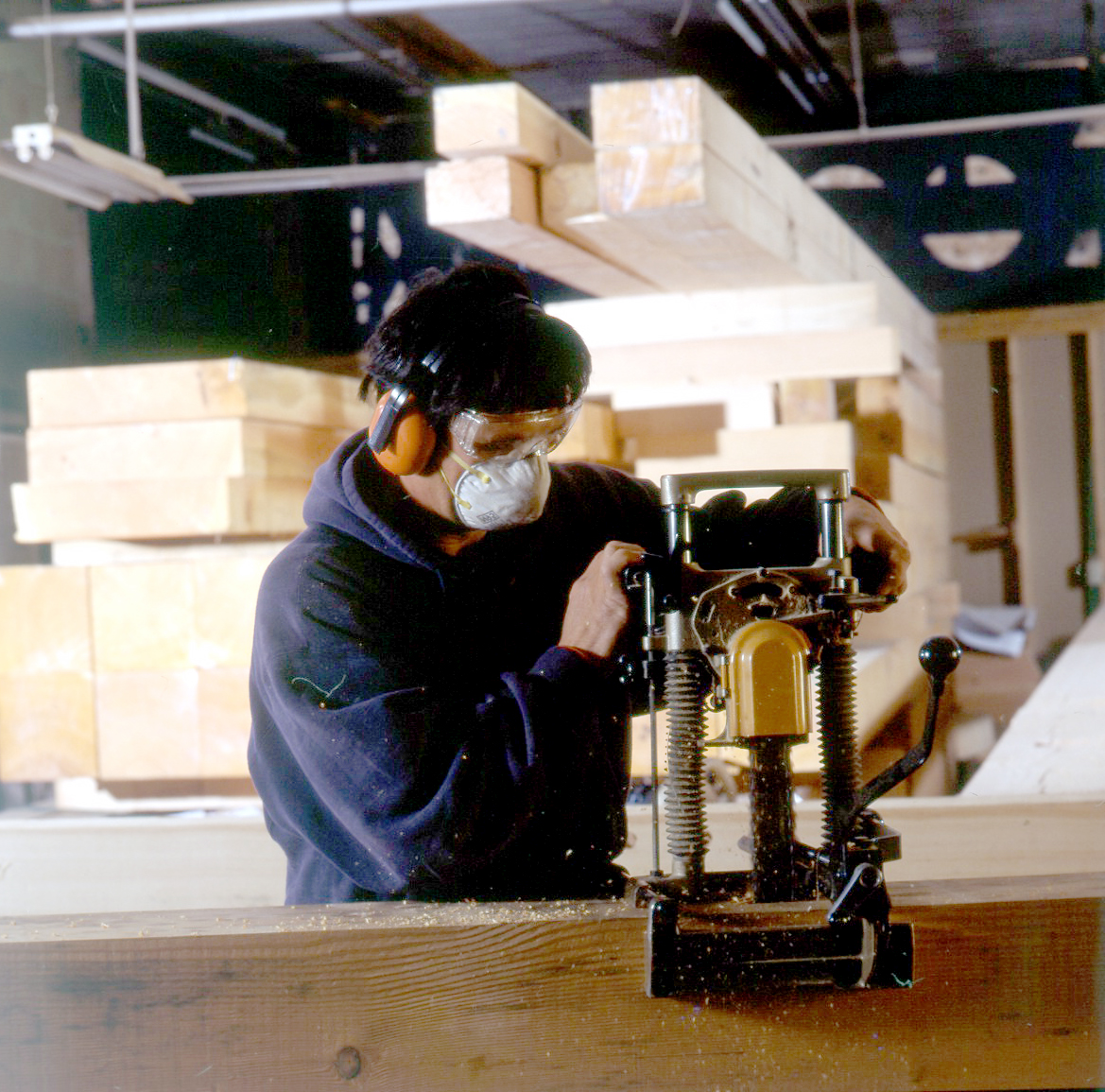
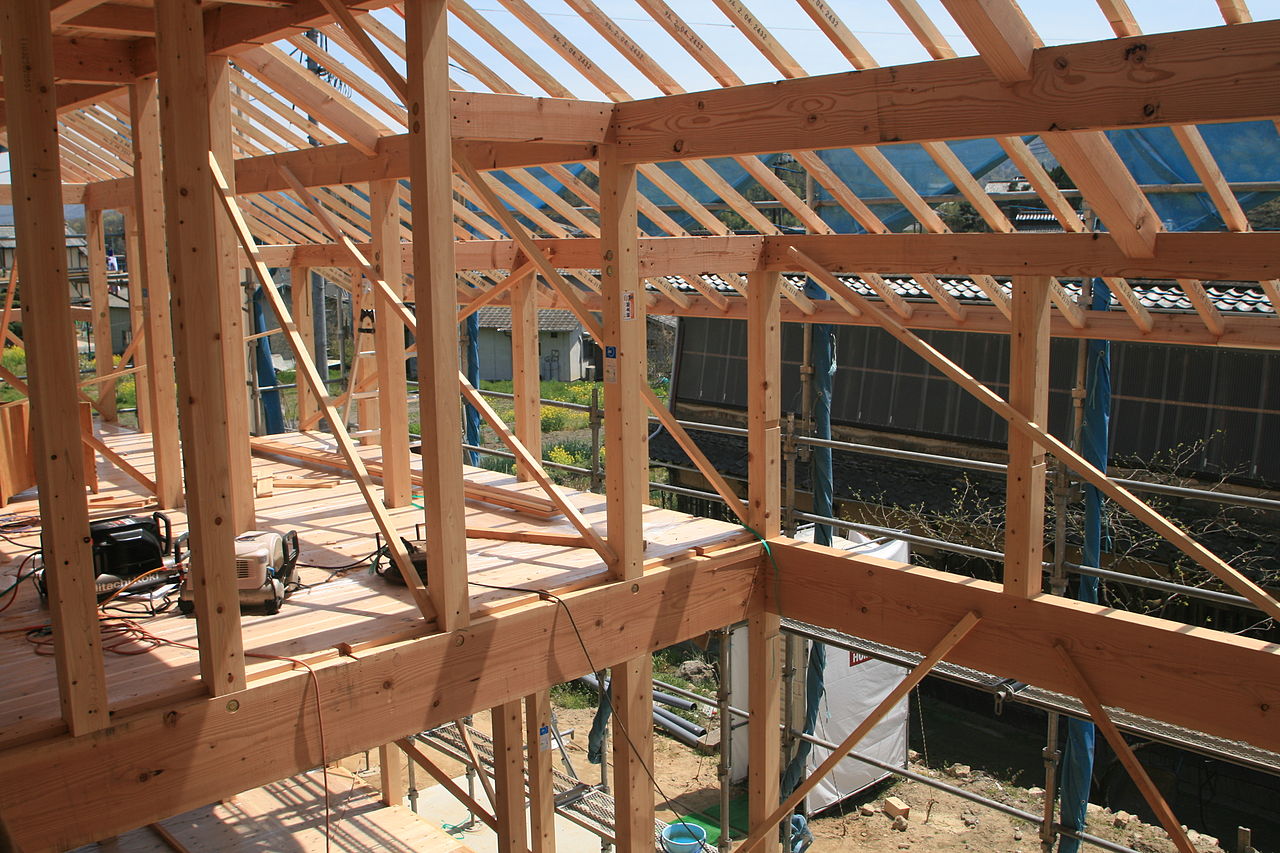
Different applications favor different joints. For heavy timber work such as a traditional house framing, through tenons, pegged joints, and large lap joints are common; for small wooden puzzle toys and fine furniture, tight-fitting interlocks and precise glue joints are preferred. Traditional joinery often minimizes metal fasteners, while modern practices combine adhesives, engineered fasteners, and machine-cut joinery for speed and consistency. The use of adhesives has changed joinery: strong modern glues can make some simpler joints perform well, but adhesive bonds still depend on proper surface preparation and moisture conditions.
History and development
Joinery has a long history, with sophisticated techniques found in ancient furniture, shipbuilding, and timber structures. Across cultures, makers evolved joint forms to suit available species, tools, and needs. The rise of machine tools and industrial adhesives broadened the range of practical joints, enabling mass-produced furniture and engineered wood products. Yet many traditional joints remain valued for aesthetics, longevity, and the ability to be repaired or disassembled.
Practical considerations and notable facts
When choosing or making a joint, consider load direction, grain orientation, moisture exposure, ease of assembly, and intended lifespan. Some joints are primarily cosmetic, others structural. Joints that transfer shear or tensile loads across the grain require careful reinforcement or selective grain alignment to avoid failure. Conservators and craftsmen also note that well-made traditional joints can be easier to repair than heavily glued modern assemblies. For further technical guidance on material properties and climate effects consult sources on material properties, grain behavior at grain structure, and humidity impacts on wood at moisture behavior.
Practical examples of joint selection include using dovetails for drawer fronts to resist pull-out, mortise and tenon for chair frames for rigidity, and tongue-and-groove for wide plank flooring to accommodate seasonal movement. Whether for conservation, craftsmanship, or manufacturing, understanding the principles behind joinery leads to more durable, functional, and attractive wooden work.
Related articles
Author
AlegsaOnline.com Woodworking joints: types, material behavior, and common uses Leandro Alegsa
URL: https://en.alegsaonline.com/art/108995