
William Ward, 2nd Earl of Dudley
British aristocrat, Conservative politician and military officer; Lord Lieutenant of Ireland (1902–1905) and Governor‑General of Australia (1908–1911).
Overview
William Humble Ward, 2nd Earl of Dudley (25 May 1867 – 29 June 1932) was a British peer, Conservative politician and military officer who held senior ceremonial and viceregal offices in the early 20th century. He inherited extensive family estates and responsibilities from his father, the 1st Earl of Dudley, and combined the private duties of a landed aristocrat with public service at home and across the empire. His principal public appointments were Lord Lieutenant of Ireland (1902–1905) and Governor‑General of Australia (1908–1911), and he received a number of high honours in recognition of his rank and service.
Image gallery
4 Images

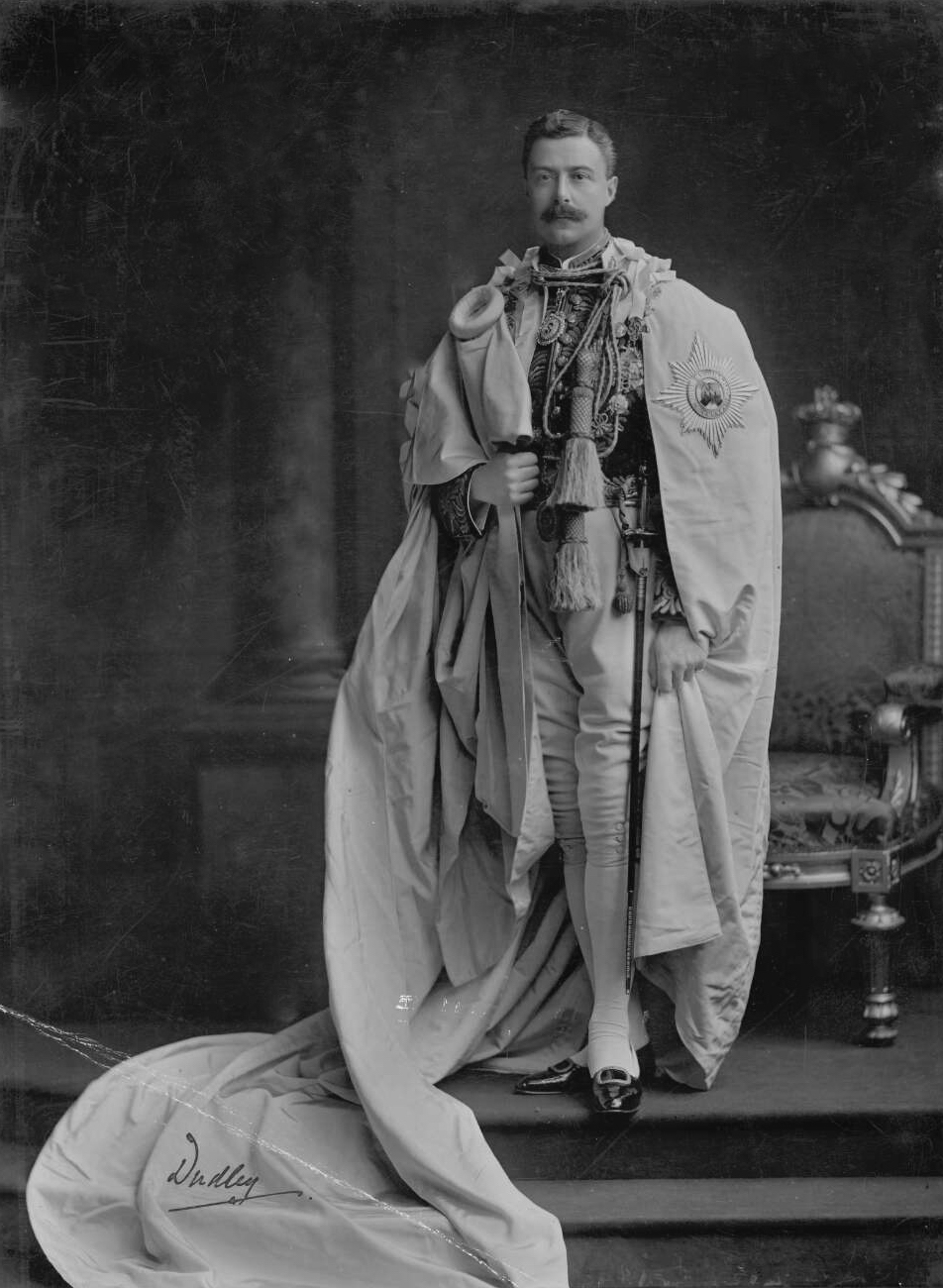

Early life and family
Born in London into a prominent aristocratic family, Dudley was the elder son of William Ward, 1st Earl of Dudley, and Georgina Ward, Countess of Dudley. His upbringing reflected the expectations of a late Victorian heir: management of family estates, public duties, social obligations and preparation for military and civic roles. He married Rachel Gurney and the couple had seven children. After Rachel Ward's accidental death by drowning in 1920 he later married the stage actress Gertie Millar in 1924. The family retained a public profile through successive generations.
Military service and local duties
Like many peers of his era, Dudley combined ceremonial and local military service with estate management. He served with volunteer and territorial units and held honorary appointments linked to his county and social standing. His military connections were part of a broader pattern in which members of the aristocracy supported local defence organizations, ceremonial regiments and civic institutions.
Lord Lieutenant of Ireland (1902–1905)
Dudley was appointed Lord Lieutenant of Ireland in 1902, acting as the monarch's representative during a politically sensitive period. The office involved constitutional, ceremonial and administrative responsibilities: representing the crown at public occasions, overseeing aspects of local government, and liaising with the British cabinet on Irish affairs. His tenure fell during continuing debates about Irish self‑government, land reform and administration of local services, and required a combination of diplomacy and ceremonial presence.
Governor‑General of Australia (1908–1911)
In 1908 Dudley was appointed Governor‑General of Australia, the fourth person to hold that viceregal office in the recently federated dominion. As Governor‑General he performed constitutional duties such as giving royal assent to legislation, appointing ministers on the advice of Australian premiers, and representing the sovereign at national ceremonies. His term coincided with a formative period in Australian federal politics; he worked with several prime ministers and governments as the new Commonwealth consolidated institutions and practices. The role required reconciling ceremonial dignity with the growing expectations of political autonomy in the dominion.
Honours and public recognition
Dudley held a number of senior British and imperial honours customary for someone of his rank and service. He was a member of the Privy Council and was appointed to several distinguished orders and decorations, reflecting both his social position and the pattern of imperial honours awarded to senior officials and representatives of the crown.
Personal life, later years and death
Outside his official roles Dudley managed family estates, supported local charitable and civic causes and maintained an active social life typical of his class. After his return from Australia he continued to be involved in public life and family affairs. He suffered from ill health in later years and died in London on 29 June 1932 at the age of 65. Contemporary obituaries noted his mixture of aristocratic patronage, imperial duty and public ceremonial.
Legacy
William Ward's career illustrates the role of the British aristocracy in the governance of the United Kingdom and its dominions in the Edwardian era. His viceregal appointments provide insight into how ceremonial dignity and constitutional practice intersected as self‑government developed across the empire. Historians and biographers use his life to explore questions of imperial administration, the social responsibilities of peers, and the evolution of viceregal practice in dominions such as Australia.
Further reading and resources
- Biography and honours summary
- Imperial decorations and orders
- Royal Victorian distinctions
- Privy Council membership details
- Political affiliation and party links
- Peerage and aristocratic background
- Parliamentary and governmental roles
- Conservative Party context
- Governor‑General of Australia: office overview
- Lord Lieutenant of Ireland: viceregal duties
- Birthplace and early life
- County and local ties
- Maternal family and Scottish connections
- Personal tragedy: Rachel Gurney
- Circumstances of death and final years
The items linked above provide starting points for archival or biographical research into Dudley’s life, offices and the broader social and political contexts in which he served. They are useful for readers seeking more detailed contemporary documents, official records and specialist studies of viceregal practice in the British Empire.
Related articles
Author
AlegsaOnline.com William Ward, 2nd Earl of Dudley Leandro Alegsa
URL: https://en.alegsaonline.com/art/108313
Sources
- commons.wikimedia.org : William Ward, 2nd Earl of Dudley
- adb.anu.edu.au : "Dudley, second Earl of (1867–1932)"