
Lord Lieutenant of Ireland
The Lord Lieutenant of Ireland was the British monarch's chief representative in Ireland (c.1171–1922). The viceregal office evolved from medieval justiciars and governed Irish administration until the Irish Free State.
The Lord Lieutenant of Ireland was the Crown's chief representative in Ireland from the period following the Anglo‑Norman incursions of the late 12th century until the office was abolished in 1922. Commonly called the "viceroy" in contemporary and later accounts, the holder acted as the nominal head of the Irish executive and as the principal conduit between Irish administration and the government in London. Alternative medieval and early modern titles include Justiciar and Lord Deputy, reflecting the office's long evolution.
Image gallery
3 Images
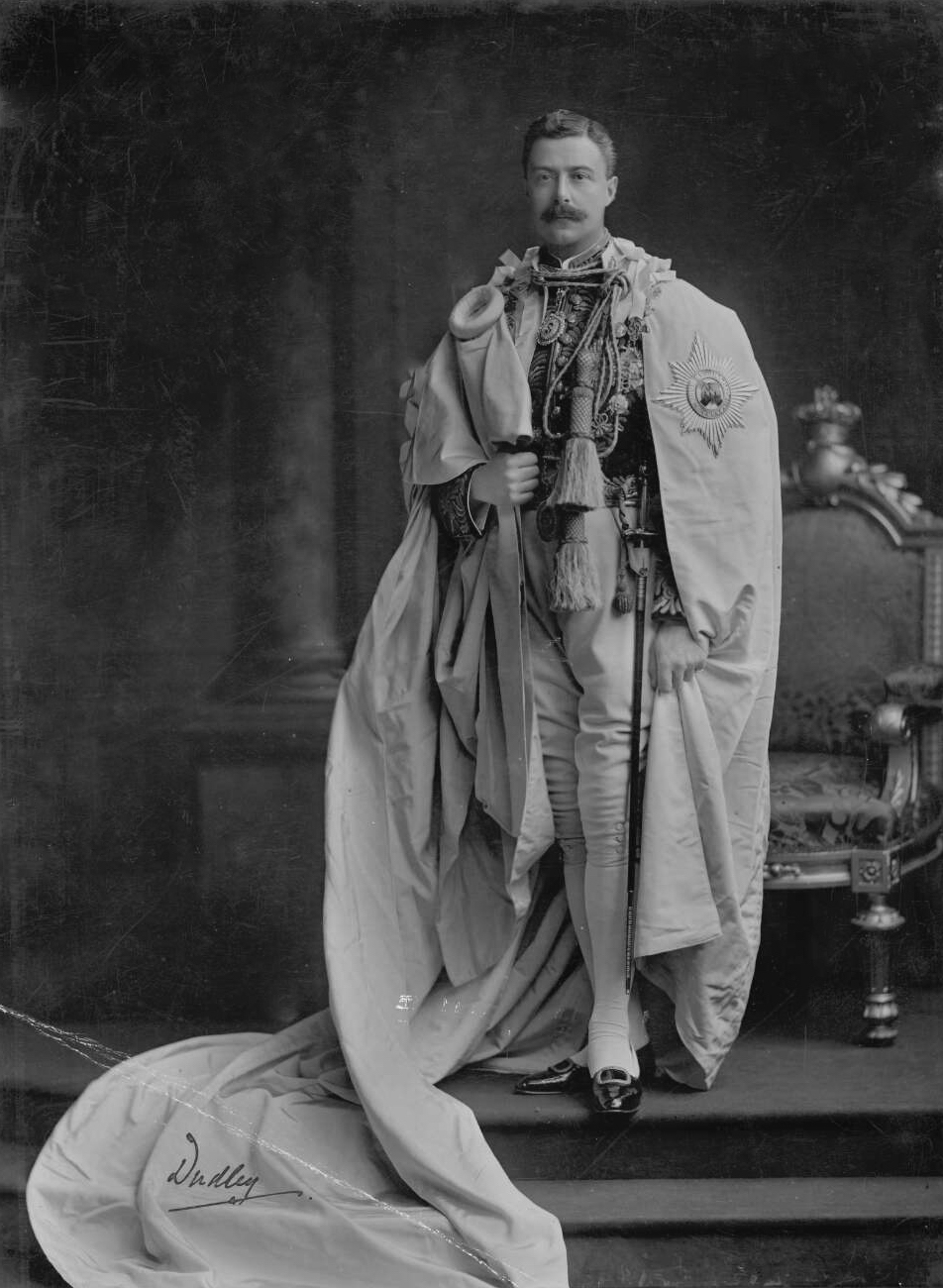

Origins and historical development
The office developed from early royal mechanisms for ruling territories beyond the immediate control of the sovereign. During the medieval period, officials known as justiciars exercised royal authority in Ireland; in later centuries the terminology shifted and the office acquired the more elaborate trappings associated with viceregal government. Over time the role changed in response to political consolidation, the creation of an Irish administration centered on Dublin Castle, and the constitutional changes that linked Ireland more closely to the Crown in London. From the early modern period most incumbents were members of the British peerage rather than native Irish magnates.
Duties, powers and institutions
As the monarch's representative the Lord Lieutenant combined ceremonial, executive and political functions. He presided over the Irish Privy Council, appointed and dismissed civil and judicial officers by royal authority, and held patronage powers that shaped local and national governance. In military or emergency situations the Lord Lieutenant coordinated defence and law‑and‑order measures with British forces. Although the office bore the sovereign's authority, in practice holders usually acted on the advice and instructions of ministers in London, particularly as modern cabinet government developed.
Appointment, style and public role
The Lord Lieutenant was formally appointed by the monarch and was often a high‑ranking aristocrat whose social rank and connections reflected the importance of the post. In everyday speech the office was widely referred to as the "viceroy"—a concise way to express the idea of the sovereign's deputy or vice‑king. The traditional British pronunciation of "Lieutenant" as "Lef‑tenant" was commonly applied to the full style "Lord Lieutenant of Ireland." The plural form is sometimes shown in reference works as Lords Lieutenant.
Administration and residence
Dublin Castle served as the principal viceregal residence and the administrative centre for the Lord Lieutenant's household and staff. From there the viceroy conducted official business, hosted state occasions and maintained the offices that sustained Irish central government. The viceregal establishment included secretarial, legal and ceremonial offices whose records now form an important archival source for the study of Irish administration.
Political context, crises and decline
The influence of the Lord Lieutenant varied with political circumstances. During periods of unrest, rebellion or war the viceroy might exercise extensive powers; during calmer periods day‑to‑day governance often rested with local officials and ministers. The 19th and early 20th centuries brought growing demands for Irish self‑government, political reform and changes in how imperial authority was exercised. Debates over Home Rule, the expansion of electoral politics and the increasing assertiveness of Irish political movements reduced the centrality of the viceregal office as local political institutions strengthened.
Abolition and legacy
The office was abolished in 1922 with the creation of the Irish Free State and the redefinition of the Crown's role in Ireland. The end of the Lord Lieutenancy marked the close of a long‑standing system of viceregal governance. Its legacy remains visible in administrative practices, public buildings such as Dublin Castle, and extensive official records. For a concise institutional overview see a summary of the Irish executive and its change over time; the term "viceroy" and its usage are discussed further in comparative studies of vice‑royalties and imperial governance here.
- Distinction: not to be confused with county lord‑lieutenants, who serve as local Crown representatives for individual counties.
- Residence: Dublin Castle was the principal seat of the Lord Lieutenant for much of the modern period.
- Social background: incumbents were typically members of the peerage and part of the imperial governing class.
Questions and answers
Q: What is the Lord Lieutenant of Ireland?
A: The Lord Lieutenant of Ireland is a political office, which was the representative of the King and head of the Irish executive between 1171 and 1922.
Q: How is the term pronounced?
A: The term is always pronounced as 'Lord Lef-tenant of Ireland'.
Q: What other words were used for this office in earlier times?
A: Other words used for this office were Judiciar in the early medieval period, and Lord Deputy as late as the 17th century. The people in this job were often also called viceroy, from the French vice roi or deputy king.
Q: Who held this position during the Middle Ages?
A: During the Middle Ages some Lord Lieutenants had been Irish noblemen.
Q: Who held this position after that?
A: After that only noblemen from Great Britain worked in this job.
Q: When did this office exist?
A: This office existed between 1171 and 1922.
Related articles
Author
AlegsaOnline.com Lord Lieutenant of Ireland Leandro Alegsa
URL: https://en.alegsaonline.com/art/59213