
Wedgie: definition, types, social context and safety
A wedgie is the forcible pulling of a person's underwear up toward the buttocks. This article explains types, social contexts, risks, depictions in media, and prevention or response measures.
Overview
A wedgie occurs when someone's underwear is forcibly tugged so that the fabric is pulled up between the buttocks. It is commonly used as a prank, a form of hazing, or an act of bullying intended to humiliate the recipient. The action can be brief and playful among consenting friends, or aggressive and nonconsensual when used to intimidate or degrade. Because it directly involves intimate clothing, a wedgie can produce both physical discomfort and psychological distress.
Image gallery
2 Images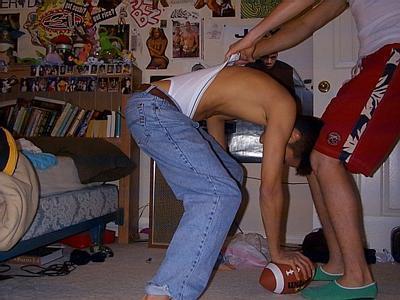

Forms and common variations
There are many named variations and techniques for wedgies. Some are distinguished by the direction of the pull, the social setting, or whether additional actions are taken. Typical variants include:
- Standard wedgie: a rearward pull that forces the underwear between the buttocks.
- Front wedgie (sometimes called a melvin): the underwear is pulled upward at the front of the body.
- Hanging wedgie: the garment is hooked on an elevated object so the person is partially suspended.
- Bra connection: underwear is connected to an upper garment such as a bra to create a tethered effect.
- Atomic wedgie: the underwear is pulled up and over the head, stretching the elastic beyond its normal range.
- Messy or prank wedgies: food, water, or other substances are placed in the pants while the victim is wedgied.
- Squeaky clean and bouncing wedgies: these are descriptive names for specific motions — repeated front/back pulls or bouncing while the fabric is stretched.
Some variations increase the risk of clothing tearing, injury, or forced exposure, and may cross into sexual harassment.
Context, effects and distinctions
Wedgies appear in school settings, sports locker rooms, workplace harassment complaints, and popular culture. When consensual and controlled, they are often portrayed for humor or as a light prank; when nonconsensual they constitute bullying or assault. Physical effects range from soreness, chafing, and torn garments to more serious soft-tissue injuries in extreme cases. Psychological effects can include embarrassment, anxiety, and loss of trust. A wedgie differs from other forms of physical harassment because it specifically manipulates undergarments, but its social function—power, humiliation, or initiation—overlaps with teasing, hazing and sexual harassment.
History and cultural presence
While there is no single origin story, wedgies have long appeared in informal social rituals and in visual comedy. They are a recurring trope in films, television sitcoms, and cartoons, where the act is exaggerated for comedic effect. Their frequent use in low comedy stems from the combination of surprise, mild violence, and bodily humor. At the same time, increased awareness of bullying and consent has led to more critical portrayals and discussions about whether such gags are acceptable.
Prevention, response and legal considerations
Schools, employers and organizations increasingly treat nonconsensual wedgies as a discipline or safety issue. Prevention strategies include clear anti-bullying policies, supervision in settings where wedgies occur, and education about consent and respect. Responses to incidents often involve counseling, disciplinary measures, and, when injuries or sexualized conduct occur, legal or law-enforcement action. Victims or bystanders can report incidents to authorities or institutional administrators. For practical guidance on clothing damage or first aid after an incident, a trusted adult or medical professional can provide help.
Related notes and resources
Awareness of context matters: a prank among consenting adults differs legally and ethically from a wedgie used as coercion. Conversations about consent, boundaries, and the potential for emotional harm are important in preventing escalation. For general information on clothing and garments related to this topic see items associated with the body, and for social or legal advice consult institutional resources such as school policies or guidance at support pages and official complaint procedures. For product information or care notices about undergarments that may tear under strain see manufacturer guidance and for health-related concerns consider consulting educational materials at medical or counseling resources.
Related articles
Author
AlegsaOnline.com Wedgie: definition, types, social context and safety Leandro Alegsa
URL: https://en.alegsaonline.com/art/107108