
Azzedine Alaïa: Tunisian Parisian Haute Couture Designer (1935–2017)
Concise biography of Azzedine Alaïa, the Tunisian-born Paris-based haute couture designer celebrated for body-conscious tailoring, craft-based practice, major honours and his museum retrospectives.
Overview
Azzedine Alaïa (26 February 1935 – 18 November 2017) was a Tunisian-born designer who established his reputation in Paris as a leading figure in late 20th- and early 21st-century haute couture. His name appears in Arabic as عز الدين عليّة. Alaïa became known for garments that emphasize the human form through precise cutting, close tailoring and careful hand-finishing. He preferred to run an independent studio and maintained a practice that placed craft, fit and the individual client at the centre of design.
Image gallery
4 Images


Early life and training
Born in Tunisia, Alaïa moved to Paris as a young man to pursue fashion and tailoring. He trained in ateliers and learned pattern-making and construction techniques that would inform his later work. Rather than following the commercial routes favoured by some houses, he built a reputation on craftsmanship and on garments that behave like sculpture around the body.
Design characteristics
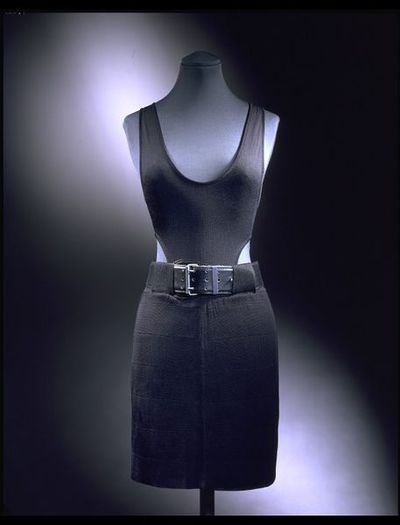
Alaïa is often described as a maker who treated clothing as three-dimensional form. He favoured tight, body-conscious silhouettes, engineered knitwear and precise seaming. His work combined technical mastery with sensuality: dresses and bodys are cut to celebrate the shape of the wearer, and execution often involved careful handwork in the atelier. He was attentive to materials and to how fabric and cut interact with movement.
Career and recognition
Working largely from his Paris studio, Alaïa navigated between made-to-measure couture and selective ready-to-wear offerings while resisting broad commercial licensing. He did not always conform to the traditional fashion calendar and for a period paused presenting on the runway; he resumed showing collections on the catwalk in 2011 after an extended hiatus. In 2008 he was awarded the Legion of Honour by the French government, a formal recognition of his cultural contribution to fashion.
Exhibitions and public legacy
Institutions have examined Alaïa's work to explore its relationship with sculpture and contemporary art. A major retrospective in 2015 at the Galleria Borghese in Rome, titled Couture/Sculpture: Azzedine Alaïa in the History of Fashion, presented his garments within a museum context and drew attention to their structural qualities. Such exhibitions helped introduce his methods and his insistence on handcraft to wider audiences beyond the fashion trade.
Influence and reception
Alaïa's reputation rests on a combination of technical ability, independence and a consistent vision that prioritised fit and longevity over transient trends. Critics and admirers have highlighted his role as a craftsman-designer who valued the human figure and the discipline of construction. His approach offered an alternative model to large-scale commercial expansion and is frequently cited in discussions about sustainability, craft and the cultural value of fashion.
Personal life and death
Alaïa lived and worked in Paris for much of his career and maintained a small, dedicated team in his atelier. He continued designing into later life and died on 18 November 2017. After his death his work has continued to be displayed in collections and exhibitions that reflect on his contribution to fashion and design.
Notable facts
- Origins: Tunisian-born, made his career in Paris as a designer and fashion designer focused on couture techniques.
- Recognition: Recipient of the Legion of Honour for cultural contribution.
- Museum attention: Retrospectives such as the Galleria Borghese show underline the sculptural quality of his work and broadened public appreciation.
Related articles
Author
AlegsaOnline.com Azzedine Alaïa: Tunisian Parisian Haute Couture Designer (1935–2017) Leandro Alegsa
URL: https://en.alegsaonline.com/art/114779
Sources
- bbc.co.uk : "Azzedine Alaïa: Popular Tunisian couturier dies aged 77"
- vogue.co.uk : "Fashion World Mourns The Death Of Azzedine Alaïa"
- vogue.com : "The Future of Fashion, Part Nine: Azzedine Alaïa"
- wwd.com : "Azzedine Alaïa Returns to Runway After Eight Years"
- wwd.com : "Azzedine Alaïa Exhibit Celebrated in Rome"
- vogue.co.uk : "Azzedine Alaia's Soft Sculptures"