
Zipper (zip fastener)
A zipper is a mechanical fastener that joins two fabric edges by interlocking teeth moved by a slider; common in clothing, luggage, outdoor gear and many industrial uses.
A zipper, also called a zip or zip fastener in some varieties of English, is a common mechanical device for temporarily joining two fabric or flexible material edges. It works by interlocking opposing rows of teeth or coils and drawing them together with a slider. Zippers can be small and delicate for garments or heavy and rugged for luggage and industrial applications, and they are both functional and sometimes decorative.
Image gallery
10 Images


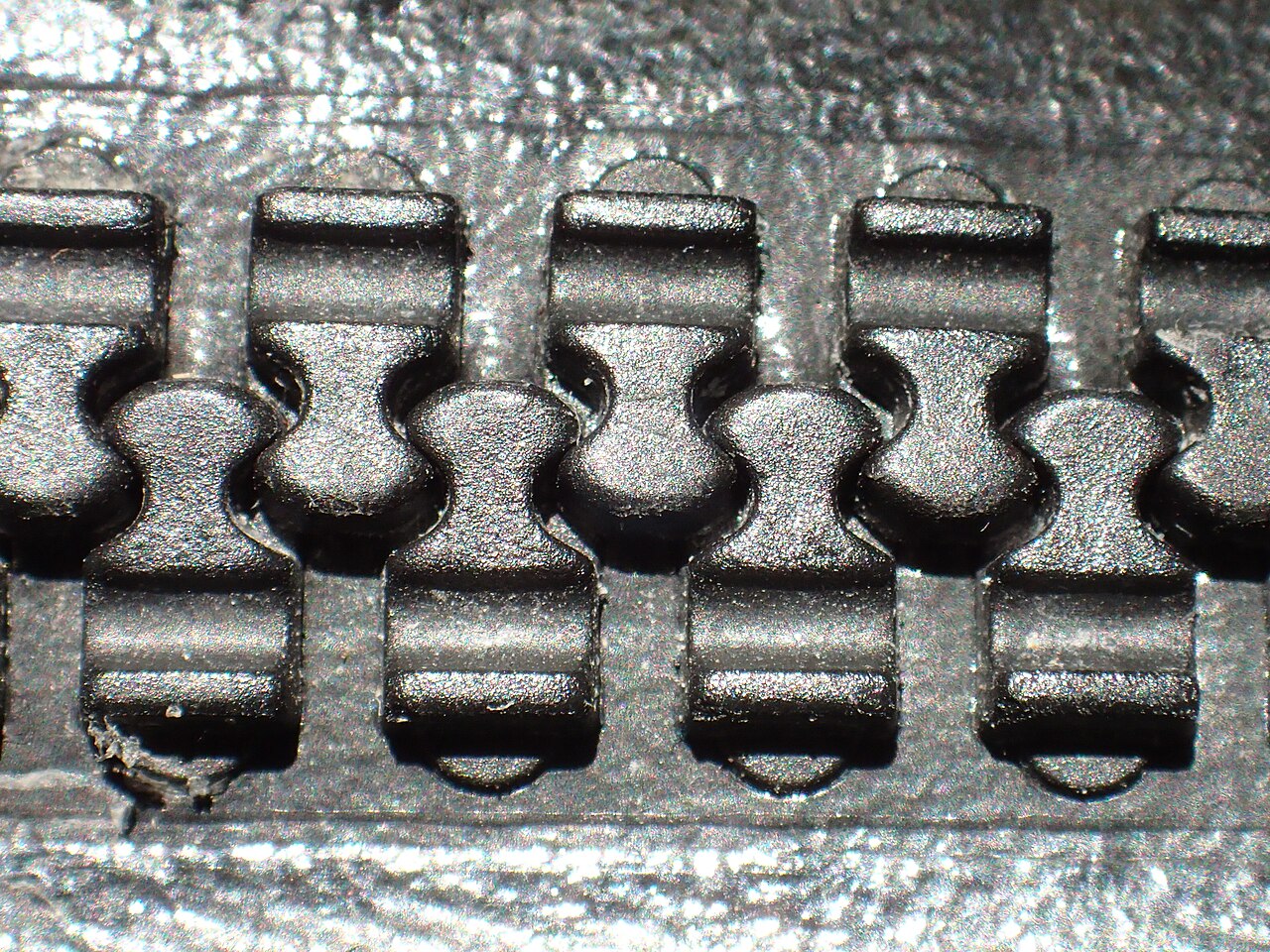

Main parts and how it works
A zipper assembly combines several standard parts. The interaction of these elements produces the closing or opening action:
- Teeth or coils: the interlocking elements, made from metal, molded plastic, or continuous nylon coil.
- Slider: the movable piece that meshes or separates the teeth as it moves along the chain.
- Tape: fabric strips sewn to the garment or product that hold the rows of teeth in place.
- Stops and retainer box: small fittings that prevent the slider from coming off the ends; separating zippers use a box-and-pin mechanism to enable complete separation.
- Pull tab: the part attached to the slider for manual operation, sometimes designed for ergonomics or aesthetics.
Types and variations
Zippers are made in many forms to suit different requirements:
- Closed-end (non-separating): used where two sides remain joined at one end, for example on trousers or skirts.
- Separating (open-end): allows complete separation of the two sides, typical of jackets and coats.
- Two-way zipper: has sliders that permit opening from either end or from both ends toward the middle.
- Materials: metal (brass, aluminum), molded plastic, and nylon coil are common, with waterproof or laminated variants for outdoor gear.
- Invisible zippers: designed so the teeth are hidden behind the tape for a clean finish on garments.
History and development
Early attempts to mechanize garment fastening appeared in the late 19th century. An initial practical machine was developed for a clasping device, and later inventors refined the concept into the modern interlocking teeth and efficient slider. Improvements in the early 20th century led to the reliable, mass-producible zippers we use today. The colloquial name "zipper" was popularized in the 20th century and is derived from the characteristic sound of the slider.
Uses, maintenance and alternatives
Zippers are ubiquitous in clothing (jeans, jackets, dresses), luggage, bedding, tents, sleeping bags, upholstery and technical garments such as sportswear and protective suits. Maintenance is simple: keep the chain clean, occasionally lubricate with wax or graphite for stiff sliders, and replace worn sliders or entire chains when teeth fail. Alternatives include buttons, snaps, hooks, and hook-and-loop fasteners; the choice depends on strength, flexibility, appearance and ease of repair.
Because zippers combine different materials, they can complicate recycling of garments and items at end of life. Nevertheless, their convenience and adaptability make them one of the most widely used fastening systems in modern textiles and equipment.
Related articles
Author
AlegsaOnline.com Zipper (zip fastener) Leandro Alegsa
URL: https://en.alegsaonline.com/art/110650