
Weather station: instruments, history, and practical uses
An overview of weather stations: what they measure, common instruments, brief history, types, and practical applications in forecasting, aviation, agriculture, and science.
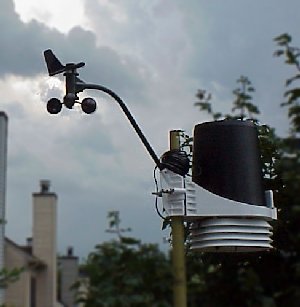
A weather station is a site or device equipped to observe and record atmospheric conditions. Stations range from simple backyard units to staffed observatories and automated networks. Typical measurements include wind speed, wind direction, temperature, humidity, and barometric pressure; additional sensors may monitor precipitation, solar radiation, and cloud base height. Many modern stations transmit data automatically to regional services and databases.
Image gallery
8 Images


Instruments and measurements
Common instruments found at weather stations collect different kinds of information. A concise list helps show how they relate to observed variables:
- Thermometers measure air temperature, often housed in radiation shields to avoid direct sunlight effects.
- Barometers register atmospheric pressure; changes in pressure are important for short‑term weather patterns (barometers).
- Anemometers determine wind speed and, with a vane, wind direction (anemometers).
- Hygrometers and psychrometers measure humidity and dew point.
- Precipitation gauges record rainfall amounts; ceilometers or cloud radars estimate cloud height and coverage.
History and development
Observations of weather have been recorded for centuries, but systematic networks grew in the 19th century as telegraphy enabled rapid sharing of measurements. Early observatories used manual readings; automating sensors and digital telemetry in the 20th and 21st centuries vastly increased data frequency and coverage. Satellite and radar systems now complement ground stations to produce comprehensive weather analyses.
Applications and importance
Weather station data support many practical uses. National services use station networks for forecasting and issuing warnings for storms, heat, or frost. Airports rely on precise local readings for flight safety. Farmers use station data for irrigation and planting decisions. Long‑term records from stations contribute to climate monitoring and research.
Types, operation, and notable facts
Stations may be staffed or fully automatic. Personal and educational stations are common and can feed public networks if they meet siting and calibration standards. Data quality depends on sensor maintenance, correct placement, and exposure; for example, thermometers should be shielded and mounted at a standardized height. Many stations now integrate with online platforms so users can visualize trends in near real time.
For further reading about individual measurement techniques and sensor care, see specialized resources on wind speed, wind direction, temperature, humidity, barometers, and anemometers.
Related articles
Author
AlegsaOnline.com Weather station: instruments, history, and practical uses Leandro Alegsa
URL: https://en.alegsaonline.com/art/107040