
Anemometer (wind-speed instrument)
An instrument for measuring wind speed—often paired with direction sensors—used in meteorology, aviation, marine work and wind-energy assessment. Several mechanical and electronic designs measure speed differently.
Overview
An anemometer is an instrument designed to measure the speed of air flow. The term derives from the Ancient Greek ἄνεμος (anemos), meaning "wind." Anemometers are a standard component of weather stations and are widely used in meteorology, aviation, marine operations and wind engineering. Different designs suit different environments and accuracy requirements.
Image gallery
10 Images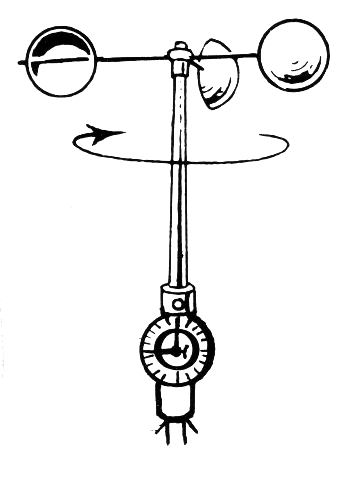





Common types and how they work
Several principal types of anemometer are in common use. Each measures wind speed by a different physical principle:
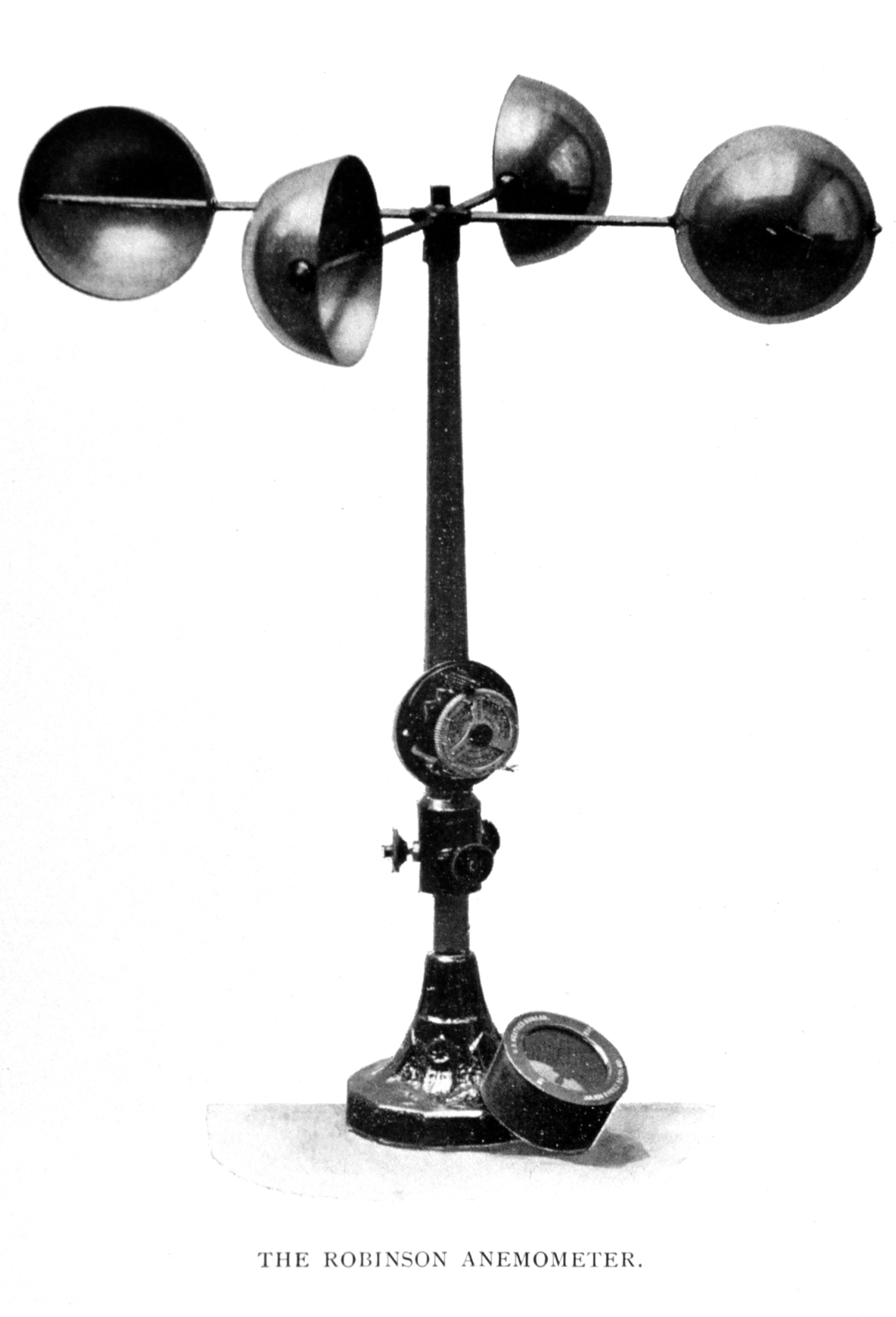
- Cup anemometers: Rotating cups drive a shaft; the rotation rate is proportional to wind speed and is simple to implement and robust for field use.
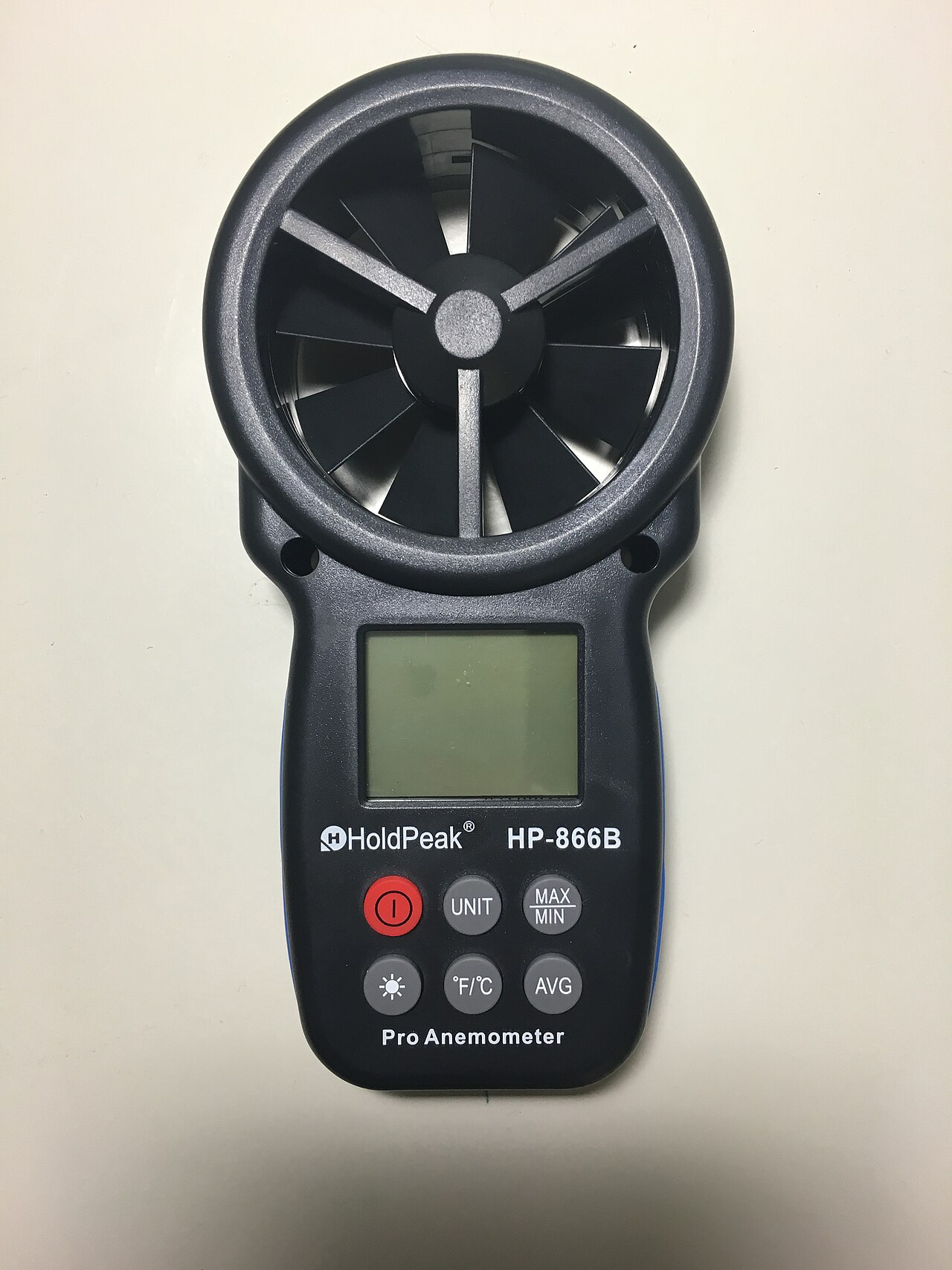
- Vane or propeller anemometers: A propeller or rotor aligned by a vane turns in the wind, combining speed and direction measurements when linked to a wind vane.
- Hot-wire anemometers: Use electrically heated wires that cool in moving air; the cooling rate relates to speed and is sensitive at low velocities.
- Sonic (ultrasonic) anemometers: Measure the time-of-flight of ultrasonic pulses between transducers; they provide three-dimensional wind components with no moving parts.
- Pitot and differential-pressure systems: Common in aeronautics, they infer airspeed from pressure differences.
Components and practical considerations
A typical installation includes the sensor head, mounts that minimize flow distortion, cabling and a recorder or data logger. Height above ground, nearby obstacles and sensor orientation strongly influence readings; standard meteorological measurements are often taken at 10 meters above ground to enable consistent comparisons. Maintenance, calibration and protection from icing or contamination are important for reliable long-term records.
History and development
Descriptions of wind-measuring devices date back centuries; a mechanical anemometer was first described by Leon Battista Alberti in the mid-15th century. Later refinements led to the cup anemometer widely attributed to the 19th century. Twentieth-century advances in electronics and acoustics produced hot-wire and sonic designs that extend measurement range and temporal resolution.
Uses, importance and notable distinctions
Anemometers serve many roles: routine weather observation, airport wind monitoring, marine navigation, designing buildings to withstand wind loads, and assessing sites for wind turbines. Choice of instrument balances sensitivity, durability and the need to resolve gusts versus mean wind. For aerodynamic testing and research, high-frequency ultrasonic or hot-wire instruments reveal turbulence and rapid fluctuations, while cup and vane instruments are often preferred for field simplicity. For more technical reference on standards and best practices, see materials related to aerodynamics.
Understanding the instrument type, its limitations and proper siting is essential to interpret wind measurements correctly. Different technologies complement each other: moving-element devices remain commonplace for routine monitoring, while non-mechanical sensors are favored where precision and low maintenance are required.
Questions and answers
Q: What is an anemometer?
A: An anemometer is a device used to measure wind speed.
Q: Where can an anemometer be found?
A: An anemometer can be found in most weather stations.
Q: What is the origin of the word anemometer?
A: The word anemometer comes from the Ancient Greek word ἄνεμος, meaning wind.
Q: In which fields is an anemometer used?
A: An anemometer is used in meteorology or aerodynamics as an airspeed measurement instrument.
Q: Who described an anemometer for the first time?
A: Leon Battista Alberti described an anemometer for the first time around 1450.
Q: What is the importance of an anemometer?
A: An anemometer is important in determining wind speed, which can have an impact on weather patterns, sailing, flying, and many other activities.
Q: How has the design of anemometers evolved over time?
A: The design of anemometers has evolved over time to incorporate digital technology and advanced sensors, leading to more accurate measurements and increased functionality.
Related articles
Author
AlegsaOnline.com Anemometer (wind-speed instrument) Leandro Alegsa
URL: https://en.alegsaonline.com/art/4088