
Vulcanoid asteroids: hypothetical small bodies orbiting inside Mercury's path
Vulcanoids are a proposed population of small asteroids that would orbit between the Sun and Mercury. None have been confirmed; their existence informs models of inner Solar System formation and dynamics.
Overview
Vulcanoid asteroids are a theoretical class of small Solar System bodies that would orbit interior to the planet Mercury, in a region very close to the Sun. The name recalls the 19th‑century idea of a planet called Vulcan, once proposed to explain certain anomalous observations near the Sun. Modern discussion treats vulcanoids as a possible remnant population: stable in some dynamical models, but difficult to detect because of the intense solar background and thermal environment.
Image gallery
3 Images

Location and dynamical stability
The putative vulcanoid zone lies between the solar photosphere and Mercury's orbit in a narrow range of heliocentric distances where long‑term orbital stability is predicted by some dynamical studies. Small bodies there would experience strong solar gravity, tides from Mercury and other planets, and non‑gravitational forces such as solar radiation pressure and the Yarkovsky effect. These processes make the region dynamically interesting: some modelling suggests that kilometer‑sized objects could survive on billion‑year timescales under favorable conditions, while smaller fragments are more susceptible to removal.
Physical conditions and expected properties
Any surviving vulcanoids would be exposed to intense sunlight and high surface temperatures, leading to thermal alteration of surface materials and rapid space weathering. Their compositions would likely reflect the innermost Solar System—metal‑rich or refractory minerals might dominate if volatile compounds were driven off by heat. Their sizes, if they exist, are expected to be small relative to main‑belt asteroids; searches have typically focused on objects ranging from subkilometer to a few kilometers in diameter.
Observational searches and constraints
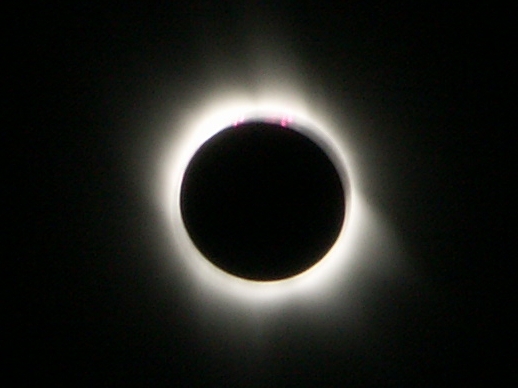
Because of the proximity to the Sun, vulcanoids can only be sought during deep twilight, total solar eclipses or with instruments that block direct sunlight. Ground‑based twilight surveys, eclipse observations and spaceborne coronagraphs have all been used in searches. Reviews and catalogs of inner‑solar observations summarize these efforts and the resulting limits on a vulcanoid population (asteroid studies, solar observing archives). So far no vulcanoid has been confirmed; existing data place upper limits on the number of bodies larger than a few kilometers, though smaller fragments remain difficult to exclude.
Methods and instruments
- Twilight imaging: sensitive cameras pointed near the Sun during brief morning or evening twilight windows (observing techniques).
- Eclipse campaigns: total solar eclipses provide short intervals when the solar disk is blocked and the sky is darker (eclipse observations).
- Space coronagraphs and heliospheric imagers: instruments that occult the Sun or image the corona can also detect faint point sources near the Sun; archived data from solar missions are regularly mined for candidates (solar observing archives).
- Inner‑heliosphere missions and targeted surveys: specialized spacecraft and future instruments aim to improve sensitivity in the near‑Sun environment (inner Solar System surveys).
Scientific significance
If vulcanoids are present today, they would provide rare samples of material from the innermost region of the protoplanetary disk and could constrain models of planetary accretion, migration and early thermal processing. Conversely, a genuine absence of vulcanoids would also be informative: it could indicate efficient removal mechanisms such as collisional grinding, radiative acceleration or thermal destruction, and would require that formation models and dynamical histories account for that loss. Either outcome helps refine our understanding of how inner Solar System bodies formed and evolved.
Open questions and future prospects
Key open questions include whether a primordial population ever existed, what size distribution might remain, and which processes dominate their survival or removal. Improving observational limits requires both dedicated ground campaigns and the use of solar missions with appropriate instrumentation. Continued theoretical modelling of orbital stability and physical evolution, together with systematic searches of archived and new data sets, will keep the question of vulcanoids an active topic. For further contextual and historical discussion see the literature on small bodies and inner‑solar observations (asteroid literature, orbital dynamics, historical context).
Related articles
Author
AlegsaOnline.com Vulcanoid asteroids: hypothetical small bodies orbiting inside Mercury's path Leandro Alegsa
URL: https://en.alegsaonline.com/art/106016
Sources
- arxiv.org : astro-ph/9905067
- ui.adsabs.harvard.edu : 1999Natur.399...41E
- doi.org : 10.1038/19919
- planetary.org : "Vulcanoids"
- msnbc.msn.com : "Vulcanoid search reaches new heights"
- nasa.gov : "NASA Dryden, Southwest Research Institute Search for Vulcanoids"
- ui.adsabs.harvard.edu : 1996ASPC..107...85C