
Solar eclipse: causes, types, observations, history and safety
An explanation of solar eclipses: how they occur, the different types, observable effects, cultural and scientific significance, prediction cycles and basic viewing safety.
Overview
A solar eclipse occurs when the Moon moves between the Earth and the Sun, casting a shadow that fully or partly blocks sunlight for observers on Earth. Eclipses can only take place near the new moon phase, when the Moon and Sun share the same general direction in the sky. Because the Moon and Sun appear roughly the same size from Earth, the Moon can completely cover the solar disk and produce the dramatic effect known as totality.
Image gallery
10 Images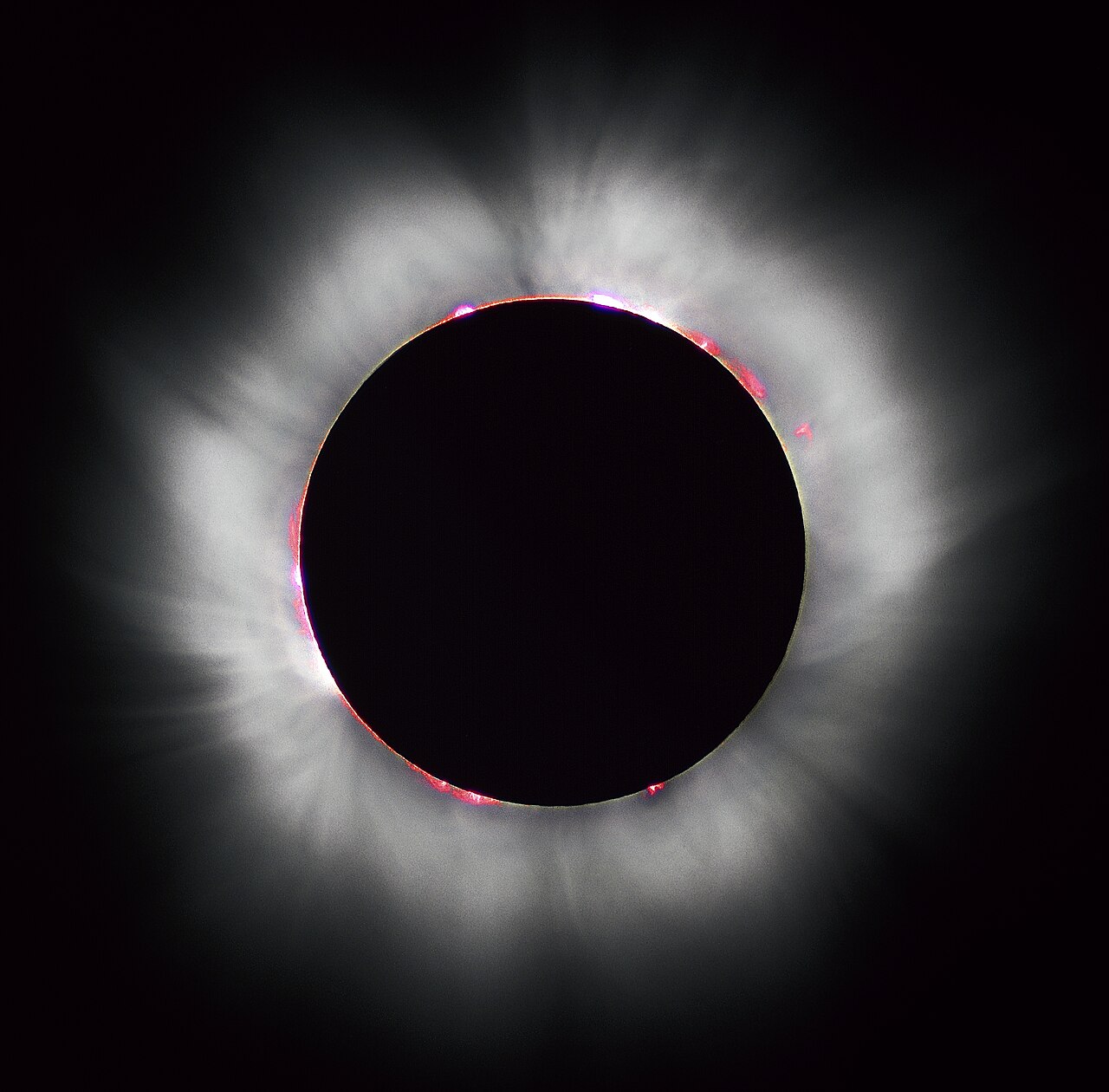






Types and geometry
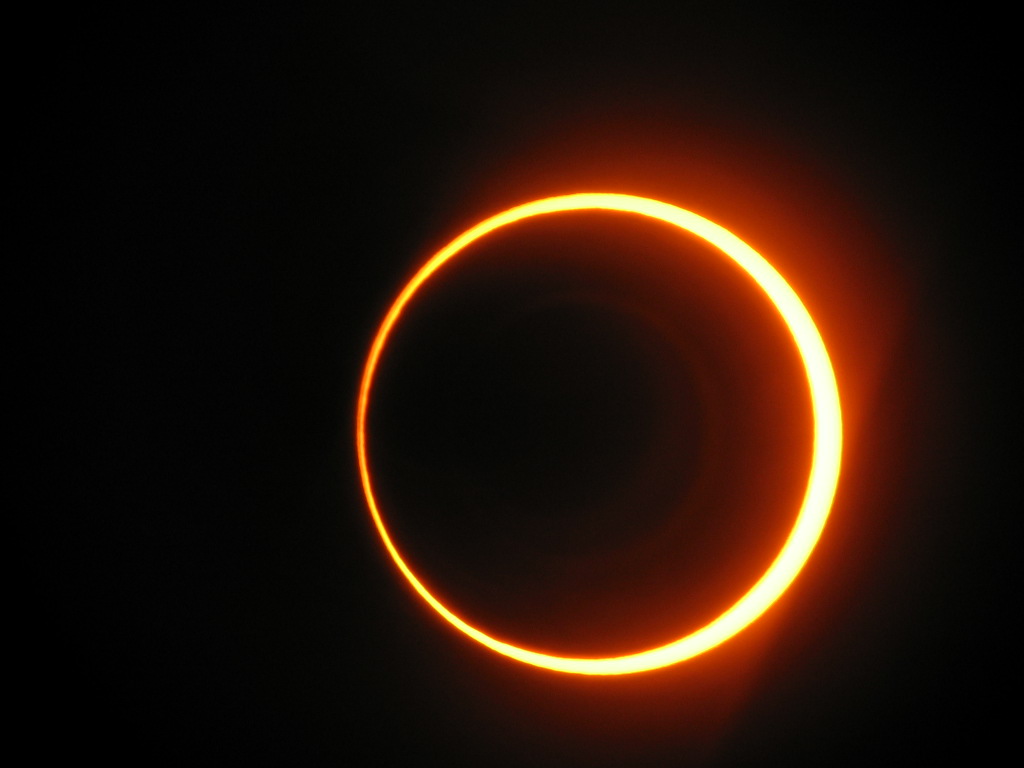
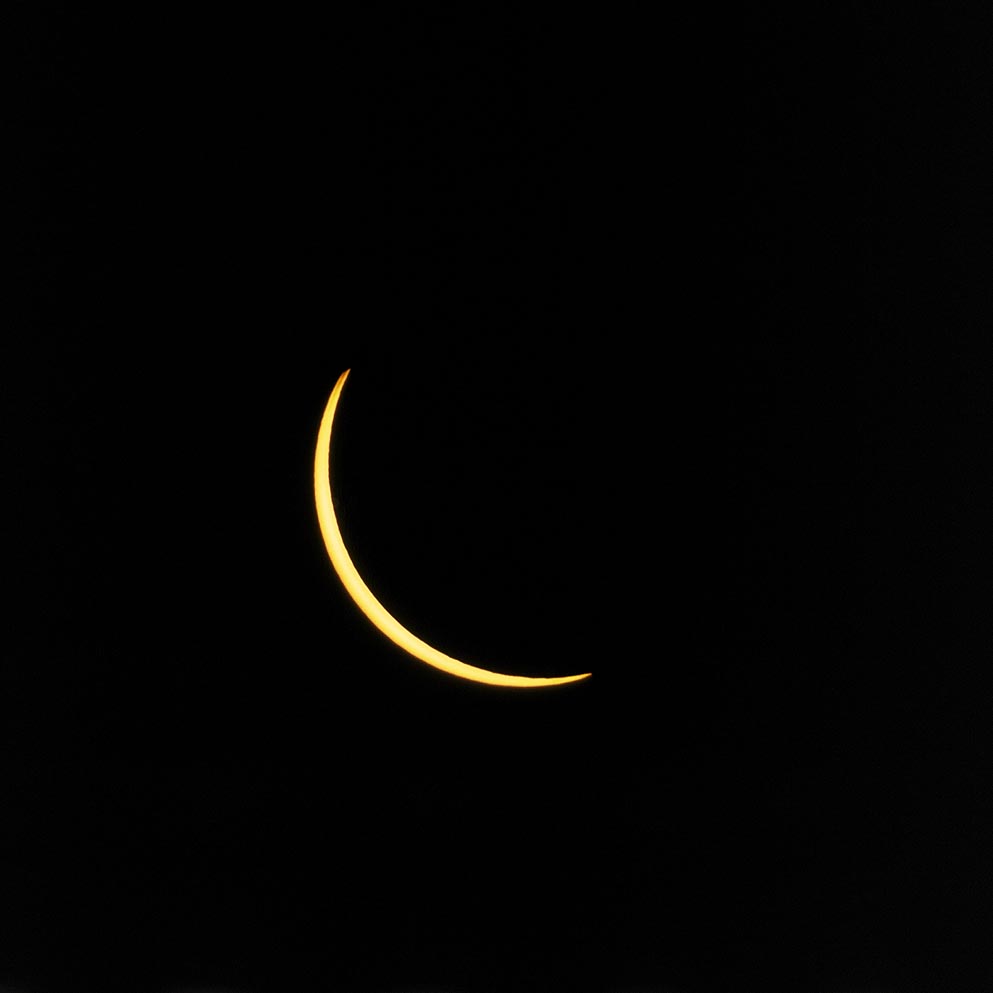
There are several principal kinds of solar eclipses: total, partial, annular and hybrid. A total eclipse happens when the Moon's dark central shadow (umbra) reaches Earth's surface and obscures the Sun completely along a narrow path. An annular eclipse occurs when the Moon is a little farther from Earth and appears slightly smaller than the Sun, leaving a bright ring or "annulus". A partial eclipse is seen from regions covered by the Moon's penumbral shadow, while a hybrid eclipse shifts between total and annular along its track. Important shadow zones include the umbra, penumbra and antumbra; their sizes and positions determine who sees which type.
What observers notice
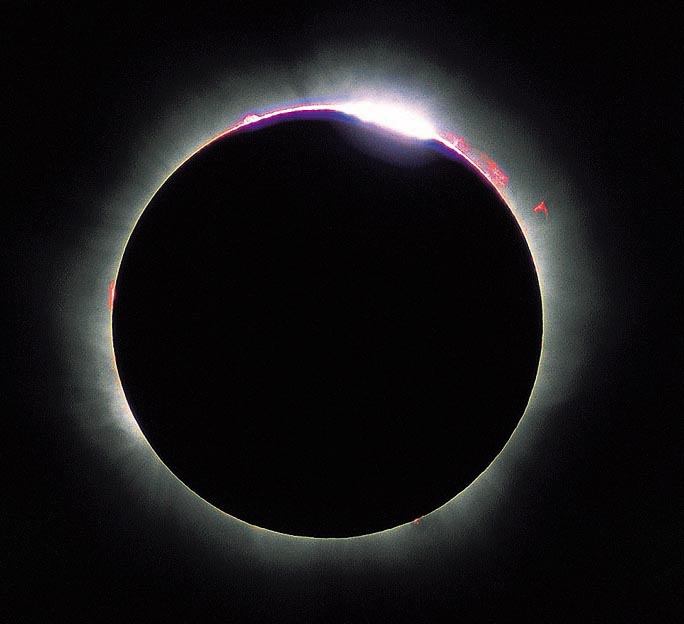
When totality arrives, daytime sky darkens, planets and bright stars become visible, temperatures can fall, and animals often change behavior. Specific visual phenomena include the solar corona (the Sun's faint outer atmosphere), prominences along the limb, Baily's beads where sunlight streams through lunar valleys, and the "diamond ring" effect at the start or end of totality. Outside the narrow path of totality observers experience only a partial covering of the Sun or none at all.
Frequency, cycles and prediction
There are typically two to five solar eclipses somewhere on Earth each year, though not all are total. Any single location on Earth sees a total eclipse far less often. Eclipses follow long-term periodicities; the most famous is the Saros cycle, about 18 years and 11 days, after which similar eclipses repeat with a shift in longitude. Modern astronomy can predict eclipse paths decades or centuries in advance, allowing precise planning and scientific observations.
History, cultural meaning and science
Solar eclipses have inspired myth and awe; many cultures interpreted them as omens or supernatural events and still do in some regions today (cultures, supernatural). In the modern era eclipses have provided opportunities for scientific discovery: for example, measurements made during an eclipse in 1919 provided empirical support for Einstein's general theory of relativity. Eclipses also foster public interest in astronomy and generate "eclipse tourism" as people travel to the path of totality to witness the phenomenon.
Safety and practical advice
- Never look directly at the uneclipsed or partially eclipsed Sun without proper eye protection; permanent eye damage can result. Use certified solar-viewing glasses or handheld solar filters and check they meet recognized safety standards.
- Projection methods—such as a simple pinhole camera—allow safe indirect viewing and are useful for groups and children.
- Plan travel well in advance if you intend to be inside the path of totality; the window of total darkness lasts only a few minutes and the viewing corridor is narrow.
For more general background see introductory resources on astronomy and observational guides (natural phenomenon). Historical descriptions emphasize the emotional response many feel—some are frightened, while others regard eclipses as moments of wonder. Because eclipses occur predictably, they remain one of the most accessible and spectacular events connecting everyday observers with celestial mechanics and centuries of human curiosity.
Further reading and outreach materials may be found through general astronomy education pages and observatory programs (Earth, Sun, new moon).
Moon — supernatural — cultures — frightened — Saros — natural phenomenon
Questions and answers
Q: What is a solar eclipse?
A: A solar eclipse is an event that happens when the Moon is directly between the Earth and the Sun, making it fully or partially cover the sun.
Q: When do solar eclipses occur?
A: Solar eclipses can only happen during a new moon. Every year there are about two solar eclipses, but only two of these can be total solar eclipses.
Q: How long does totality last during a total solar eclipse?
A: Totality during a total solar eclipse lasts only a few minutes.
Q: Can people predict when and where a total solar eclipse will occur?
A: Yes, the track of an upcoming total solar eclipse can be predicted many years before it happens.
Q: What did people think caused a total solar eclipse in ancient times?
A: In ancient times, people thought that total solar eclipses were caused by something supernatural or as a sign that something bad was going to happen. This belief still exists in some cultures today.
Q: Why might some people be afraid of witnessing a total solar eclipse?
A: Some people may be afraid of witnessing a total solar eclipse because the Sun seems to disappear during the day and the sky turns dark in just a few minutes, which can seem like an ominous sign if they don't know what it means.
Q: How often do similar types of eclipses occur on Earth?
A: Very similar types of eclipses occur on Earth every 18 years, 11.3 days - this period is called the Saros cycle.
Related articles
Author
AlegsaOnline.com Solar eclipse: causes, types, observations, history and safety Leandro Alegsa
URL: https://en.alegsaonline.com/art/91632
Sources
- eclipse.gsfc.nasa.gov : "Five Millennium Catalog of Solar Eclipses"
- eclipse.gsfc.nasa.gov : NASA Eclipse Web Site
- sunearth.gsfc.nasa.gov : "Eye Safety During Solar Eclipses"
- skyandtelescope.com : "How to Watch a Partial Solar Eclipse Safely"
- eclipse.gsfc.nasa.gov : "Eye safety during solar eclipses"