
Upper and Lower Egypt (the Two Lands of Ancient Egypt)
Overview of Upper and Lower Egypt—geography, historical unification, political symbolism, regional differences, and lasting cultural importance in ancient Egyptian civilization.
Upper and Lower Egypt refers to the two complementary regions of ancient Egypt collectively known as the "Two Lands." This basic political and cultural division shaped Egyptian identity for millennia. The expression appears in modern descriptions and in ancient royal titles; it underpinned symbols of unity, administration, and religious representation across the Nile valley. For a general introduction see Upper and Lower Egypt.
Image gallery
10 Images





Geography and regional characteristics
The terms describe contrasting landscapes along the Nile River. Upper Egypt denotes the long, narrow strip of fertile river valley that runs southward from roughly the area of the Nile’s southern cataracts near Aswan and extends north toward the point where the valley widens. Lower Egypt comprises the broad Nile Delta region that opens into the Mediterranean Sea. In later eras the boundary between the two was often placed near the Memphis–Cairo region, where the valley begins to fan out into deltas and lagoons. Geographical differences influenced economy and contacts: Upper Egypt faced the desert and Nubia to the south, while Lower Egypt had extensive marshes, richer delta soils, and maritime links to the Mediterranean and Levant.
Historical development and unification
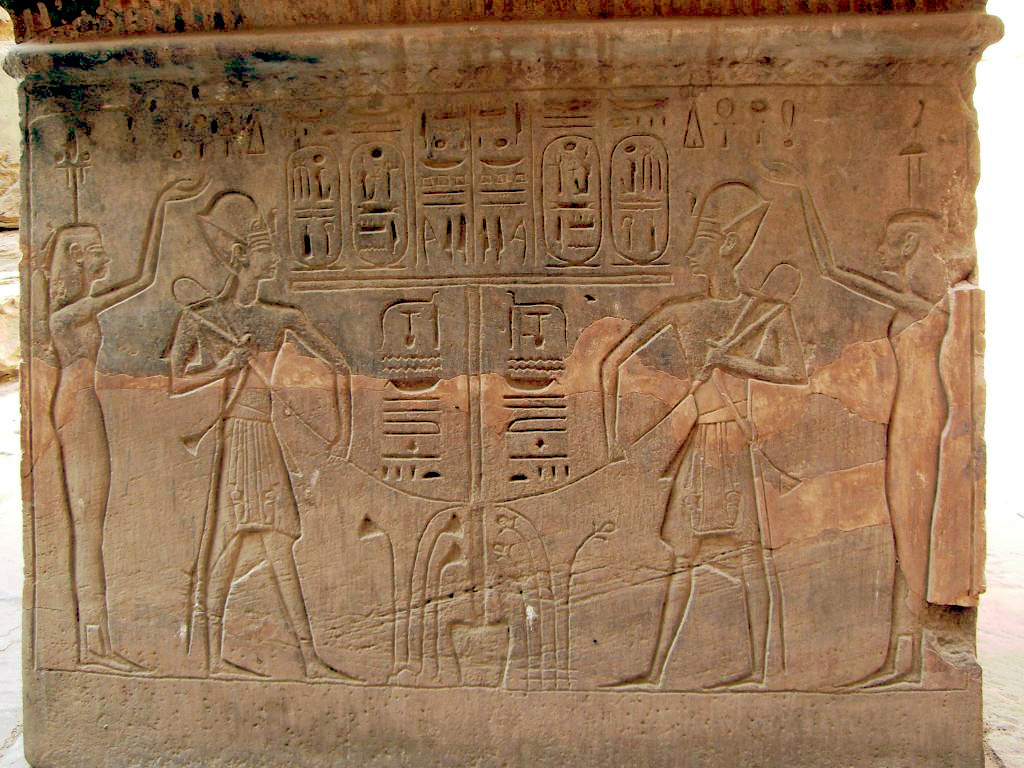
Before unified rule, the Nile valley was organized as a series of local chiefdoms and small states. Early in Egyptian prehistory these coalesced into the dual framework that became central to state formation. Traditional narratives of Egyptian history attribute the political unification of the Two Lands to early dynastic rulers; archaeologists point to the consolidation of power along the Nile around the end of the Predynastic period and the start of the First Dynasty. The iconography of unification—most famously the combined white and red crowns worn by pharaohs—expressed the king’s authority over both Upper and Lower Egypt.
Political, administrative, and religious roles
Administratively, ancient Egypt was divided into nomes (provincial districts) that belonged to either Upper or Lower Egypt; the number and organization of nomes changed over time but reflect the regionally grounded nature of the state. Rulers used symbols that paired the two regions: the white crown of Upper Egypt and the red crown of Lower Egypt were united into a double crown, and protective patron deities from each region were invoked together. These motifs reinforced the idea that the pharaoh acted as intermediary uniting disparate ecological zones, economic resources, and religious centers.
Distinctive cultural and economic patterns
- Upper Egypt: a string of riverine settlements, monumental burial sites in rocky desert cliffs, closer ties to Nubia and stone quarrying in the south.
- Lower Egypt: extensive delta agriculture, reed and papyrus marshes, greater opportunities for seafaring trade and contacts across the Mediterranean.
- Shared institutions: temples, writing (hieroglyphic inscriptions), and a centralized bureaucracy that collected grain and organized large building projects.
Legacy and modern study
The conceptual division of Upper and Lower Egypt remains central to how historians and archaeologists understand ancient Egyptian politics, ideology, and regional variation. Excavations, inscriptions, and royal titulary continue to show how the Two Lands shaped state ritual and identity. For further reading on each region, see dedicated summaries of Upper Egypt and Lower Egypt, and consult resources that locate major places such as Aswan, Cairo, and the coastline along the Mediterranean Sea. The concept also endures in popular accounts of Egyptian history and in museum presentations of ancient royal regalia and religious symbolism.
Related articles
Author
AlegsaOnline.com Upper and Lower Egypt (the Two Lands of Ancient Egypt) Leandro Alegsa
URL: https://en.alegsaonline.com/art/103475