
Varangians: Norse Warriors, Traders, and the Early Rus' Elites
Varangians were Norse-origin warriors, traders and mercenaries active in Eastern Europe and Byzantium (9th–11th centuries). They shaped the early Rus' state, served as Byzantine guards, and integrated into Slavic societies.
Overview
The Varangians (also called Varyags in some sources) were groups of Scandinavian origin—commonly identified with Vikings—who became prominent across the river routes of Eastern Europe between roughly the 9th and 11th centuries. Contemporary Byzantine and Slavic authors used the name to describe these men who combined seafaring, raiding, long-distance trade and service as mercenaries. Their activities linked the Baltic and North Sea regions with the Black and Caspian Seas, and through those corridors they influenced the formation of early medieval polities such as the state often called Kievan Rus'. For Byzantine writers the Varangians were particularly known as both fearsome raiders and as the nucleus of an elite imperial guard.
Image gallery
10 Images


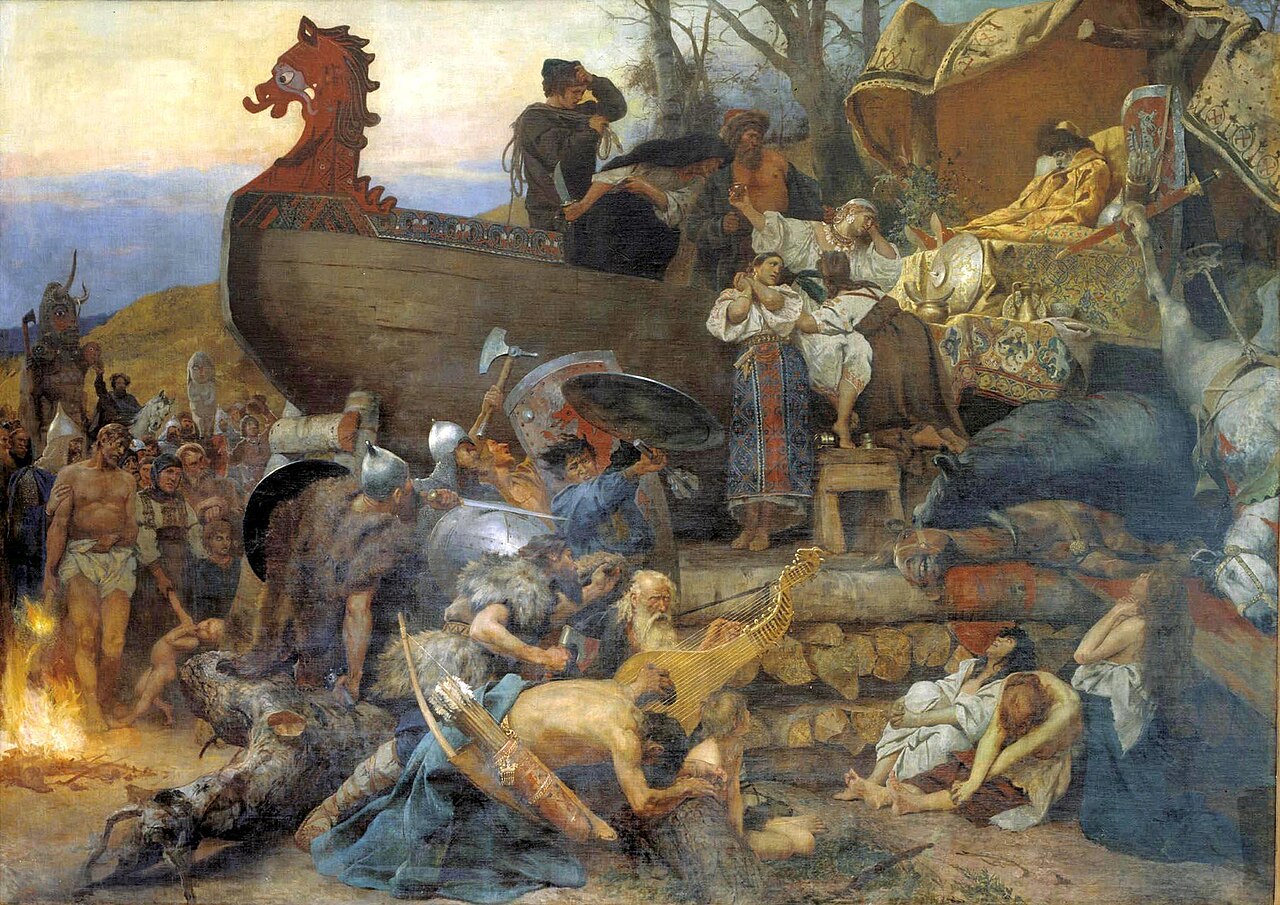


Origins and expansion
Most Varangians originated in what is today Sweden and Norway; they moved eastward rather than westward like many other Viking groups. Using longships and knowledge of navigable rivers, they penetrated river systems such as the Dnieper, the Volga and their tributaries. These waterways and the overland portages connected northern and western Europe with Byzantium and the Muslim world, creating opportunities for trade, tribute, and plunder. Norse sagas, runic inscriptions and foreign chronicles all attest to Scandinavian presence and leadership in regions that later became important Slavic centers. Traditional accounts associate leaders of Varangian background with the early rulers of Novgorod and Kiev.
Political role and the Rus' polity
In Eastern Slavic tradition, Varangian leaders are credited with founding ruling dynasties that organized disparate Slavic tribes into a more cohesive polity. Sources name figures traditionally associated with early rule in Novgorod and Kiev; their followers were called Rus', a term that later influenced the names of several East Slavic lands. Through a mixture of settlement, elite takeover and alliances, Varangians became part of local power structures, collecting tribute, defending trade routes and sometimes acting as kingmakers. Over generations the Norse elites and crews adapted to Slavic language and customs, a process sometimes called Slavicization.
Economy, routes and activities
Varangian enterprises combined commerce with armed enterprise. They traded furs, wax, slaves and other northern goods for silks, silver, spices and coin from Byzantium and Islamic markets. Well-known long-distance trade arteries—often referred to by medieval sources as the routes from the Varangians to the Greeks or to the Arabs—relied on river navigation and occasional overland portages. Along these corridors, Varangians engaged in merchant activity, private raiding, piracy and contracted military service. Their presence altered economic networks across Eastern Europe and helped integrate northern producers into wider markets.
Varangian Guard and service in Byzantium
One of the most famous manifestations of Varangian influence was their role in the Byzantine Empire as members of an elite personal guard for the emperor. Recruited for loyalty and physical prowess, these guardsmen served as bodyguards, heavy infantry or shock troops and were prized for their unfamiliarity to local factions, which made them reliable in palace politics. Over time the ranks of this guard included not only Scandinavians but also Anglo-Saxons and other northern warriors who sought service and wealth in Constantinople.
Cultural impact and conversion
With continued settlement and intermarriage, Varangians gradually adopted the languages, faiths and material culture of their Slavic neighbours. The Christianization of the ruling elite of Kievan Rus' in the late 10th century tied the region more closely to Byzantine religious and cultural influence. Archaeological finds—such as weapon types, coin hoards and grave assemblages—show a blend of Scandinavian and Slavic elements. Over the 11th century and beyond, the distinct Scandinavian identity of many Varangian groups diminished as they became part of the emerging East Slavic population.
Distinctions and notable facts
- Terminology: Different contemporary writers used different names—Greek and Slavic authors used the term Varangian or its local equivalents, while the Scandinavians referred to some areas as Gardariki, meaning the land of towns and strongholds.
- Military and naval skills: Varangians were valued for their seamanship, ability to navigate rivers and for their heavy-armour fighting style when serving as mercenaries.
- Legacy: The interaction between Norse newcomers and local Slavs contributed to state formation in Eastern Europe and to the commercial networks of early medieval Eurasia.
For further general reading and primary-source introductions see contemporary and later accounts cited in academic overviews and translated chronicles. Some accessible starting points include descriptions by Byzantine observers and references in Norse and Slavic chronicles and sagas. Representative links to background materials are offered here: Byzantine sources, Norse accounts, Rus' polity studies, Varangian Guard research, ethnonym explanations, naming and legacy, trade routes, raiding and piracy, mercenary service, geography of Gardariki, Byzantine and Islamic contacts, Constantinople and attractions, conversion to Christianity.
The Varangians illustrate how seafaring warrior-traders could transform regional politics and economies in the early Middle Ages. Their story is a case of mobility, cultural exchange and the blending of martial and commercial roles that reshaped the map of northeastern Europe.
Questions and answers
Q: Who were the Varangians?
A: The Varangians were a group of Vikings who were given the name by Greeks and East Slavs.
Q: When did they rule the medieval state of Rus'?
A: The Varangians ruled the medieval state of Rus' between the 9th and 11th centuries.
Q: How did they become personal bodyguards for Byzantine Emperors?
A: The Varangians formed the Byzantine Varangian Guard, which became their role as personal bodyguards for Byzantine Emperors.
Q: What was Kievan Rus'?
A: Kievan Rus' was a state that was later ruled by Ruriks descendants after Oleg conquered Kiev in 882.
Q: What activities did they do?
A: The Varangians engaged in trade, piracy, and mercenary activities. They moved around using river systems and portages of Gardariki, which was an area north of the Black Sea.
Q: Why did they start wars with Byzantium?
A: The Varangians wanted to gain access to riches from Constantinople so they started a number of wars with Byzantium known as Rus'-Byzantine Wars.
Q: How were most of them converted from paganism? A: Most of them were converted from paganism into Orthodox Christianity during their time in both Byzantium and Eastern Europe.
Related articles
Author
AlegsaOnline.com Varangians: Norse Warriors, Traders, and the Early Rus' Elites Leandro Alegsa
URL: https://en.alegsaonline.com/art/104237
Sources
- etymonline.com : "Online Etymology Dictionary"
- britannica.com : "Oleg"
- thefreedictionary.com : "Varangian"
- snl.no : "væringer"
- historybits.com : "The Vikings - Rus - Varangian Guard"
- books.google.com : Atlas of Russia and the Soviet Union
- books.google.com : Culture and Customs of Russia
- books.google.com : Viking Rus
- britannica.com : "Rurik Dynasty"
- books.google.com : "Vikings"