
Unisphere (Flushing Meadows–Corona Park globe)
A large stainless-steel globe in Flushing Meadows–Corona Park, Queens, built for the 1964–65 New York World's Fair; an enduring landmark, symbol of global unity and Queens identity.
Overview
The Unisphere is a monumental, free‑standing stainless‑steel globe located in Flushing Meadows–Corona Park in the borough of Queens, New York City. Erected as the focal point of the 1964–1965 New York World's Fair, it was conceived as a symbol of global interdependence and technological progress and has remained on the site as a civic landmark. The structure stands roughly 140 feet (about 43 metres) tall and is widely cited among the largest spherical sculptures in the world. Around it are a circular reflecting pool and animated jets that enhance the sculpture’s formal presentation and provide an open public space.
Image gallery
10 Images



Design and construction
The Unisphere was designed under the direction of landscape architect Gilmore D. Clarke as part of the fair’s landscape and exhibition plan. Fabricated of welded stainless‑steel, the globe represents the continents in openwork form, allowing light to pass through and giving visitors a sense of scale. Three large orbital bands, which encircle the sphere, were intended to evoke the orbits of early satellites and the era’s enthusiasm for space exploration and global communications. The globe’s reported weight is approximately 700,000 pounds (around 320,000 kilograms).
Materials, dimensions and site
Constructed from weathering stainless‑steel components and mounted on a supporting tripod, the Unisphere sits within a circular basin whose fountain jets and reflecting surface frame the sculpture. The open design of the continents contrasts with the solid rings and supporting struts, creating a balance of mass and void that contributes to its visual impact. The site design integrated planting, pathways and sightlines so the globe would function as both an exhibition centerpiece and a long‑term public artwork within the park.
History and conservation
Built for the mid‑1960s exposition and intended to communicate themes of global unity, the Unisphere remained in Flushing Meadows after the fair closed and became a durable emblem of the borough. Over time exposure to the elements and mechanical wear affected the metal and the fountain systems; a significant cleaning and restoration campaign took place in the early 1990s, with work reported from 1993 to 1994 to address corrosion, repair plumbing for the fountains, and restore the surrounding landscape. Ongoing maintenance has been required to preserve the stainless‑steel finish and keep the water features operational.
Cultural role and public use
As an instantly recognizable landmark, the Unisphere functions as a meeting point, photographic subject, and backdrop for civic events. It has appeared in films, television and popular media, helping to associate the image of a large globe with New York’s international connections and with Queens specifically. The structure is often used in local promotional materials and is commonly described in guidebooks and park literature as a symbol of world unity and the optimistic spirit of the Space Age.
Visiting and context
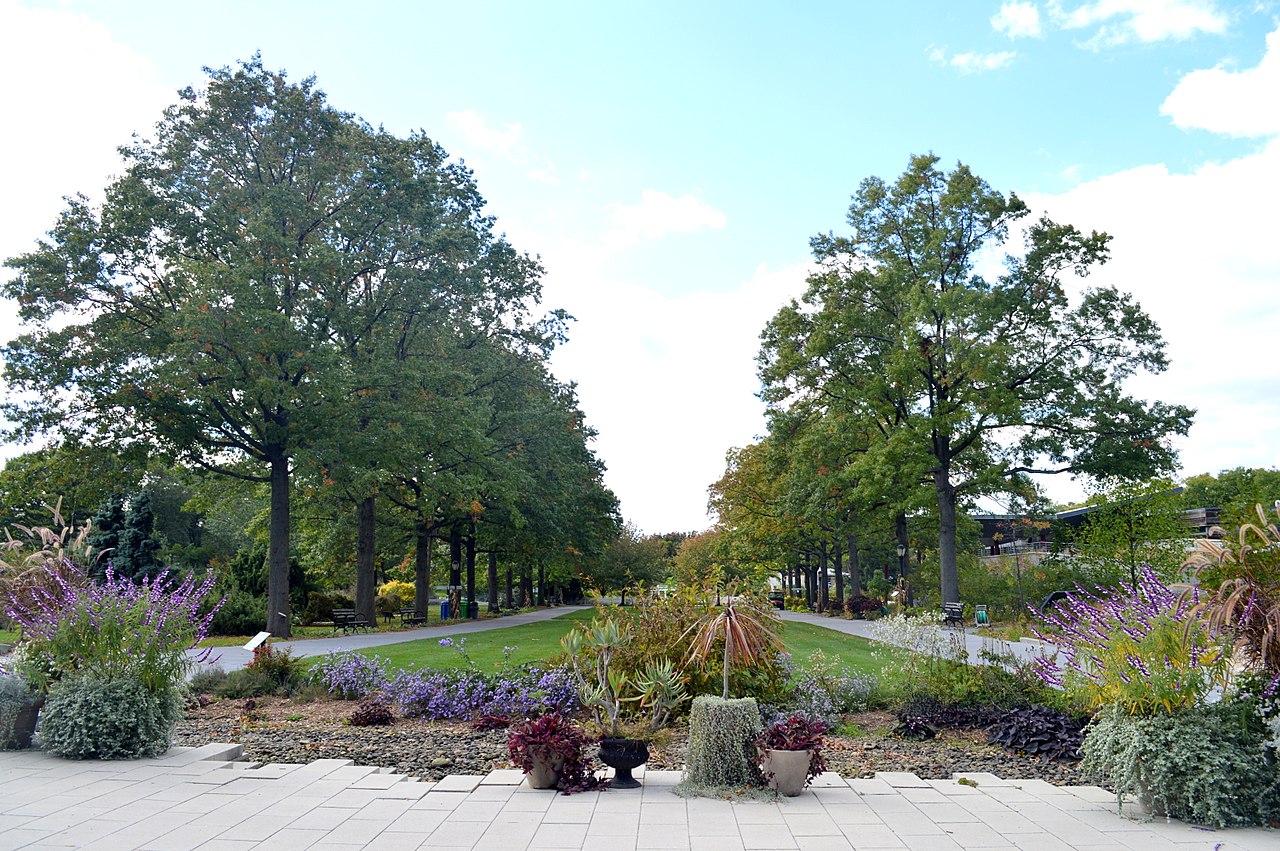
Visitors approach the Unisphere across lawn and promenade space within Flushing Meadows–Corona Park. The reflecting pool and jets provide seasonal animation and are an important part of the visitor experience; for photographers and casual visitors alike the water and open sky are integral to compositions that emphasize the globe’s scale. The Unisphere sits among other remnants and memorials from the fair era and is part of a larger park that includes recreational facilities, cultural institutions and planted landscapes. General information on the park, its history and visiting practicalities can be found through local park resources and interpretive guides about mid‑20th‑century exhibition design (landscape design).
Significance and related topics
- The Unisphere’s stainless‑steel construction and substantial mass mark it as a notable example of large‑scale public sculpture and mid‑century exhibition art (globe).
- Its three orbital rings recall early satellite missions and the optimism about global communication and space exploration during the 1960s.
- It remains an emblem of the borough and is frequently referenced as a borough symbol in cultural descriptions of Queens.
For historical context and photographic archives consult resources devoted to the 1964–1965 fair and the park’s development. The Unisphere and its setting continue to be maintained as an important public artwork and gathering place, with the reflecting pool and fountain system playing a central role in the site’s appearance and use (reflecting pool and fountains). Additional material about the designer and the fair is available through specialized histories of the fair and municipal park planning (Gilmore D. Clarke, design background) and general references to public monuments and exhibition landscapes (stainless‑steel globe, World's Fair).
Related articles
Author
AlegsaOnline.com Unisphere (Flushing Meadows–Corona Park globe) Leandro Alegsa
URL: https://en.alegsaonline.com/art/102929
Sources
- placematters.net : "Unisphere: Built by US Steel as the symbol of the 1964-5 New York World's Fair"