
Valley of the Queens
Ancient Egyptian necropolis for royal women near Thebes, known as Ta-Set-Neferu. Site of richly decorated tombs, a Hathor grotto, and roughly 110 known burial chambers; part of the Theban funerary landscape.
Overview
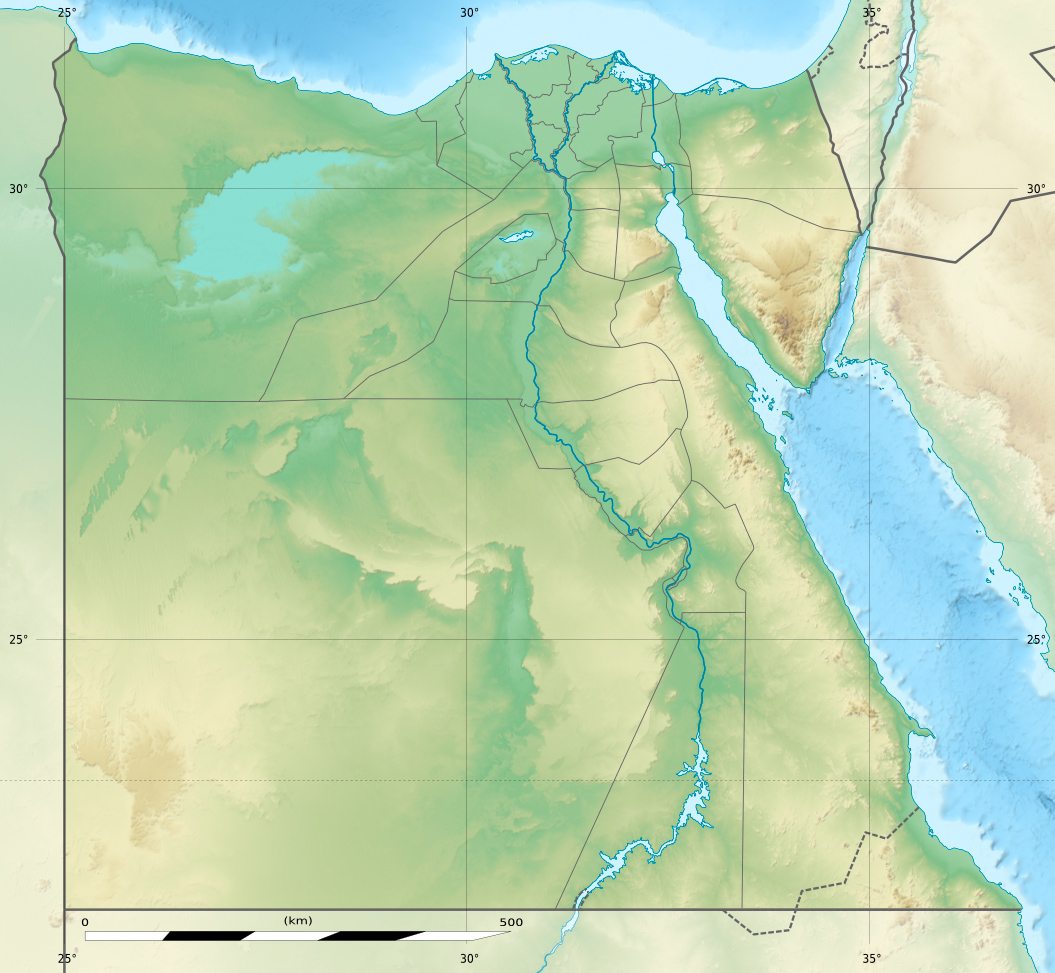
The Valley of the Queens is an ancient Egyptian burial area on the west bank of the Nile opposite modern Luxor. Used primarily during the New Kingdom, it served as a necropolis for queens, princes, and other members of the royal household. In Egyptian sources the site was called Ta-Set-Neferu, commonly translated as "the place of beauty," reflecting its role as a destination for the dead where dignified funerary rites could be performed. The site lies close to the workers' settlement of Deir el-Medina and the better-known Valley of the Kings, forming part of the greater Theban necropolis.
Image gallery
6 Images



Name, location and sacred associations
The modern name, Valley of the Queens, reflects the primary occupants of its tombs, often the wives and close relatives of pharaohs. The Arabic name appears in local references as Wādī al Malekāt. At the entrance to the valley there is a small grotto dedicated to the cow-goddess Hathor, long associated with protection, rebirth and the afterlife in Egyptian religion. Egyptologists suggest that such cult features reinforced the valley’s appropriateness for funerary rites and the cult of rejuvenation.
Layout and tombs
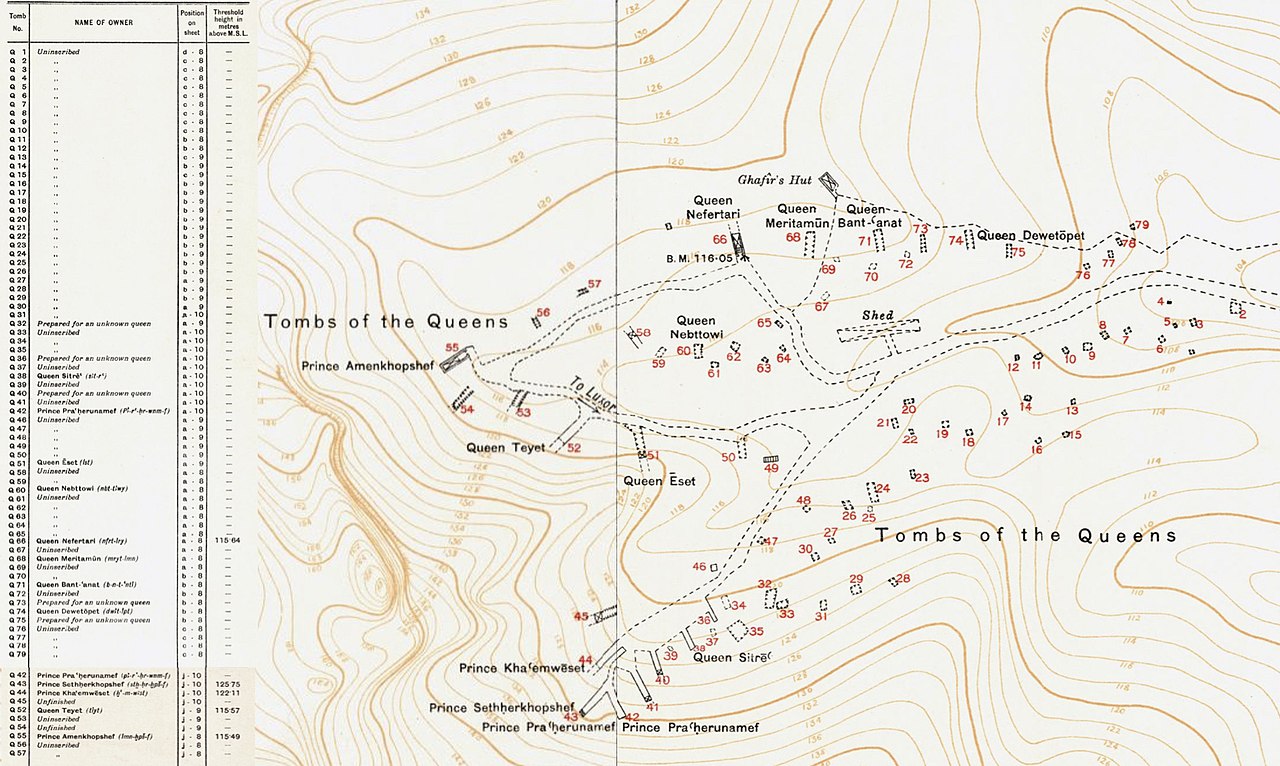
The site consists of a main wadi and a set of adjacent side valleys. The principal drainage contains approximately 91 formal tombs and the nearby hollows add roughly 19 more, giving a total of about 110 burial chambers discovered so far. Tombs in the valley are usually identified with an official number prefixed by "QV" (for "Queens' Valley"). They range from modest rock-cut chambers to large, elaborately decorated complexes intended for high-ranking individuals.
Art, inscriptions and burial practices
Tomb decoration in the Valley of the Queens often mirrors themes found elsewhere in royal burials: scenes from funerary books, hymn-like texts to deities, and iconography designed to assist the deceased’s journey in the afterlife. The best-preserved examples display vivid paintwork and finely executed reliefs. One of the most famous chambers, QV66, belongs to Queen Nefertari and is celebrated for its vibrant wall paintings and intricate religious scenes. Tomb architecture and grave furnishings show continuity with royal funerary practices while also reflecting variations according to date and status.
History of exploration and conservation
European exploration of the Valley began in the 18th and 19th centuries, and systematic archaeological work continued through the 20th century. Excavations revealed both elaborate tombs and modest burials, as well as objects that illuminate daily and ritual life in Thebes. The site lies within the broader UNESCO World Heritage area of Ancient Thebes with its necropolis; conservation challenges include fragile pigments, past robberies, and modern environmental pressures. Ongoing restoration and visitor-management efforts aim to balance study, preservation and public access.
Significance and visiting
The Valley of the Queens provides important evidence about royal women, funerary art and Theban religious practices. It is frequently visited as part of tours to the Theban necropolis, though access to particular tombs is regularly rotated to limit damage from humidity and visitors. Researchers and conservators continue to study its stratigraphy, inscriptions and the cult features such as the Hathor grotto to better understand how the valley functioned within the ritual landscape of Egypt and alongside neighboring sites like the Valley of the Kings.
- Notable features: well-preserved painted tombs (for example QV66), the Hathor grotto and the proximity to the workers' village of Deir el-Medina (Egypt).
- Numbers: roughly 91 tombs in the main wadi and about 19 in adjacent valleys (main wadi counts).
- Context: part of the Theban necropolis and connected to royal mortuary religion and the cult of Hathor (sacred grotto).
For general introductions and practical visitor information, museum catalogues and site guides offer accessible summaries; academic publications address finer points of tomb chronology, decoration and social history. Further reading and primary reports can be found through archaeological institutes and curated collections (royal burials and roles, Arabic/ancient names, neighboring necropoleis).
Questions and answers
Q: What is the Valley of the Queens?
A: The Valley of the Queens is a place in Egypt where wives of Pharaohs were buried in ancient times.
Q: What was the Valley of the Queens known as in ancient times?
A: The Valley of the Queens was known as Ta-Set-Neferu, meaning "the place of beauty" in ancient times.
Q: Why was the Valley of the Queens chosen as a burial site?
A: The reason for choosing the Valley of the Queens as a burial site is not known. However, it is speculated that a sacred grotto dedicated to Hathor at the entrance of the Valley may have played a role, as it might be associated with rejuvenation for the dead.
Q: Where is the Valley of the Queens located?
A: The Valley of the Queens is located near the worker's village in Deir el-Medina and the Valley of the Kings in Egypt.
Q: How many tombs are in the main wadi of the Valley of the Queens?
A: The main wadi of the Valley of the Queens contains 91 tombs.
Q: How many additional tombs are there in nearby valleys of the Valley of the Queens?
A: In addition to the 91 tombs in the main wadi, there are 19 additional tombs in nearby valleys of the Valley of the Queens.
Q: Who was buried in the Valley of the Queens?
A: Wives of Pharaohs were buried in the Valley of the Queens in ancient times.
Related articles
Author
AlegsaOnline.com Valley of the Queens Leandro Alegsa
URL: https://en.alegsaonline.com/art/104072