
U-boat (Unterseeboot): German military submarine
U-boat, from German Unterseeboot, commonly names German submarines most noted for commerce raiding and convoy warfare in World War I and World War II.
Overview
A U-boat is a submarine built or operated by Germany; the word is an abbreviation of the German Unterseeboot, literally "undersea boat." In English usage the term U-boat most often refers to the German military submarines that served in the two world wars. Their principal roles included attacking enemy warships and, more importantly, disrupting merchant shipping to enforce blockades and conduct economic warfare. The Austro-Hungarian Navy also used submarines commonly called U-boats in their own service.
Image gallery
10 Images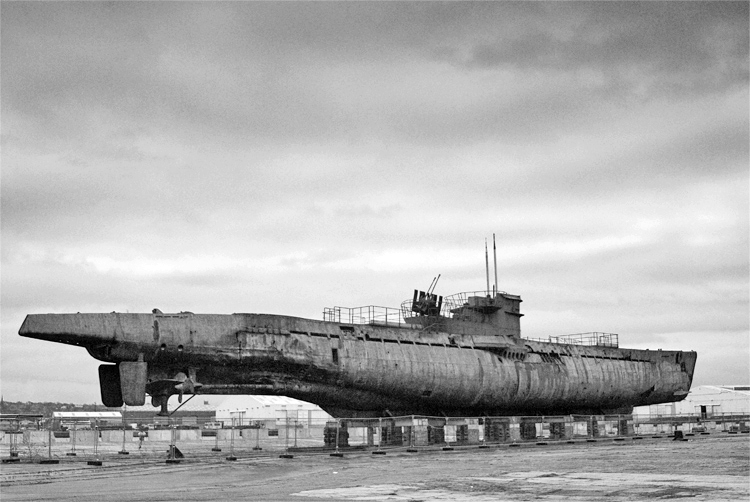


Design and characteristics
Early U-boats were typically diesel-electric: diesel engines charged batteries for submerged operations, while surface running used the diesels directly. Typical weaponry included torpedo tubes and a complement of torpedoes, and many boats carried a deck gun for surface engagements. Later designs experimented with improved batteries, hull streamlining, snorkel systems to run diesels while submerged, and enhanced sensors. Crew sizes and exact fittings varied by class and period, but all were constrained by limited internal space and the need to balance range, speed, and stealth.
Operational history and development
German submarine warfare became prominent during World War I and escalated significantly in World War II. In both conflicts U-boats posed a major threat to Allied shipping, prompting extensive countermeasures such as convoy systems, antisubmarine escorts, sonar and depth charges, air patrols, and cryptographic efforts. Tactics and technology evolved rapidly: from lone commerce raiding to coordinated group attacks often called "wolfpacks," and from early periscope-attacks to submerged night attacks supported by intelligence and radio coordination.
Tactics, impact and examples
U-boats had strategic impact disproportionate to their numbers because sinking merchant tonnage could deny supplies, raw materials, and food. Commerce raiding constrained military operations and civilian economies alike. Their effectiveness forced major changes in naval strategy and merchant shipping organization. Notable tactical themes include long-range patrols in the Atlantic, mine-laying missions, and attacks within contested sea lanes. The human cost was high for both merchant mariners and submarine crews.
Legacy and distinctions
In German the term U-Boot applies to any submarine, military or civilian, regardless of nationality. In English, however, "U-boat" has come to refer specifically to German naval submarines, particularly those of the two world wars. Technological advances pioneered or refined in U-boat development influenced postwar submarine design, while the historical record of U-boat campaigns informs naval doctrine, international law on unrestricted submarine warfare, and memorials to those lost at sea.
Further reading and resources
- General history of U-boats
- Terminology and meanings in German
- First World War Atlantic operations
- World War I context and naval policy
- Battle of the Atlantic in World War II
- Weapons and armament overview
- U-boats versus warships
- Blockades and economic warfare
- Etymology: Unterseeboot abbreviation
- German language sources
- Military and civilian submarines
- Austro-Hungarian submarines and related vessels
Author
AlegsaOnline.com U-boat (Unterseeboot): German military submarine Leandro Alegsa
URL: https://en.alegsaonline.com/art/102400
Sources
- etymonline.com : "U-boat"