
Trabant (East German compact automobile)
Compact, economical automobile produced in East Germany from the 1950s–1990s, known for its plastic body (Duroplast), two-stroke engine, and cultural symbolism after German reunification.
Overview
The Trabant, often called the "Trabi," was the emblematic small car produced in the German Democratic Republic (GDR) for several decades. Intended as an affordable, mass‑market family car, it combined simple mechanics and light construction to meet the needs and material constraints of a centrally planned economy. The vehicle is widely remembered for its distinctive appearance, its two‑stroke engine, and its bodywork made from a fibre‑reinforced composite rather than conventional sheet steel. After political changes at the end of the 1980s the car's technological shortcomings compared with Western models became more apparent, and demand declined.
Image gallery
10 Images




Design and materials
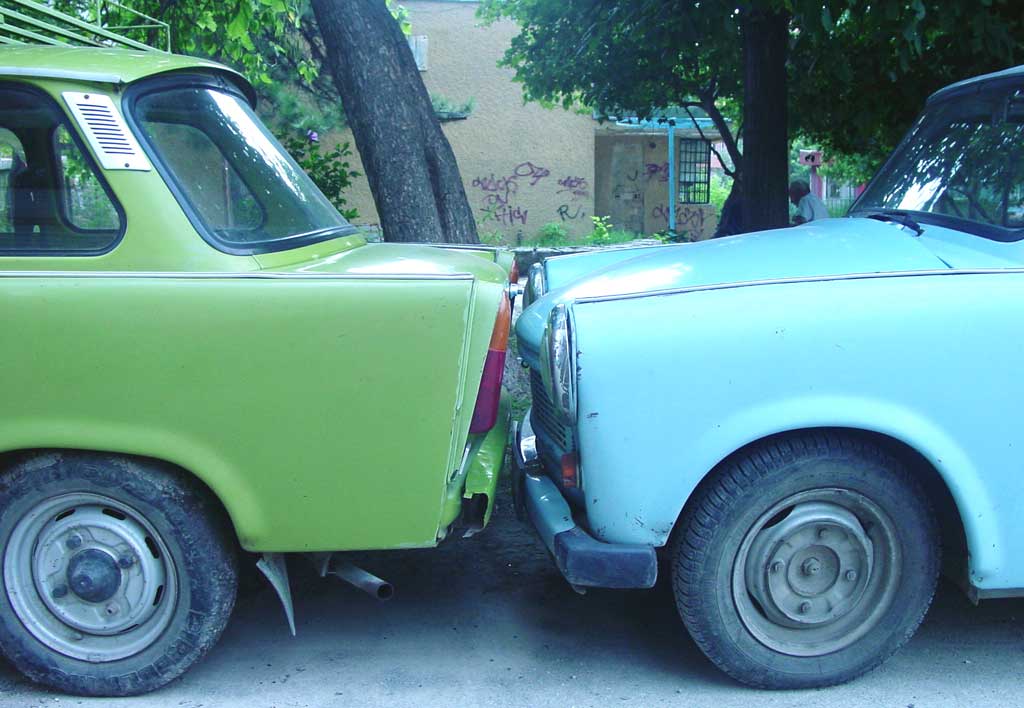
The Trabant's outer panels were manufactured from Duroplast, a hard, thermosetting composite that used resin and textile fibres to create a rigid, rust‑resistant shell. Duroplast reduced reliance on imported steel and allowed panels to be formed without heavy stamping presses. Because the GDR imported limited quantities of steel, metal was used selectively for the chassis, engine components and floorpan while the body panels and bonnet were made from the composite. The material gave the car a light weight and a characteristic finish; it also influenced repair and restoration techniques used by owners and enthusiasts.
Engine and performance
Most Trabant models were fitted with a small two‑stroke petrol engine. Two‑stroke designs of that era were inexpensive, compact and simple to maintain, providing adequate performance for urban and suburban use while offering relatively low fuel consumption for the period. They also produced higher levels of smoke and particulate emissions than contemporary four‑stroke engines and required oil to be mixed with the fuel or supplied by an oil injection system. The car's mechanical simplicity meant many repairs could be performed by owners or local workshops with basic tools.
Variants and production
Over its production life the Trabant range evolved through a number of variants and incremental changes rather than frequent complete redesigns. Several model designations are commonly associated with the series; later versions retained the same basic silhouette with modest updates to the interior, trim and mechanical components. The cars were manufactured in state‑run factories and exported within the Eastern Bloc as well as sold domestically, where long waiting lists at times reflected constrained supply more than immediate consumer preference.
Social and cultural significance
Beyond its engineering, the Trabant became a cultural symbol of everyday life in East Germany and, after 1989, a potent emblem of the end of the Cold War. Images of East Germans driving their Trabants across the border after the fall of the Berlin Wall helped cement the car's place in popular memory. In reunified Germany and elsewhere the vehicle is often used in film, photography and public exhibitions to evoke the GDR era. For many former owners and collectors the Trabi represents both nostalgia and a tangible link to social history.
Preservation and legacy
Since production ceased, a vibrant community of restorers, collectors and hobbyists has formed around the Trabant. Restored cars appear at rallies, in museums and on organised drives; some tour operators offer guided city tours in classic Trabants. In parts of Eastern Europe, including Hungary and other countries that once belonged to the Eastern Bloc, Trabants can still be found in use or preserved in private collections. Enthusiasts share technical information, replacement parts and repair techniques to keep these vehicles roadworthy and visible as historical artefacts.
Further reading and resources
- Technical overview and early reception
- Fuel economy and two‑stroke engine notes
- Materials and body construction details
- Economic context and resource decisions in the GDR
- Duroplast: composition and properties
- Comparisons with contemporary plastics and composites
- Historical influences on resin and laminate use
- Reinforcement fibres and local material sources
- Role of the Trabant in the reunification era
- Trabant presence and preservation in Eastern Europe
These entries provide starting points for technical study and historical context, and can help readers explore the Trabant's place in twentieth‑century automotive and social history.
Related articles
Author
AlegsaOnline.com Trabant (East German compact automobile) Leandro Alegsa
URL: https://en.alegsaonline.com/art/100992