
Trade route
A trade route is a recurrent path or corridor used to move goods between producers and markets; routes have evolved from ancient caravan and maritime highways to modern pipelines, railways and air freight.
Definition and overview
A trade route is a regular course or chain of corridors — overland paths, rivers, sea lanes or modern transportation links — used to convey goods and raw materials between production centers and markets. In its simplest sense a trade route links points of exchange and may combine many modes of conveyance. Historically the term applied to long-distance caravan and maritime lines; today it also describes pipelines, rail corridors, highways and scheduled air freight networks. The idea of a route emphasizes repeated commercial transactions and the organised movement of transport of cargo along particular paths.
Image gallery
10 Images



Key characteristics
- Corridor structure: a route typically has nodes (ports, markets, hubs) and connecting links (roads, rivers, sea lanes, pipelines).
- Modes of transport: historically caravans and ships; today also rail, road, air and pipelines — each with specific capacity, cost and speed trade-offs.
- Institutions and rules: tolls, tariffs, treaties, guilds and modern free-trade agreements shape accessibility and security.
- Risks and logistics: seasonal weather, banditry and political disruption affect reliability; warehousing, insurance and standardized contracts mitigate these risks.
- Cultural and economic impact: routes transmit not only goods but ideas, technologies and cultural practices across regions.
Historical development
Long-distance exchange networks emerged early in many regions. Between roughly 1500 BCE and the start of the common era, major axes connected Western Asia, the Mediterranean basin, China and the Indian subcontinent. The Silk Road is the best-known example linking Chinese production centers with Central Asia and Mediterranean markets; many of these links passed through hubs in what is today China (Chinese sources), India (Indian ports) and the Near East. In Europe the Amber Road and other inland corridors enabled trade between northern raw-material regions and Mediterranean consumers; these earlier networks set patterns of specialization and urban growth across Europe.
Medieval and early modern routes
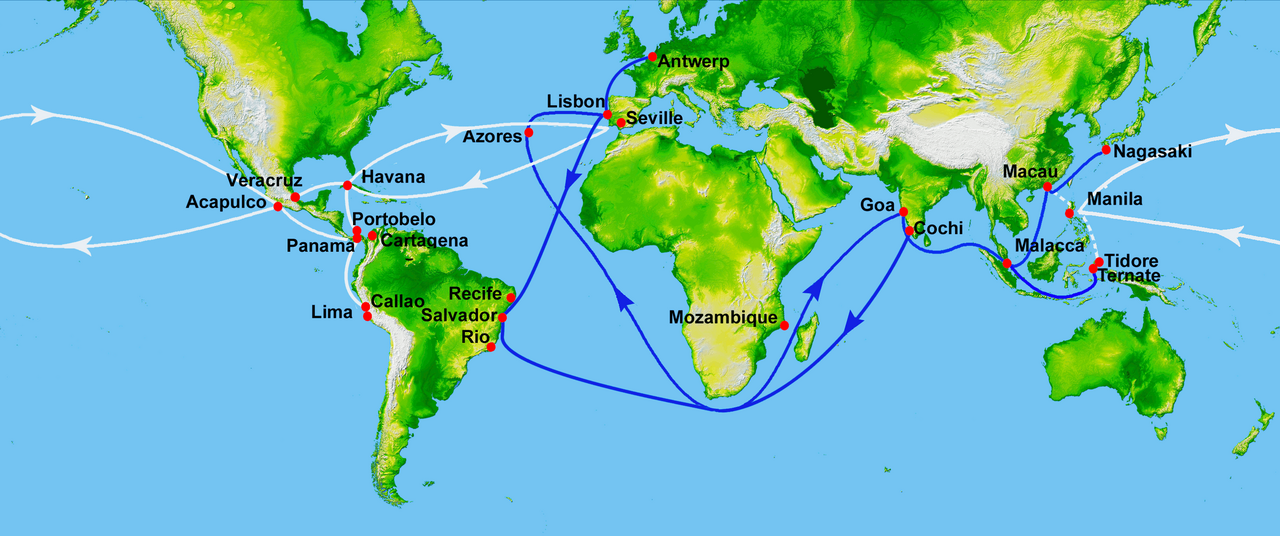
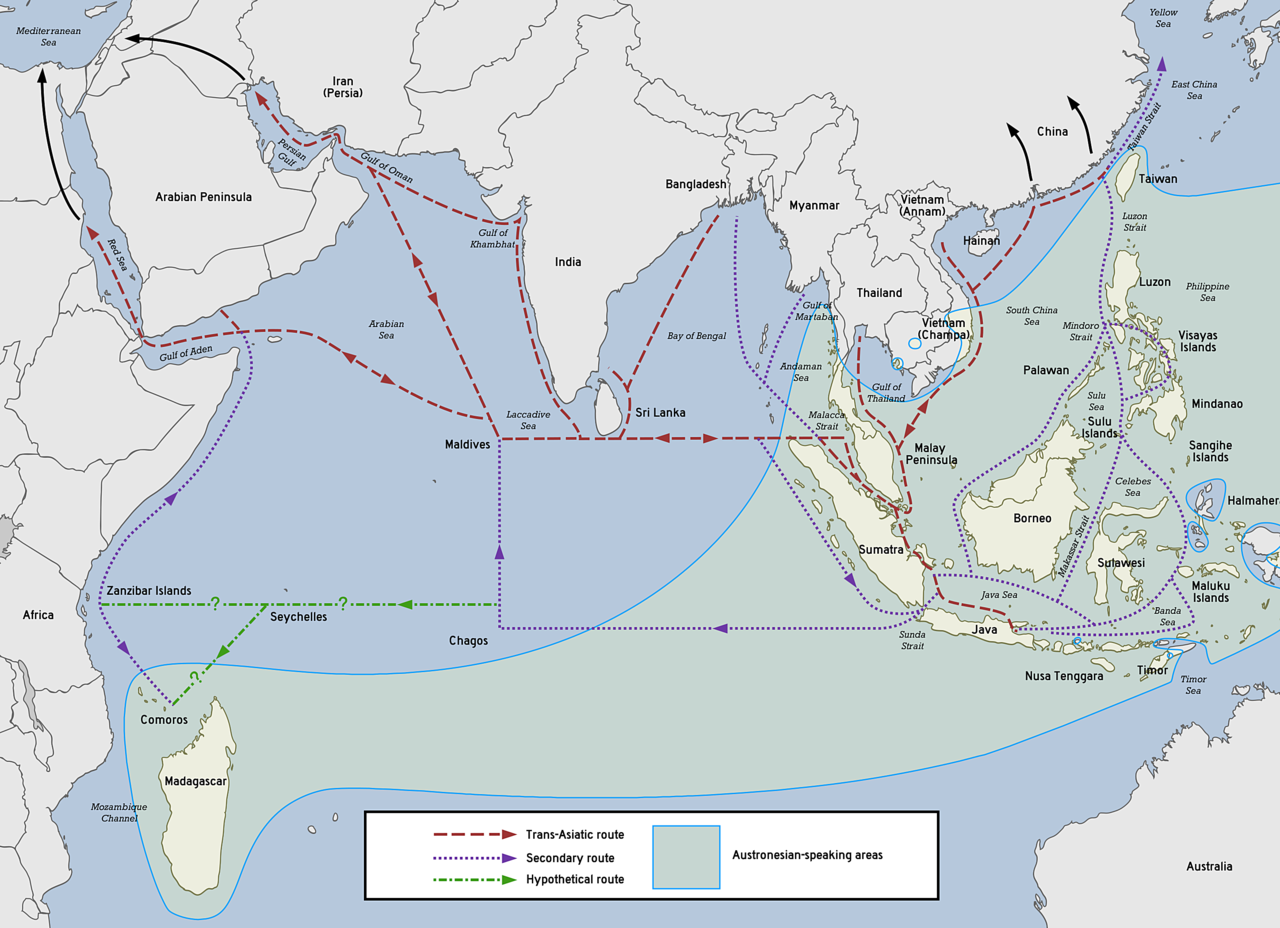
During the Middle Ages maritime highways such as the spice routes of the Indian Ocean and the Red Sea gained prominence, connecting Asian producers with Middle Eastern and European buyers. Control of these sea lanes became strategically and economically important to rulers and trading states (Middle Ages). In northern Europe, merchant organizations like the Hanseatic League created cooperative protections, standards and mutual defenses to support long-distance trade and to protect merchant interests (Hanseatic League).
Modern transformations
From the 18th century onward, industrialization, steam power and later motor vehicles and air transport shifted how routes were conceived and used. Trade that once concentrated on Old World corridors diffused into networks connecting modern nation-states and colonial economies (Old World). The 20th century added new engineered links: oil and gas pipelines transport fluids across continents (pipeline transport), railways move bulk commodities and containers across land, and road freight using automobiles and trucks handles short- and medium-distance distribution. Scheduled air freight and cargo carriers (cargo airlines) now move high-value or time-sensitive goods globally. In some specialised cases, pipelines and conveyor systems are adapted to move slurries or compressed solids such as coal or mineral concentrates over long distances.
Uses, importance and distinctions
Trade routes underpin economic specialization: producers focus on goods for which they have comparative advantage and rely on reliable corridors to reach distant markets. Routes vary by scale (local, regional, global), by sovereignty (domestic infrastructure versus international corridors) and by governance (regulated lanes, free-trade zones, or contested passages). They also carry environmental and social consequences: construction and traffic can alter ecosystems, while concentrated wealth along hubs can deepen regional inequalities. Understanding a trade route therefore involves transport technology, economic networks, legal frameworks and the geopolitical context that shapes who benefits from exchange.
Notable facts and contemporary considerations
- Many historic routes remain visible in modern infrastructure: highways and rail lines often follow ancient corridors.
- Security, port capacity, customs procedures and hinterland connections continue to determine a route's commercial value.
- Digital tracking, containerization and multimodal logistics have reduced transit times and uncertainty, but geopolitical tensions and climate risks still create major disruptions.
For further reading on specific corridors and historical examples, consult regional studies and transport histories: see sources that cover caravan routes, maritime trade, guilds and modern transport policy for deeper context. Paths and routes, commercial practice, and transport methods remain central themes in the study of trade routes.
Questions and answers
Q: What is a trade route?
A: A trade route is a set of paths or roads that is used for the transport of commercial cargo.
Q: What are some historical societies that developed major trade networks?
A: Western Asian, Mediterranean, Chinese, and Indian societies all developed major trade networks.
Q: What was the name of one of Europe's early trading routes?
A: The amber road was one of Europe's early trading routes.
Q: What became prominent during the Middle Ages?
A: Maritime trade along the spice route became prominent during the Middle Ages.
Q: What was the Hanseatic League?
A: The Hanseatic League was an organization aimed at protecting the interests of merchants and trade during the Middle Ages.
Q: What has commercial activity shifted to in modern times?
A: In modern times, commercial activity has shifted from major trade routes of the old world to newer routes between modern nation states.
Q: What are some innovative transportation methods in modern times?
A: Innovative transportation methods in modern times include pipeline transport, and trade using rail routes, automobiles and cargo airlines.
Related articles
Author
AlegsaOnline.com Trade route Leandro Alegsa
URL: https://en.alegsaonline.com/art/101019