
Timor (island)
Timor is an island at the eastern end of the Malay Archipelago, divided between independent Timor-Leste and Indonesia’s West Timor; known for its distinct cultures, colonial history, and biodiversity.
Overview
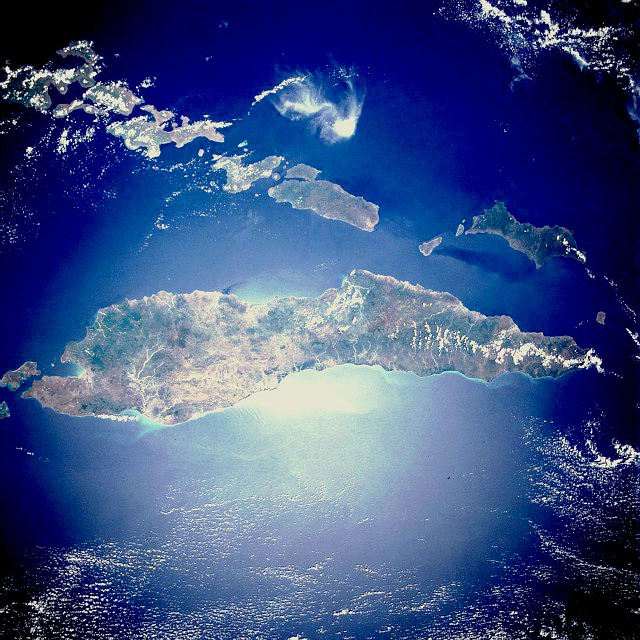
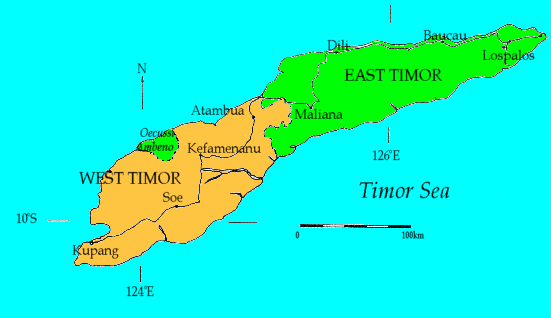
Timor is a sizeable island in Maritime Southeast Asia situated at the southeastern edge of the Malay Archipelago. It lies north of the Timor Sea and forms part of a chain of islands stretching toward the Pacific. The island’s name derives from the Malay word timur, meaning "east," reflecting its position at the eastern end of a long island arc. Politically the island is divided: the sovereign state of Timor-Leste (East Timor) occupies the eastern portion and a narrow inland corridor, while the western part, often called West Timor, is administered as part of Indonesia's East Nusa Tenggara province.
Image gallery
8 Images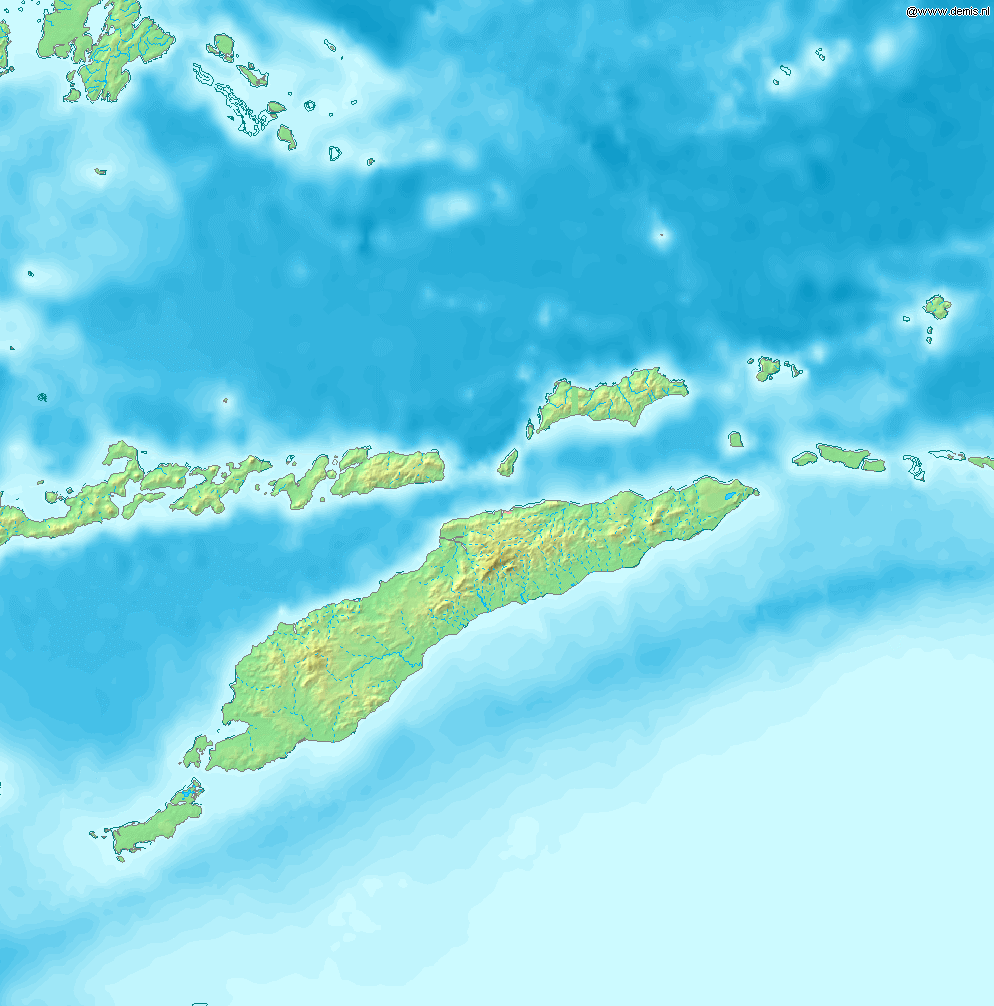




Geography and environment
Timor covers roughly 30,000 km² and features a varied landscape of steep central mountain ranges, coastal lowlands, and seasonal river valleys. The climate is tropical with a distinct wet and dry season. Vegetation includes dry deciduous forests and savanna in lower areas, while upland zones host pockets of moist forest. The island is part of the Wallacea biogeographic region, which has a mix of Asian and Australasian species and high levels of endemism.
Marine environments around Timor, including coral reefs and the deeper Timor Sea, are important for fisheries and biodiversity. Offshore geology has also made the seas nearby significant for hydrocarbons and undersea resources.
History and culture
Timor has long been inhabited by Austronesian- and Papuan-speaking peoples with locally distinct languages and cultural traditions. From the 16th century, European colonial powers vied for influence: the Portuguese took a leading role in the east while Dutch authority expanded in the west. These colonial legacies shaped language, religion, and political boundaries. Timor-Leste achieved full internationally recognized independence in 2002 after a turbulent process of decolonization and conflict in the late 20th century.
Economy and significance
The island’s economies are largely rural, based on subsistence agriculture, coffee and other smallholder crops, and coastal fishing. In the late 20th and early 21st centuries, oil and gas discoveries in adjacent waters also became economically and politically important, influencing relations between Timor-Leste and Indonesia as well as with other regional partners.
Notable facts and resources
- Division: Timor is one of the few large islands divided between an independent country and part of another state.
- Language and culture: Tetum and Portuguese are official languages in Timor-Leste; Indonesian and many local languages are spoken in West Timor.
- Biogeography: Its location within Wallacea makes it of interest to naturalists and conservationists.
Further reading and links
- General location and maps
- Malay Archipelago context
- Timor Sea and marine features
- Timor-Leste (East Timor) official resources
- Indonesia and West Timor information
- East Nusa Tenggara province
- Area and geographic statistics
- Etymology: Malay term timur
Approximate central coordinates: 9°14′S, 124°56′E.
Related articles
Author
AlegsaOnline.com Timor (island) Leandro Alegsa
URL: https://en.alegsaonline.com/art/99983