
Tisza — Central European river
The Tisza is a major Central European river rising in the Ukrainian Carpathians and flowing through several countries into the Danube; notable for its ecology, floodplain landscapes and cultural importance.
Overview
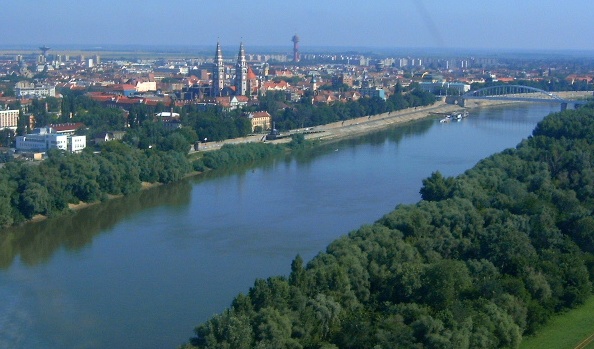
The Tisza is one of the principal waterways of Central Europe, running for about 965 km and draining roughly 157,186 km². It begins in the Ukrainian Carpathians, where branches known as the White and Black Tisza rise, then traverses or borders several countries before joining the Danube. The river has played a persistent role in regional transport, agriculture and wetland ecosystems.
Image gallery
5 Images


Course and geography
The river originates in western Ukraine; the headwaters lie in the Chornohora and Gorgany ranges. From there it flows generally southwest, forming sections of the border with neighboring Romania and briefly touching or approaching Slovakia, then crossing into Hungary near Tiszabecs. After flowing through the Great Hungarian Plain it continues into northern Serbia and enters the Danube in central Vojvodina. For a concise regional context see major rivers of Central Europe.
Names and languages
- Hungarian: Tisza
- Ukrainian: Tysa (Тиса)
- Romanian: Tisa
- Slovak: Tisa
- Serbian: Tisa (Тиса)
The river is referenced in local maps and literature across national borders; for information related to the countries it crosses see entries for Ukraine, Romania, Hungary, Slovakia and Serbia, while its confluence with the Danube lies in Vojvodina.
Hydrology, tributaries and landscapes
The Tisza collects water from a wide basin fed by mountain streams and plains runoff. Its valley includes extensive floodplain meadows, oxbow lakes and wetlands that support high biodiversity. Along its route, the river receives numerous tributaries that increase seasonal flows and influence flood dynamics. Human interventions such as channel regulation and levee construction have altered its natural meandering in many sections.
Ecology, use and importance
The Tisza basin supports fisheries, irrigation and recreation, and its wetlands are important for birds and aquatic species. Historically the river corridor enabled local navigation and trade; today it remains important for regional water management and nature conservation. Conservation efforts focus on restoring floodplain habitats, improving water quality and balancing agricultural water use with ecological needs.
History and management
Settlements and cultures along the Tisza reflect a long human presence shaped by seasonal floods and fertile floodplain soils. Modern flood control schemes date from the 19th and 20th centuries, and international cooperation among the river basin countries addresses transboundary water issues such as pollution events, flood forecasting and habitat protection. The Tisza continues to be an emblematic feature of the landscape and an axis for cross-border environmental work.
Related articles
Author
AlegsaOnline.com Tisza — Central European river Leandro Alegsa
URL: https://en.alegsaonline.com/art/100103