
Tibetan Book of the Dead (Bardo Thodol)
A Tibetan Buddhist guide for the dying and the recently deceased, outlining stages of the bardo, ritual readings and practices intended to ease passage and offer liberation; widely translated and studied.
Overview
The Tibetan Book of the Dead is a Tibetan religious work that serves as a practical manual for attendants and the dying. Originating within Tibetan culture and Buddhism (Tibet), it provides spoken and ritual directions to those present at a deathbed and to the deceased as they pass through intermediate states associated with dying.
Image gallery
4 Images

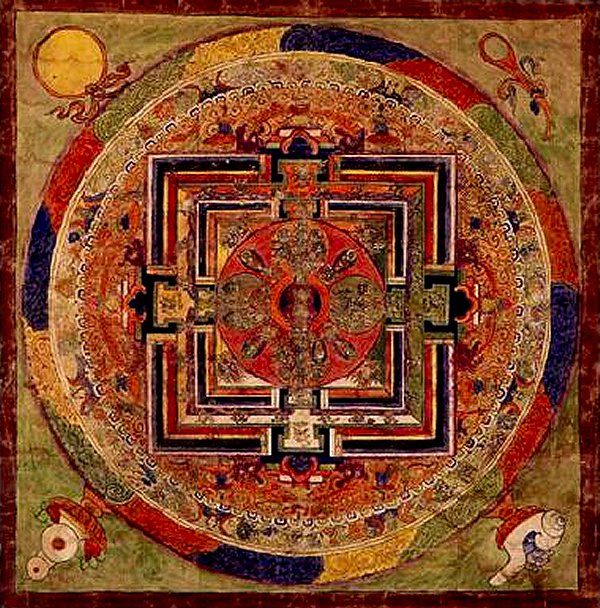

Contents and characteristics
Its core material gives sequential instructions, prayers and meditations intended to guide consciousness through the so-called bardos — transitional phases between death and rebirth. The text prescribes particular prayers, visualizations and exhortations, and it describes various visionary experiences and realms that relate to notions of the afterlife.
- Guidance for the dying: calm, recognition practices and reminders.
- Instructions for attendants: what to recite and how to help.
- Descriptions of bardos: appearances, sounds and opportunities for liberation.
History and origins
The work is rooted in Tibetan Buddhist ritual and contemplative traditions and is often associated with revealed or transmitted teachings. It has been presented within Tibetan communities as a specialized funerary and contemplative text. Over centuries it became canonical in certain lineages and was preserved in oral and manuscript forms before wider printing and translation.
Ritual use and practice
In practice, the book is read aloud by trained attendants near a dying person and during the initial period after death. Readers alternate recitation with instruction aimed at helping the mind recognize liberating experiences rather than clinging to fear. The use of ritual implements, chanting and close presence distinguishes these rites from routine readings; some observers compare their function to other traditions’ terminal rites, such as parts of Roman Catholicism, though theological aims differ.
Translations, influence and reception
Translations into multiple languages, including prominent English editions, brought the book to global attention in the 20th century. It influenced comparative religion studies, psychology of death, and artistic works while fostering interest in Tibetan approaches to dying and rebirth. Academics treat it as both a religious manual and a cultural document.
Distinctions and notable facts
Though popularly called a single "book," the material circulates in various compilations and commentaries. Its emphasis on the transitional stages between death and rebirth, on the possibility of seeing liberating visions, and on the active role of attendants sets it apart from many doctrinal sutras and from secular discussions of death.
Related articles
Author
AlegsaOnline.com Tibetan Book of the Dead (Bardo Thodol) Leandro Alegsa
URL: https://en.alegsaonline.com/art/99768